
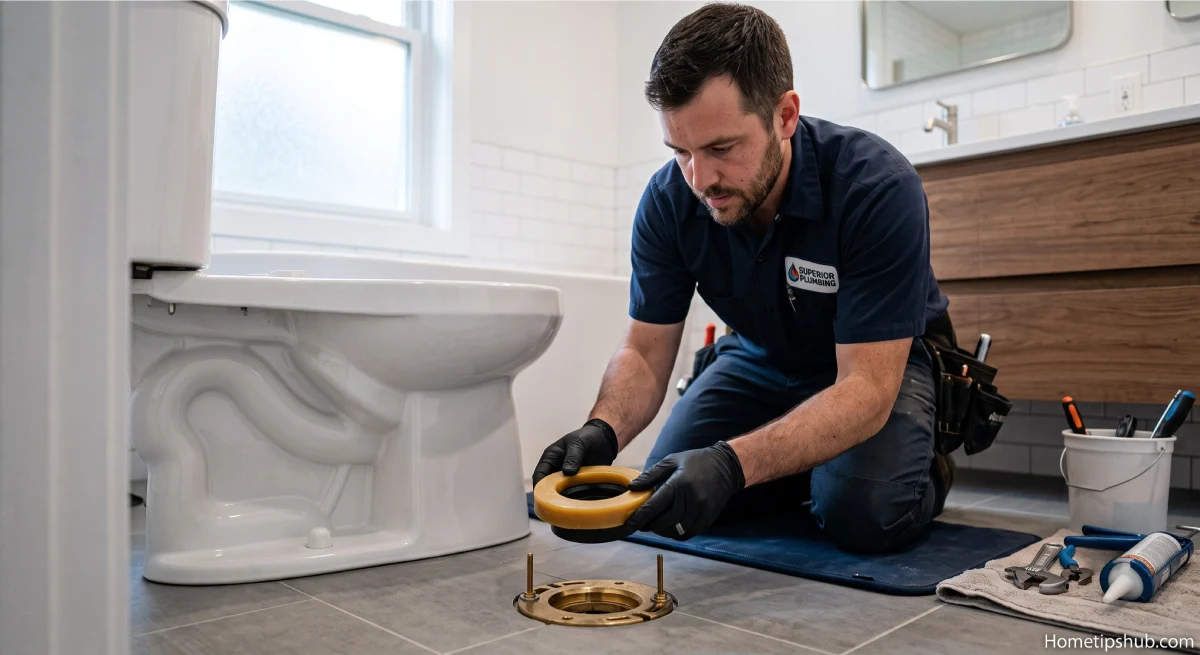
If you’ve ever mopped up a mystery puddle around the base of your toilet, chances are the culprit was a worn-out toilet wax ring. It’s one of the smallest, cheapest parts in your bathroom, yet it’s doing one of the biggest jobs: keeping sewer gas out and wastewater in. Most homeowners don’t think about this little wax disc until it fails — and by then, there’s often water damage to the subfloor or a lingering odor that won’t go away no matter how much you clean.
The good news is that toilet wax ring technology has come a long way. What used to be a single, messy, one-size-fits-all product now has over a dozen smart variations designed for different toilets, flanges, and installation headaches. In this guide, we’ll walk through what a wax ring actually does, how to tell when yours is leaking, 15 upgraded wax ring options you probably didn’t know existed, and a full walkthrough on how to replace a toilet wax ring yourself — no plumber required.
By the end, you’ll know exactly which wax ring for toilet installation fits your situation and how to fix a leaking toilet base for good.
What Is a Toilet Wax Ring?
A toilet wax ring is a donut-shaped seal made of wax (or a wax-and-rubber blend) that sits between the base of your toilet and the Toilet flange on your bathroom floor. When you set the toilet down and bolt it in place, the ring compresses and forms a watertight, gas-tight barrier.
How a Wax Ring Seal Works
Every time you flush, wastewater travels down through the toilet’s outlet, through the flange, and into the drain pipe. The toilet wax seal is what prevents that water — and the sewer gas beneath it — from escaping around the base instead of going where it should. Because wax is pliable, it molds itself to small gaps and irregularities between the toilet and the flange, which is why it’s remained the standard sealing material for decades.
The catch is that wax rings are a one-time-use product. Once you lift a toilet off its base, the seal is broken, and a fresh toilet wax ring replacement is required before reinstalling. Reusing an old wax ring almost always leads to leaks down the road.
Signs Your Toilet Wax Ring Is Leaking
Catching a failing seal early can save you from replacing flooring, subfloor, or even ceiling drywall in the room below. Watch for these warning signs:
- Water pooling at the base of the toilet after a flush
- A persistent sewer-gas smell in the bathroom
- Discolored, soft, or spongy flooring around the toilet
- The toilet rocking or feeling unstable when you sit down
- Ceiling stains in the room directly below an upstairs bathroom
If you notice any of these, your toilet wax ring leaking is very likely the cause, and it’s worth inspecting sooner rather than later.
Toilet Base Leaking: Common Culprits
A toilet base leaking isn’t always about the wax ring itself. Sometimes it’s caused by:
- A cracked or corroded flange sitting too low or too high
- Loose closet bolts that let the toilet shift
- An uneven bathroom floor that prevents a solid seal
- A wax ring that was never sized correctly for the flange in the first place
Diagnosing the real cause matters, because installing another standard ring on a damaged flange will just lead to the same leak again.
15 Amazing Toilet Wax Ring Upgrades You Won’t Believe Exist
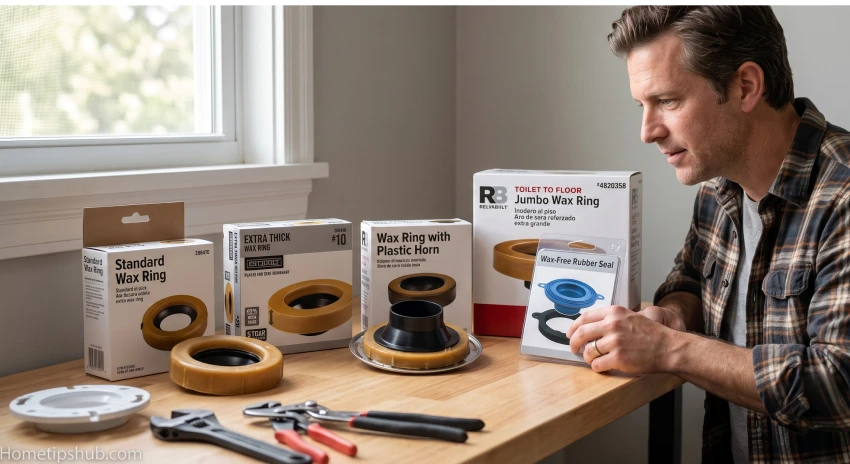
Wax rings have quietly evolved into a category with real engineering behind them. Here are 15 upgraded versions worth knowing about before your next installation.
- Extra thick toilet wax ring – Built with more material to fill larger gaps between the toilet and a low flange.
- Jumbo toilet wax ring – An even bulkier version for flanges set well below floor level, common in tiled or multi-layered floors.
- Wax ring with a plastic (or brass) horn – Adds a rigid funnel through the center to guide waste and resist collapsing.
- Reinforced flange wax ring – Includes a built-in plastic ring that reinforces a cracked or worn flange.
- No-wax rubber seal – A wax-free silicone or rubber alternative that never melts, dries out, or needs a perfect fit.
- Universal toilet wax ring – Designed to fit both standard 3-inch and 4-inch flange openings without guesswork.
- Adjustable-height wax ring – Uses stacked sections you can add or remove to match your exact flange depth.
- Self-lubricating wax ring – Coated to slide into place more easily, reducing the risk of shifting the seal during installation.
- Wax-free foam gasket – A modern alternative that seals without ever needing to compress like wax.
- Double-thick wax ring with horn combo – Pairs extra material with a rigid horn for maximum leak protection on problem installs.
- Odor-blocking enhanced wax ring – Formulated with added density specifically to cut down on sewer gas seepage.
- Wax ring with built-in bolts – Comes pre-fitted with closet bolts so alignment during installation is faster and more accurate.
- Heat-resistant wax ring – Engineered to hold its shape in bathrooms with heated flooring, where standard wax can soften.
- Low-profile wax ring – A thinner design for flanges installed flush or slightly above the floor.
- All-weather wax ring – Rated for unheated spaces like cabins, garages, or basements where temperature swings can affect a standard seal.
Whichever option you choose, the goal is the same: a toilet seal replacement that matches your flange height, floor material, and toilet type. When in doubt, a wax ring with a horn or a no-wax rubber seal tends to be the most forgiving choice for DIYers.
How to Replace a Toilet Wax Ring: Step-by-Step
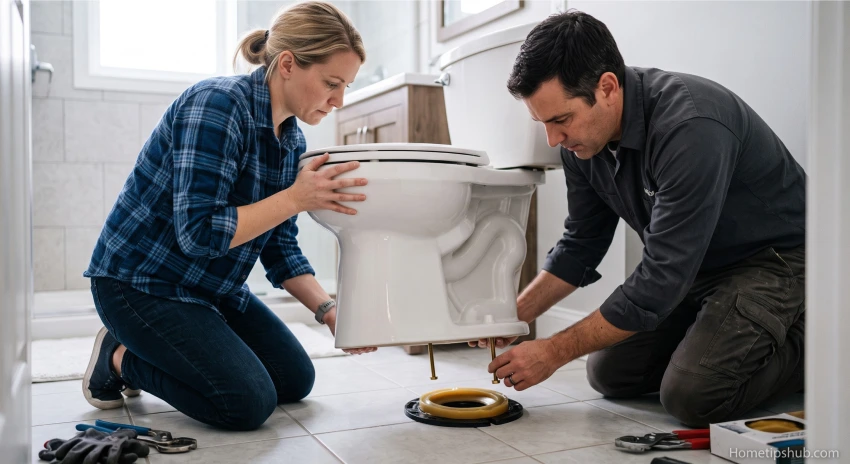
Once you’ve picked the right product, the actual wax ring installation is a manageable weekend project. Here’s how to do it safely and correctly.
Tools You’ll Need
- New wax ring (sized to your flange)
- Adjustable wrench
- Putty knife
- Rubber gloves and old towels
- New closet bolts and a wax ring installation kit (recommended)
- A helper, if your toilet is heavy
Step-by-Step Wax Ring Installation
- Shut off the water supply at the valve behind the toilet, then flush to empty the tank and bowl.
- Disconnect the water line and remove the caps covering the closet bolts at the toilet’s base.
- Remove the nuts from the closet bolts and carefully lift the toilet straight up, setting it on old towels.
- Scrape away the old wax ring from the flange using a putty knife, and inspect the flange for cracks or corrosion.
- Install new closet bolts if the old ones are rusted or bent.
- Place the new toilet wax ring onto the flange, horn-side down if your ring has one.
- Lower the toilet straight down onto the flange, aligning the bolt holes, then press down firmly to compress the seal.
- Add washers and nuts to the closet bolts and tighten evenly in a crisscross pattern — snug, not overtightened, to avoid cracking the porcelain.
- Reconnect the water supply, turn the valve back on, and flush several times while checking around the base for leaks.
If everything stays dry after a few flushes, your toilet wax ring replacement is complete.
Choosing the Best Toilet Wax Ring for Your Bathroom
Not every bathroom needs the same seal. The best toilet wax ring for your home depends on flange height, floor thickness, and how your toilet has behaved in the past.
Standard vs Extra Thick vs Jumbo Wax Rings
- Standard wax ring: Works when the flange sits at or near floor level.
- Extra thick toilet wax ring: Best when the flange sits slightly below the floor, such as after new tile was added.
- Jumbo toilet wax ring: Needed when the flange is noticeably recessed, often in older homes with layered flooring.
Choosing too thin a ring for a low flange is one of the most common reasons a toilet wax ring leaking issue returns even after a fresh install.
Universal Toilet Wax Ring Options
A universal toilet wax ring is designed to accommodate both 3-inch and 4-inch flange sizes, which makes it a smart pick if you’re not entirely sure what your toilet uses. These are widely available at hardware stores across the U.S. and are usually the easiest option for first-time DIYers to install correctly.
Tips to Fix a Leaking Toilet Base for Good
If you’ve already replaced the wax ring once and the leak came back, a few extra steps can help you fix a leaking toilet base permanently:
- Check that the flange itself isn’t cracked, warped, or sitting too far from the floor
- Make sure closet bolts are tight and not spinning loosely in the flange slots
- Confirm the toilet isn’t rocking on an uneven floor — use plastic shims if needed
- Consider switching to a wax ring with a horn or a rubber gasket if wax alone hasn’t held
- Never reuse an old wax ring, even if it looks intact
Taking the time to identify the actual source of the leak, rather than just swapping in another identical ring, is what separates a lasting fix from a repeat repair.
Suggested Image Details for This Article
Image Alt Text: Close-up of a toilet wax ring placed on a bathroom floor flange before installation
Image Caption: A properly sized toilet wax ring creates a watertight seal between the toilet base and the flange.
Frequently Asked Questions
How often should a toilet wax ring be replaced?
A toilet wax ring only needs replacing when the toilet is removed for any reason, or if you notice signs of a leak. There’s no set expiration date — a properly installed ring can last for decades unless the toilet is disturbed.
Can I reuse a toilet wax ring after removing the toilet?
No. Once a wax ring has been compressed and broken, it won’t reseal properly. Always install a new wax ring for toilet reinstallation, even if the toilet was only lifted briefly.
What is the best toilet wax ring for a low flange?
An extra thick or jumbo toilet wax ring is the best choice for flanges installed below floor level, since standard rings may not fully close the gap.
Why does my toilet base keep leaking after a new wax ring?
A toilet base leaking after replacement usually points to a cracked flange, loose closet bolts, an uneven floor, or a ring that’s the wrong thickness for the flange height.
Are wax-free toilet seals better than traditional wax rings?
Wax-free rubber or foam gaskets can be a good option in hot climates or over heated flooring, since they won’t soften or shift the way wax can. For most standard installations, a traditional wax ring still performs reliably.
Final Thoughts
A toilet wax ring might be small, but it’s one of the most important parts standing between a dry bathroom floor and a costly repair bill. Whether you’re dealing with a toilet wax ring leaking right now or simply want to upgrade before problems start, there’s a version on this list built for your exact setup — from a jumbo ring for a recessed flange to a universal toilet wax ring that takes the guesswork out of sizing.
If your toilet has started rocking, smelling, or leaking at the base, don’t wait for a small issue to become a subfloor replacement. Pick up the right wax ring for your flange, follow the installation steps above, and enjoy a bathroom that stays dry flush after flush. And if you’re ever unsure about the condition of your flange or subfloor, it’s worth calling in a licensed plumber to double-check before you reinstall.