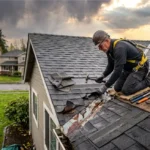
If you’ve ever climbed onto your roof after a storm and found a puddle where there shouldn’t be one, you already know why flat roof repair matters so much. Water doesn’t run off a flat roof the way it does on a pitched one, so small problems turn into big, expensive ones fast.
The good news? Most flat roof problems follow predictable patterns, and once you know what to look for, flat roof repair becomes a lot less mysterious. In this guide, we’ll walk through 14 practical fixes that cover everything from a simple flat roof patch repair to full flat roof membrane repair, so you know exactly what’s involved, what it costs, and when to pick up the phone instead of the caulk gun.
Whether you’re dealing with a leaking garage, a commercial building, or a mobile home, this article breaks down real solutions homeowners and property managers actually use.
Why Flat Roof Repair Is Different From Sloped Roof Fixes
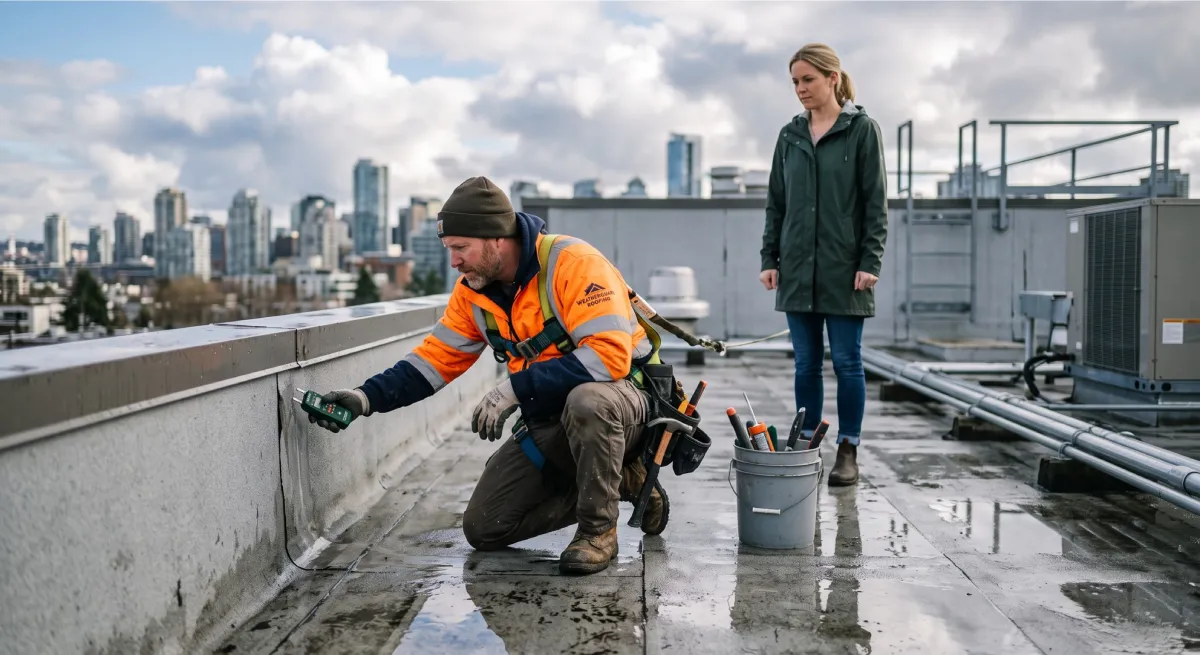
Flat roofs rely on drainage systems, membranes, and seams rather than gravity to shed water. That means flat roof leak repair often starts with finding where water is traveling, not just where it’s dripping inside. A leak that shows up in the middle of a ceiling might actually originate several feet away near a seam or flashing detail.
This is one reason flat roof repair near me searches spike after heavy rain: property owners realize they need someone who understands membrane systems, not just shingles.
1. Locating the Source Before Any Flat Roof Repair Begins
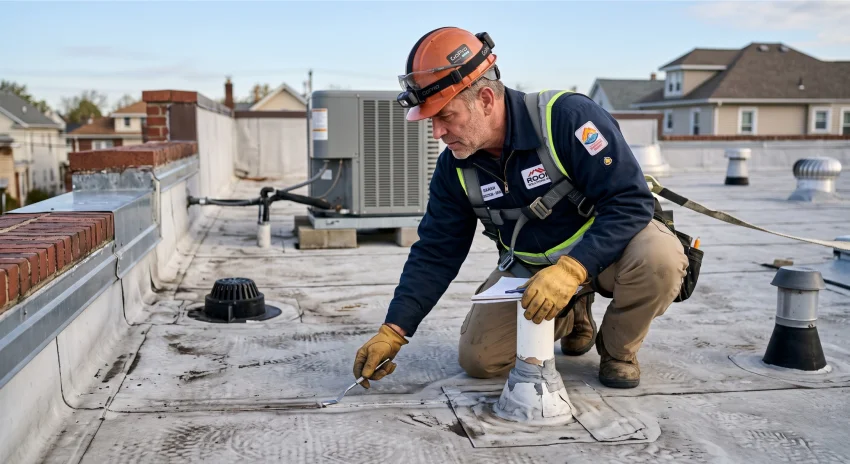
Before any fix works, you need to find the actual entry point. Inspectors look at:
- Seams and laps in the membrane
- Flashing around vents, pipes, and edges
- Areas where water pools longer than 48 hours
- Cracks or blisters near HVAC units
Skipping this step is the number one reason DIY flat roof crack repair attempts fail — you patch the wrong spot and the leak returns within weeks.
2. Flat Roof Patch Repair for Small Punctures
For minor punctures or small holes, a flat roof patch repair is often the fastest fix. This typically involves cleaning the area, applying a compatible primer, and layering a patch material over the damaged section, then sealing the edges. It’s a solid short-term solution, especially for garage flat roof repair or shed roofs where the damage is isolated to one small area.
3. Flat Roof Membrane Repair for Larger Damage
When damage spreads across a wider section, a full flat roof membrane repair becomes necessary. This means cutting out the compromised membrane and welding or adhering a new section in its place. Membrane repairs are common on both residential flat roof repair jobs and larger commercial flat roof repair projects, since membranes degrade at different rates depending on sun exposure and drainage.
4. EPDM Flat Roof Repair (Rubber Roofing)
EPDM flat roof repair centers on rubber roofing, one of the most widely used flat roof systems in the U.S. Common issues include shrinkage at the edges and seam separation. Rubber flat roof repair typically uses a seam primer and specialized tape or liquid adhesive designed specifically for EPDM, since standard sealants won’t bond properly to rubber.
Quick answer: EPDM repairs usually last 5–10 years when done correctly with the right adhesive system.
5. TPO Flat Roof Repair for Heat-Welded Systems
TPO flat roof repair differs from EPDM because TPO seams are heat-welded rather than glued. A damaged TPO roof usually needs a heat gun and roller to properly fuse a new patch to the existing material. Attempting this without the right equipment often leads to a patch that peels within months, so this is one repair where professional help pays off.
6. Modified Bitumen Roof Repair Basics
Modified bitumen roof repair involves torch-applied or cold-adhesive layers built from asphalt and reinforcing fabric. Repairs typically require cutting out damaged plies and layering new material with proper overlap, then sealing with compatible bitumen cement. This system is durable but demands careful technique to avoid uneven layers that trap moisture.
7. Fixing Flat Roof Blisters
A flat roof blister repair addresses trapped air or moisture pockets that form bubbles under the membrane. Left alone, blisters eventually crack open and let water in. The fix involves cutting the blister open, letting it dry completely, then patching the section with new material and sealant. Ignoring blisters is one of the fastest ways a small issue becomes a full leak.
8. Solving Flat Roof Ponding Water Repair Issues
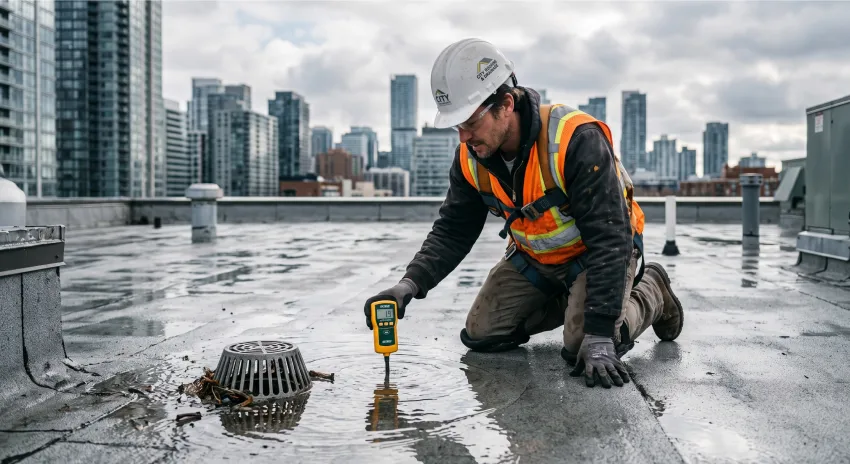
Flat roof ponding water repair is arguably the most important long-term fix, since standing water accelerates membrane breakdown, encourages algae growth, and adds unnecessary weight to the structure. Solutions range from adding tapered insulation to correct slope, to installing additional drains. If water sits for more than 48 hours after rainfall, it’s a sign the drainage system needs attention, not just a patch.
9. Flat Roof Flashing Repair Around Edges and Penetrations
Flashing seals the transitions where the roof meets walls, vents, chimneys, or skylights. Flat roof flashing repair usually involves removing old, cracked flashing, cleaning the surface, and installing new metal or membrane flashing with fresh sealant. Flashing failures account for a large share of leaks reported in flat roof leak repair calls.
10. Flat Roof Seam Repair for Long-Term Durability
Seams are the joints between roofing sheets, and they’re often the weakest point on any flat roof. Flat roof seam repair involves cleaning, re-adhering or re-welding the seam, and applying a reinforced seam tape or liquid membrane over the top for extra protection. Regular seam inspections can prevent most future flat roof repair emergencies.
11. Flat Roof Waterproofing Repair as Preventive Maintenance
Beyond fixing existing damage, flat roof waterproofing repair adds a protective coating layer across the entire roof surface. This is a smart investment for older roofs that are structurally sound but showing early signs of wear, extending the roof’s life by several years without a full replacement.
12. Commercial Flat Roof Repair Considerations
Commercial flat roof repair often involves larger surface areas, rooftop equipment, and stricter timelines since business operations can’t stop for repairs. Property managers typically schedule regular inspections and keep repair budgets on hand, since commercial roofs endure more foot traffic and equipment weight than residential ones.
13. Residential, Garage, and Mobile Home Flat Roof Repair
Residential flat roof repair, garage flat roof repair, and mobile home flat roof repair share many of the same materials and techniques, but scale and access differ. Mobile homes often use thinner membrane systems that are more sensitive to temperature during repair, so timing the work for mild weather matters.
14. Emergency Flat Roof Repair When You Can’t Wait
Emergency flat roof repair is for active leaks during or right after a storm. The priority is a temporary seal — often a heavy-duty tarp or quick-set patch — to stop water intrusion until a permanent fix can be scheduled. Never attempt emergency repairs on a wet or icy roof; safety comes first, even during a leak crisis.
Flat Roof Repair Cost: What to Expect
Flat roof repair cost varies based on damage size, material type, and whether it’s a patch or full section replacement. Generally:
- Small patch repairs: budget-friendly, often completed in a single visit
- Seam or flashing repairs: moderate cost, depending on linear footage
- Membrane replacement sections: higher cost due to material and labor
- Full waterproof coating: priced per square foot across the roof
Getting a written estimate before work begins helps avoid surprises, and it’s worth asking whether the quote includes warranty coverage on the repair.
How to Find Reliable Flat Roof Repair Near You
When searching for flat roof repair near me, look for contractors who:
- Carry proper licensing and insurance
- Have specific experience with your roof type (EPDM, TPO, or modified bitumen)
- Offer written estimates and warranties
- Can show recent references or project photos
A contractor who asks detailed questions about your roof’s age and drainage history is usually more trustworthy than one who quotes a price over the phone without an inspection.
Frequently Asked Questions
How long does a typical flat roof repair take?
Most patch or seam repairs are completed in a single day. Larger membrane sections or waterproofing projects may take two to three days depending on weather and roof size.
Can I do flat roof repair myself?
Small patch repairs are sometimes manageable for handy homeowners, but membrane welding, flashing work, and drainage corrections generally require professional tools and training to avoid future leaks.
What’s the average lifespan after a flat roof repair?
A properly done repair on EPDM, TPO, or modified bitumen roofing can extend the roof’s life by 5 to 15 years, depending on the material and ongoing maintenance.
Is flat roof ponding water always a problem?
Water that drains within 24 to 48 hours is generally normal. Standing water beyond that window signals a drainage issue that should be addressed before it damages the membrane.
How much does emergency flat roof repair cost compared to standard repair?
Emergency service often costs more due to after-hours labor and rush scheduling, but it’s usually far less expensive than the water damage that results from delaying repairs.
Final Thoughts and Next Steps
Flat roof repair doesn’t have to be overwhelming once you understand the system you’re working with. From a simple flat roof patch repair to full flat roof waterproofing repair, each fix addresses a specific weak point, and catching problems early always costs less than waiting for a full leak.
If you’ve spotted ponding water, a blister, or a suspicious stain on your ceiling, don’t wait for the next storm to make the decision for you. Reach out to a qualified local roofing contractor for an inspection today, and get ahead of small problems before they become expensive ones.