
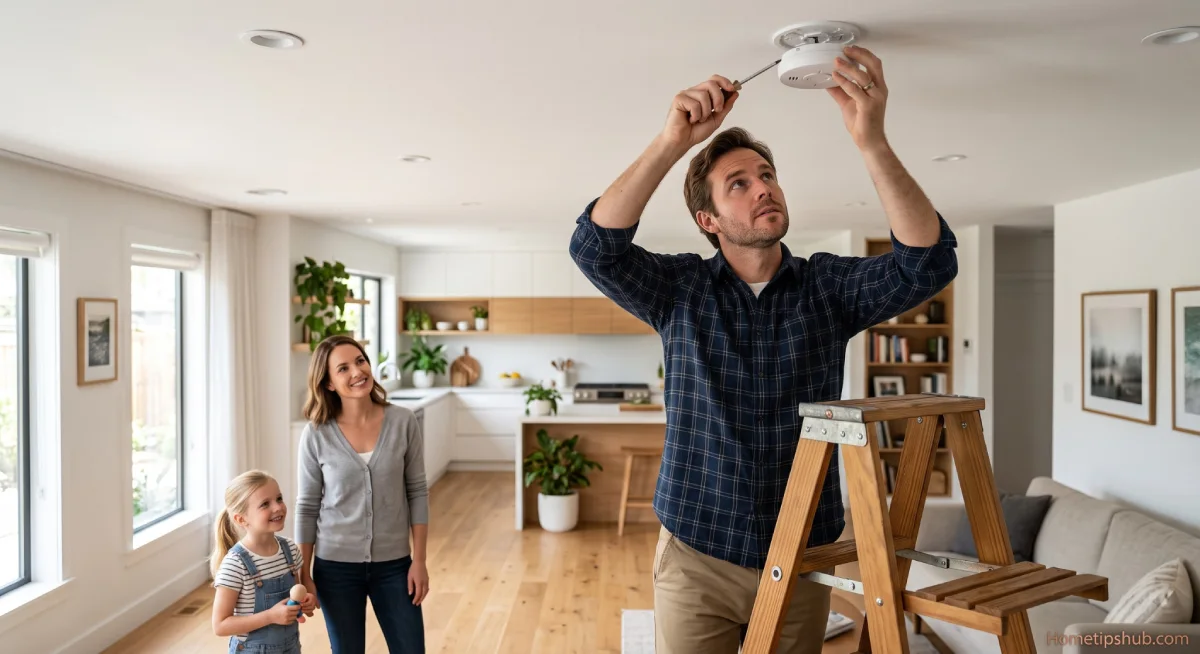
Most house fires happen when everyone is asleep, and the difference between waking up in time and not waking up at all often comes down to a few feet of wall space. That’s what makes smoke detector placement so important — and so frequently done wrong. A smoke alarm mounted in the wrong spot can be slower to trigger, easier to ignore, or, in the worst cases, completely useless when it matters most.
If you’ve ever stood in a hallway holding a smoke detector and wondering exactly where it should go, you’re not alone. This guide walks through everything you need to know about smoke detector placement, from bedroom-by-bedroom recommendations to the exact height requirements fire codes call for. By the end, you’ll understand not just where to put your alarms, but why each location matters.
Why Smoke Detector Placement Matters More Than You Think
Smoke rises. That basic fact drives almost every rule around smoke alarm placement, but there’s more nuance to it than simply “put it on the ceiling.” The National Fire Protection Association (NFPA) reports that most fatal home fires occur at night, and a properly placed smoke detector can cut your risk of dying in a fire by roughly half compared to having no working alarm at all.
Poor smoke detector placement is one of the most common — and most fixable — safety mistakes homeowners make. An alarm placed too close to a kitchen may trigger constant false alarms, leading residents to disable it altogether. One placed too far from bedrooms may not be loud enough to wake a sleeping person. Correct residential smoke alarm placement isn’t about following an arbitrary rule; it’s about giving smoke the shortest, fastest path to a working sensor.
The Basic Rules of Smoke Alarm Placement
Before diving into room-specific advice, it helps to understand the foundational guidelines that apply to nearly every home. These rules come from fire safety organizations like the NFPA and the U.S. Fire Administration, and they form the backbone of any smoke detector placement guide.
Install One Alarm on Every Level of Your Home
Whether you live in a single-story ranch or a three-story colonial, every level needs its own smoke alarm — including the basement. This is non-negotiable for proper smoke detector placement, since fires can start anywhere, and a fire on one floor may not be detected quickly by an alarm on another.
Place a Smoke Detector Inside Every Bedroom
This is one of the most overlooked best smoke detector locations. Many older homes only have alarms in hallways, but modern fire safety codes recommend a smoke detector inside each individual bedroom, not just outside the door. Closed bedroom doors can slow or block smoke and sound, so an in-room alarm gives sleeping occupants the fastest possible warning.
Add One Outside Every Sleeping Area
In addition to inside each bedroom, install a smoke alarm in the hallway or common area directly outside the sleeping zone. This layered approach to smoke alarm placement ensures that no matter where smoke originates, an alarm nearby will catch it.
Mount Detectors on the Ceiling or High on the Wall
For proper smoke detector placement, ceiling mounting is generally preferred. If wall mounting is necessary, the detector should sit between 4 and 12 inches from the ceiling, since smoke pools at the ceiling first and dead air pockets can exist right at the corner where the wall meets the ceiling.
Keep Detectors Away From Corners and Dead Air Spaces
Corners — where two walls meet the ceiling — often have limited air circulation. Installing a detector too close to a corner can delay how quickly it senses smoke. As a rule of thumb, keep smoke detectors at least 4 inches away from where the wall and ceiling meet.
Room-by-Room Smoke Detector Placement Guide
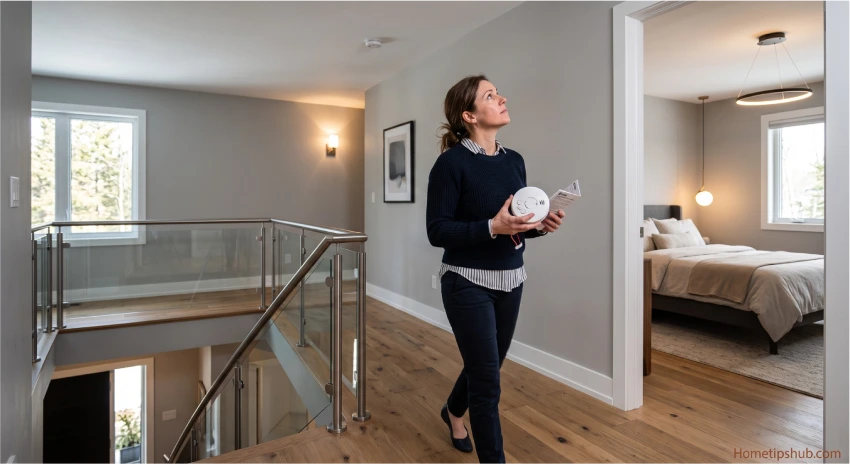
Understanding where to place smoke detectors becomes much clearer when you break it down room by room. This section serves as a practical home smoke detector placement guide you can walk through in your own house.
| Room/Area | Recommended Placement | Notes |
|---|---|---|
| Bedrooms | Center of ceiling or high on wall | One alarm per bedroom, no exceptions |
| Hallways outside bedrooms | Ceiling, centered in hallway | Required for every sleeping area |
| Kitchen | At least 10 feet from stove | Prevents false alarms from cooking smoke |
| Living room/family room | Ceiling, away from vents | Common area with electronics and fireplaces |
| Basement | Base of stairwell, on ceiling | Catches smoke before it spreads upstairs |
| Attic | Near entrance if finished/used | Often overlooked but high fire risk |
| Garage | Use heat detector, not smoke alarm | Dust and fumes cause false triggers |
| Bathroom | Avoid — use elsewhere nearby | Steam triggers false alarms |
Kitchen Smoke Detector Placement
The kitchen is the number one source of false alarms, which is exactly why smoke detector placement here requires extra care. Cooking smoke and steam can easily set off a standard alarm. Fire safety experts recommend placing kitchen smoke detectors at least 10 feet away from cooking appliances, or using a photoelectric alarm, which is less sensitive to the fine particles produced by cooking than an ionization alarm.
Bathroom and Steam-Heavy Areas
Bathrooms with showers should generally not have a smoke detector installed directly inside them. Steam mimics smoke to many sensors, triggering unnecessary alarms. Instead, focus on proper smoke alarm placement in the hallway just outside the bathroom.
Basement and Attic Smoke Detector Placement
Basements are often neglected in home smoke detector placement plans, yet they’re a common origin point for electrical fires due to wiring, furnaces, and water heaters. Install a smoke detector at the top of the basement stairs and, if the basement is a finished living space, add another inside that level. Attics, especially finished or storage-heavy ones, should also have a detector near the entrance.
Garage Smoke Detector Placement
Garages present a unique challenge. Dust, exhaust fumes, and temperature swings make standard smoke detectors prone to false alarms in this space. Instead of a smoke alarm, most fire safety professionals recommend a heat detector for garages, which responds to a rapid rise in temperature rather than airborne particles.
Proper Height and Distance Guidelines
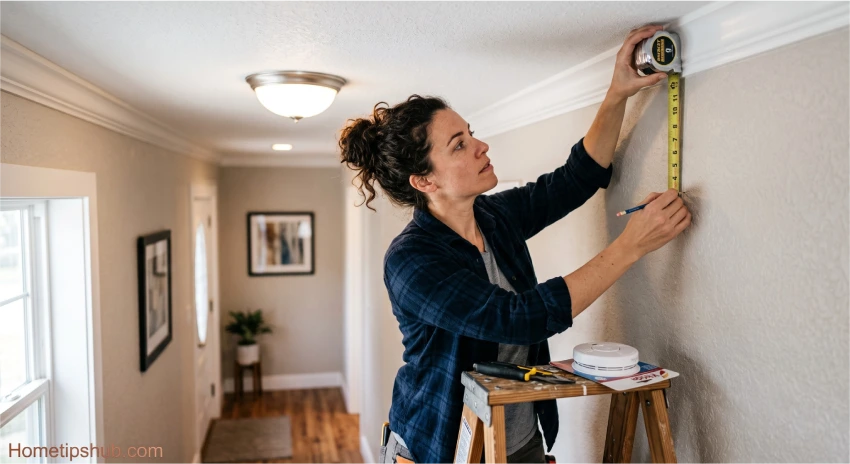
Getting the room right is only half the equation — proper smoke detector placement also depends on exact height and distance measurements. Here’s a quick-reference table for the specifics.
| Placement Factor | Recommended Distance/Height |
|---|---|
| Distance from ceiling corner | At least 4 inches |
| Wall-mounted height from ceiling | 4–12 inches down |
| Distance from kitchen appliances | Minimum 10 feet |
| Distance from HVAC vents/ceiling fans | At least 3 feet |
| Distance from bathroom door | At least 3 feet |
| Spacing between multiple alarms (open areas) | Every 30 feet |
Ceiling fans and HVAC vents can blow smoke away from a detector before it has a chance to register, which is why keeping a few feet of clearance is part of any thorough smoke alarm placement strategy. Similarly, in large open-concept homes, a single alarm may not be enough to cover the whole space — additional units spaced roughly 30 feet apart help maintain even coverage.
Best Smoke Detector Locations for Different Home Types
Not every home has the same layout, so smoke detector placement needs to adapt to the structure you actually live in.
Single-Story Homes
In a single-level home, focus on covering each bedroom, the hallway outside sleeping areas, and common living spaces. A minimum of three to four alarms is typical for a modest single-story house, depending on square footage and layout.
Multi-Story Homes
Multi-level homes need at least one smoke detector per floor, in addition to the in-bedroom and hallway alarms. Stairwells are especially important, since they act like chimneys and can pull smoke rapidly from one floor to another.
Apartments and Condos
Renters often assume smoke detector placement is entirely the landlord’s responsibility, and while building owners are legally required to install alarms in most states, tenants should still verify placement inside their own bedroom and near the kitchen. If an alarm seems poorly located — directly above the stove, for instance — flag it with your building management.
Mobile Homes
Because mobile homes tend to have lower ceilings and open floor plans, smoke can spread unusually fast. Manufactured housing codes typically call for smoke detectors in every bedroom and common area, with special attention paid to keeping units away from HVAC returns, which are common in these homes.
Common Smoke Detector Placement Mistakes to Avoid
Even well-intentioned homeowners make placement errors that reduce the effectiveness of their alarms. Here are the most frequent ones seen by fire safety inspectors.
- Mounting too close to a corner — dead air pockets slow detection.
- Installing directly in the kitchen or bathroom — leads to nuisance alarms and, eventually, disabled detectors.
- Skipping individual bedrooms — relying only on a hallway alarm delays warning to sleeping occupants.
- Placing near windows, doors, or vents — drafts can pull smoke away from the sensor.
- Forgetting the basement or attic — these areas are common fire origin points but are often left uncovered.
- Using outdated alarms — even perfect smoke detector placement won’t help if the unit itself is more than 10 years old.
- Ignoring ceiling height in vaulted rooms — in rooms with high or sloped ceilings, alarms should be placed near the highest point, since smoke collects there first, but not in the very peak where dead air can form.
Avoiding these mistakes is just as important as getting the placement guide itself right — a technically correct location paired with an old or malfunctioning unit still leaves your home under-protected.
How Many Smoke Detectors Do You Actually Need?
A common question homeowners ask is how many alarms their home actually requires. The honest answer depends on square footage, number of bedrooms, and layout, but a simple formula helps:
- One per bedroom
- One outside each sleeping area
- One per floor, including the basement
- Additional units for large open spaces (every 30 feet)
For a typical three-bedroom, two-story home, this usually adds up to six or seven smoke detectors. It might sound like a lot, but layered smoke alarm placement is exactly what gives you the fastest possible warning, no matter where in the house a fire starts.
Frequently Asked Questions About Smoke Detector Placement
Where is the best place to put a smoke detector?
The best smoke detector locations are on the ceiling, centered in the room when possible, inside every bedroom, and in hallways outside sleeping areas. Avoid corners, vents, and spots near kitchen appliances.
Can you put a smoke detector too close to a door?
Yes. Placing a smoke alarm too close to a door can expose it to drafts that pull smoke away from the sensor before it triggers. Keep at least a few feet of clearance from doors when possible.
Do smoke detectors need to be in every room?
Not every room, but every bedroom, yes. Common areas like living rooms and basements should also have coverage, while spaces like garages and bathrooms typically use different detection methods or none at all.
How high should a smoke detector be mounted?
Ceiling mounting is preferred for proper smoke detector placement. If wall-mounted, the detector should be positioned 4 to 12 inches below the ceiling.
Why does my smoke detector keep going off near the kitchen?
This usually means it’s placed too close to cooking appliances. Moving it to at least 10 feet away, or switching to a photoelectric-style alarm, typically resolves the issue.
Final Thoughts: Get Your Smoke Detector Placement Right Today
Smoke detector placement isn’t just a box to check off during a home safety review — it’s one of the most impactful, low-cost decisions you can make for your family’s safety. A handful of properly placed alarms, mounted at the right height and kept clear of dead air pockets, vents, and steam, can mean the difference between an early warning and a tragedy.
Take twenty minutes this week to walk through your home with this guide. Check that every bedroom has its own alarm, confirm hallway coverage outside sleeping areas, and make sure your basement and attic aren’t being overlooked. If any of your alarms are more than 10 years old, replace them — proper smoke detector placement only works with a properly functioning unit behind it.
Your family’s safety shouldn’t depend on guesswork. Review your home’s smoke alarm placement today, and make the small adjustments that could one day make all the difference.