
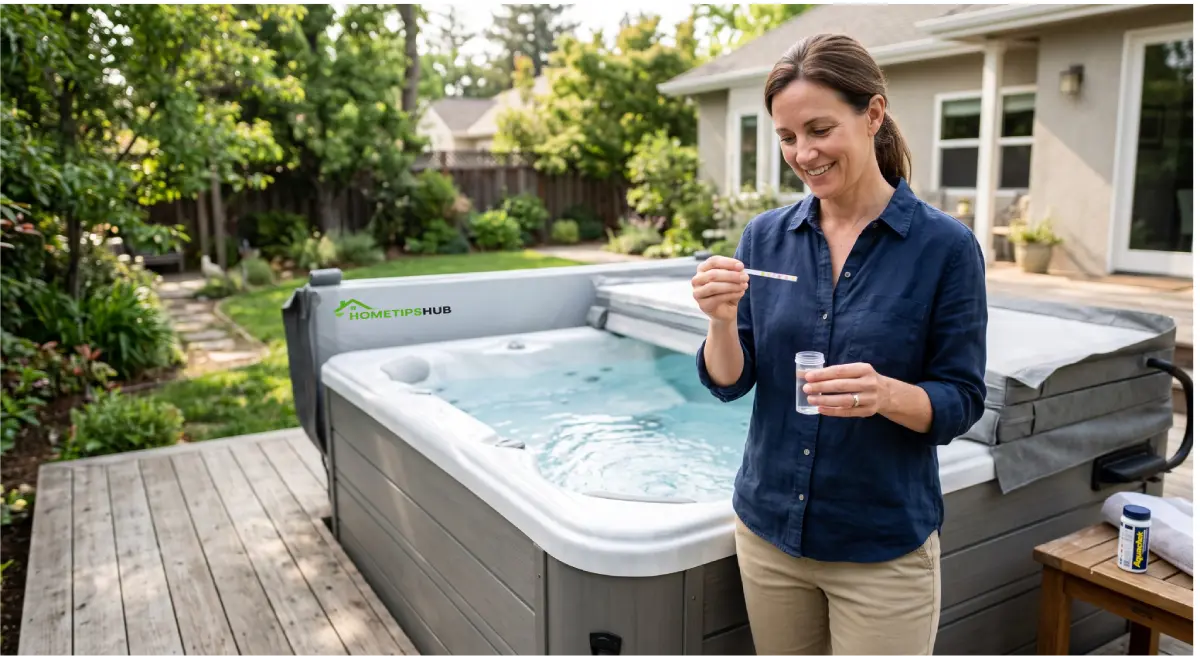
Owning a hot tub is a luxury that brings relaxation and joy to any home. But here’s the truth: without proper hot tub maintenance, that crystal-clear water can quickly turn cloudy, uncomfortable, and even unsafe. Whether you’re a first-time owner or someone struggling with your spa maintenance routine, keeping your hot tub in top condition doesn’t have to be complicated.
This comprehensive hot tub maintenance guide breaks down everything you need to know about caring for your spa. From understanding water chemistry to creating a realistic hot tub maintenance schedule, we’ll walk you through the essential steps that keep your water clean, balanced, and inviting. Most importantly, we’ll show you how straightforward maintain a hot tub actually is when you have the right knowledge.
By the end of this article, you’ll have a clear hot tub maintenance checklist and the confidence to keep your spa running smoothly without expensive professional help. Let’s dive in.
Understanding Hot Tub Water Chemistry: The Foundation of Great Maintenance
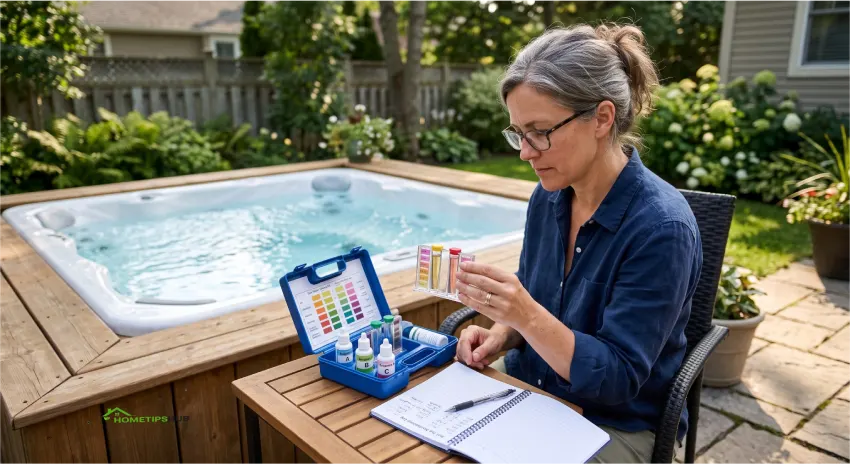
The most critical aspect of hot tub care is water chemistry. This isn’t just about making your water look nice—it’s about safety, equipment longevity, and guest comfort. Most people find that hot tub water care becomes second nature once they understand the basics.
The Four Key Chemical Levels
For proper spa water maintenance, you need to monitor four essential components:
pH Level (7.2–7.8): This measures water acidity. The correct pH prevents skin irritation and keeps sanitizers working effectively. If pH is too high, chlorine or bromine becomes less effective. Too low, and it can damage your hot tub’s surfaces.
Alkalinity (80–120 ppm): Think of alkalinity as a buffer that stabilizes pH levels. Without proper alkalinity, your pH will swing wildly, making it nearly impossible to maintain balanced water.
Sanitizer Levels: You’ll choose between chlorine, bromine, salt systems, or other methods. Chlorine and bromine are most common. For chlorine, maintain 1–3 ppm; for bromine, keep it at 2–4 ppm.
Calcium Hardness (150–250 ppm): Hard water can scale your equipment, while soft water can corrode it. Finding the middle ground is part of effective hot tub maintenance for beginners.
| Chemical | Ideal Range | Tests Per Week | Purpose |
|---|---|---|---|
| pH | 7.2–7.8 | 2-3 | Maintains water balance & sanitizer effectiveness |
| Alkalinity | 80–120 ppm | 1 | Stabilizes pH levels |
| Chlorine | 1–3 ppm | 2-3 | Sanitizes and kills bacteria |
| Bromine | 2–4 ppm | 2-3 | Alternative sanitizer for sensitive skin |
| Calcium Hardness | 150–250 ppm | 1 | Prevents scale buildup and corrosion |
Building Your Weekly Hot Tub Maintenance Checklist
The backbone of successful spa maintenance is consistency. A weekly hot tub maintenance checklist takes just 15–20 minutes and prevents major issues down the road. This is the easiest form of hot tub maintenance for beginners.
Step-by-Step Weekly Routine
Test Water Chemistry (2-3 times per week): Use test strips or a kit to check pH, alkalinity, and sanitizer levels. Add chemicals as needed to maintain the ideal ranges. This simple act is the most important part of how to maintain a hot tub.
Clean the Skimmer Basket: Remove debris, leaves, and organic material that accumulates in the skimmer. A clogged basket reduces circulation, which directly impacts water quality.
Inspect the Waterline: Look for any algae growth or discoloration. Wipe the waterline with a clean cloth. This prevents buildup that becomes harder to remove over time.
Check Chlorine or Bromine Levels: Depending on your chlorine hot tub maintenance or bromine hot tub maintenance system, verify levels are adequate and add sanitizer as needed.
Run the Jets: Activate all jets and features to improve circulation and help chemicals distribute evenly. Running jets for 20–30 minutes daily is part of routine hot tub upkeep.
Inspect for Leaks: Look around the pump, heater, and connections for any water drips. Early detection prevents costly damage.
Monthly Hot Tub Maintenance: Going Deeper
Beyond weekly tasks, a monthly hot tub maintenance routine keeps your equipment functioning properly and extends its lifespan. This is where many spa owners neglect their hot tub maintenance schedule.
Key Monthly Tasks
Clean or Replace Filters: Hot tub filters trap debris and oils. Depending on usage, they need cleaning or replacing monthly. For a comprehensive approach, follow your manufacturer’s hot tub maintenance guide for your specific filter type.
Deep Clean the Waterline: Using a hot tub-specific brush or eraser, clean mineral deposits and oils from the tub’s edge and shell. This prevents permanent staining.
Inspect the Filter Housing: Look for cracks or damage. If you notice issues, address them immediately.
Test Calcium Hardness and Alkalinity: While you’re testing sanitizer levels weekly, hardness and alkalinity can be checked monthly. Adjust as needed for consistent hot tub water chemistry guide compliance.
Clean Jets and Massage Functions: Use a small brush or pipe cleaner to ensure jets aren’t clogged. This keeps your experience enjoyable and equipment working correctly.
Verify Heater Function: If you haven’t recently used your heater, test it briefly. Make sure it reaches the desired temperature without issues.
How to Clean Hot Tub Filters: A Critical Skill
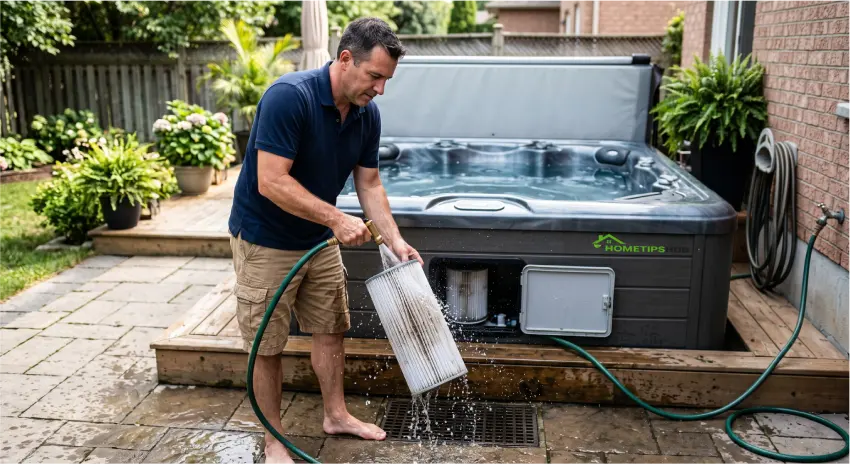
Filters are the lungs of your hot tub. Learning how to clean hot tub filters is essential to hot tub maintenance without chemicals becoming impossible. Well-maintained filters allow your chemical treatment to work as intended.
Two Cleaning Methods
Cartridge Filters (Most Common):
- Turn off the pump and let pressure decrease
- Remove the filter housing cap
- Gently pull out the cartridge filter
- Rinse with cool water (not hot) using a garden hose, working from top to bottom
- Inspect for damage—if pleats are deteriorated or cracked, it’s time to replace
- Reinsert and secure the housing cap
Sand Filters (Less Common in Home Spas):
- Backwash the filter by reversing water flow
- Run until water runs clear
- Return to normal flow mode
- This process should be done monthly during your hot tub maintenance schedule
For hot tub maintenance cost concerns, replacing a filter ($30–$100) is far cheaper than dealing with cloudy water or damaged equipment. Most filters need replacement every 12–18 months with proper maintenance.
Seasonal Hot Tub Maintenance: Preparing for Weather Changes
Hot tub maintenance in winter and hot tub maintenance in summer differ significantly. Seasonal preparation is part of responsible spa ownership and extends the life of your investment.
Winter Maintenance Tips
Cold weather affects your hot tub’s performance and water balance:
- Increase circulation: Run your hot tub more frequently to prevent freezing
- Monitor heating costs: If you live in a cold climate, consider reducing temperature slightly or using a thermal cover to save energy
- Check the freeze protection: Ensure your equipment’s freeze protection is working
- Drain and maintain: Some owners opt for hot tub drain and refill schedule during winter to start fresh
- Use anti-freeze chemicals: For inflatable models, winterizing products protect seals and surfaces
Summer Maintenance Considerations
Warm weather brings its own challenges:
- Increase sanitizer: Higher temperatures boost algae growth and bacteria proliferation, requiring more chlorine or bromine
- Manage heat: Don’t let water temperature exceed 104°F; it stresses equipment and creates an unhealthy environment
- Increase filter cleaning: Summer use is often heavier, requiring more frequent filter maintenance
- Watch evaporation: Top up water more frequently and monitor chemical balance closely
- Provide shade: If possible, shade reduces water temperature and evaporation
| Season | Primary Concern | Maintenance Focus | Frequency |
|---|---|---|---|
| Winter | Freezing & heat loss | Circulation, freeze protection, insulation | Daily checks |
| Spring | Algae & water startup | Filter cleaning, chemical balancing, shock treatment | Weekly |
| Summer | High use & algae growth | Increased sanitizer, frequent testing, evaporation control | 2-3x weekly |
| Fall | Leaf debris & cooling | Skimmer basket, leaf removal, equipment inspection | Weekly |
Advanced Topics: Saltwater and Alternative Maintenance Methods
Saltwater Hot Tub Maintenance
Saltwater hot tub maintenance is often promoted as “chemical-free,” but that’s misleading. These systems use a salt chlorinator that converts salt into chlorine. Benefits include softer water and fewer chemical odors, but challenges include higher initial cost and specific maintenance needs.
Key differences in saltwater hot tub maintenance:
- Monitor salt levels (2700–3400 ppm) instead of adding chlorine manually
- Clean the chlorinator cell every 3–6 months to remove buildup
- Watch for corrosion due to salt exposure
- Cost runs $100–$300 more upfront than traditional systems
Hot Tub Maintenance Without Chemicals: Reality Check
You’ll see claims about hot tub maintenance without chemicals, but honestly, all sanitizing methods use some form of chemistry. However, you can minimize traditional chlorine or bromine with:
- Ozone systems: Reduce sanitizer needs by 25–50% but still require backup sanitizers
- UV light systems: Work similarly to ozone but aren’t sufficient alone
- Mineral cartridges: Provide some antimicrobial benefits but can’t sanitize alone
Most “chemical-free” approaches fail without proper water testing and supplemental treatment.
Common Hot Tub Maintenance Mistakes You Should Avoid
Understanding hot tub maintenance mistakes helps you sidestep costly problems. Here are the most common errors:
1. Ignoring Water Testing: You can’t maintain balanced water if you don’t test it. This is the #1 mistake beginners make in hot tub maintenance for dummies scenarios.
2. Neglecting Filter Maintenance: Clogged filters reduce circulation and water clarity. Clean or replace on schedule—period.
3. Overusing Chemicals: More isn’t better. Excess chlorine causes odors and irritation; excess alkalinity clouds water. Follow tested dosages.
4. Skipping the Pre-Filter Cleanup: Removing visible debris before running the circulation system prevents filter clogging and water issues.
5. Forgetting About Drain and Refill: Water becomes stale and chemically unbalanced over time. A hot tub drain and refill schedule every 3–4 months is essential for water health.
6. Using Cheap Test Strips: Unreliable testing leads to guesswork. Invest in a quality test kit or digital tester.
7. Not Following the Manufacturer’s Guide: Your specific model has a hot tub maintenance schedule in its manual. Follow it—different systems have different needs.
Hot Tub Maintenance for First-Time Owners: Getting Started Right
If you’re new to spa ownership, you’re probably wondering: How to take care of a hot tub without feeling overwhelmed? The good news is that easy hot tub maintenance guide principles are straightforward.
Your First 30 Days
Week 1: Focus on learning your specific equipment. Read the manual, identify your sanitizing system (chlorine, bromine, or salt), and locate your filter. Perform your weekly spa maintenance checklist.
Week 2: Establish a testing routine. Test water daily to understand natural fluctuations. This teaches you how your specific hot tub behaves.
Week 3: Complete your first filter cleaning or inspection. Most owners find this far simpler than expected.
Week 4: Perform your first monthly maintenance tasks (waterline cleaning, deep filter inspection). You’ve now completed a full maintenance cycle.
Essential Tools for Hot Tub Maintenance
| Tool | Purpose | Cost | Frequency of Use |
|---|---|---|---|
| Test Kit or Strips | Measure chemical levels | $15–$50 | 2-3x weekly |
| Skimmer Net | Remove debris | $10–$25 | Weekly |
| Brush/Eraser | Clean waterline | $8–$20 | Monthly |
| Filter Cleaner Spray | Enhance filter cleaning | $15–$30 | Monthly |
| Thermometer | Monitor temperature | $5–$15 | Daily |
| Hot Tub Maintenance Kit | Starter package of chemicals | $30–$80 | Initial purchase + as needed |
Hot Tub Maintenance Calendar: Planning Your Year
A hot tub maintenance calendar takes the guesswork out of care. Here’s a sample yearly overview to guide your hot tub upkeep strategy:
January–February: Winter focus—check freeze protection, increase circulation, maintain heating systems
March: Spring cleaning—drain and refill, deep clean filter, test all equipment after winter
April–May: Post-winter startup—balance water chemistry, run jets to clear lines, ensure heater functions properly
June–August: Summer season—increase sanitizer, monitor evaporation, clean filter more frequently, test 2-3 times weekly
September–October: Fall transition—remove leaf debris, prepare for cooling weather, winterize if needed
November–December: Pre-winter preparation—drain and refill if annual, inspect all connections, protect from cold damage
How Often Should You Clean a Hot Tub? The Complete Answer
How often should you clean a hot tub? depends on usage, but here’s a practical breakdown:
- Daily: Temperature check, visual inspection
- 2-3 times weekly: Water testing and chemical balancing
- Weekly: Skimmer cleaning, waterline inspection, jet circulation test
- Monthly: Filter cleaning, deep waterline scrub, hardness testing
- Quarterly: Deep filter inspection or replacement, full equipment review
- Annually: Drain and refill, professional inspection (optional), complete equipment servicing
FAQ: Hot Tub Maintenance Questions Answered
Q1: Can I drain my hot tub once and refill only occasionally?
No. Even with perfect chemical maintenance, water becomes stale. The recommendation for hot tub maintenance professionals is draining completely every 3–4 months. This resets mineral accumulation and ensures water freshness. Some owners follow a hot tub maintenance without draining often approach but still change water seasonally.
Q2: What should I do if my hot tub water turns cloudy?
Cloudy water typically indicates inadequate filtration or chemical imbalance. First, test your water chemistry immediately—most commonly, pH or alkalinity is off. Run your filter continuously for 24 hours. If cloudiness persists, perform a partial drain (25–50%) and refill. If you still have issues after this, it’s time for professional help. Prevention through consistent testing prevents this situation in hot tub water care.
Q3: How much does hot tub maintenance cost annually?
Basic maintenance costs include chemicals ($200–$400/year), filter replacements ($60–$200/year), and occasional repairs. Total annual hot tub maintenance cost for an average home spa runs $300–$600. Consider it insurance for protecting your investment, which typically costs $3,000–$10,000+.
Q4: Is it better to keep my hot tub running constantly or turn it off when not in use?
Most experts recommend keeping circulation running at least 4–8 hours daily, even when not actively using your tub. This maintains water circulation and chemical distribution. Completely shutting down can lead to stagnation and problems. For hot tub maintenance tips, think of it like a swimming pool—constant, gentle circulation is healthier than sporadic usage.
Q5: How do I know if my filter needs replacement versus just cleaning?
A good filter cleans effectively for 12–18 months with proper maintenance. If you notice cloudy water even after cleaning, reduced water flow despite proper circulation settings, or visible pleats that are damaged or deteriorated, it’s replacement time. Filters are one of the cheapest components to replace—don’t delay this maintenance.
Inflatable Hot Tub Maintenance: Special Considerations
Inflatable hot tub maintenance has become increasingly popular due to cost-effectiveness. However, these require slightly different care approaches:
- More frequent cleaning: Filters get dirty faster due to less robust circulation
- Gentle handling: Use soft brushes and avoid sharp objects near the vinyl
- Drainage schedule: Change water more frequently (every 4–6 weeks) than permanent spas
- Storage: Drain and store properly during winter to prevent vinyl damage
- Chlorine levels: Monitor closely, as inflatable models heat faster and chemical degradation accelerates
Despite different handling, the core principles of hot tub care remain the same—consistent testing, cleaning, and balanced chemistry.
Conclusion: Taking Control of Your Hot Tub
Mastering hot tub maintenance isn’t complicated—it’s simply about understanding fundamentals and establishing consistency. Whether you’re following a weekly hot tub maintenance checklist, learning how to take care of a hot tub for the first time, or implementing a year-round hot tub maintenance calendar, the principles remain consistent: test regularly, clean thoroughly, and address issues immediately.
The investment you make in proper spa maintenance today saves you thousands in repairs tomorrow. More importantly, it ensures your family enjoys the relaxation and health benefits of a clean, safe hot tub experience. From understanding hot tub water chemistry guide principles to managing hot tub maintenance in winter, you now have the knowledge and confidence to keep your water crystal clear.
Ready to transform your hot tub care? Start with this week’s testing and cleaning routine. Download our hot tub maintenance cheat sheet or bookmark this hot tub maintenance guide for quick reference. Your future self—and your hot tub—will thank you. For more advanced DIY hot tub maintenance, subscribe to our newsletter for seasonal tips and expert advice.