
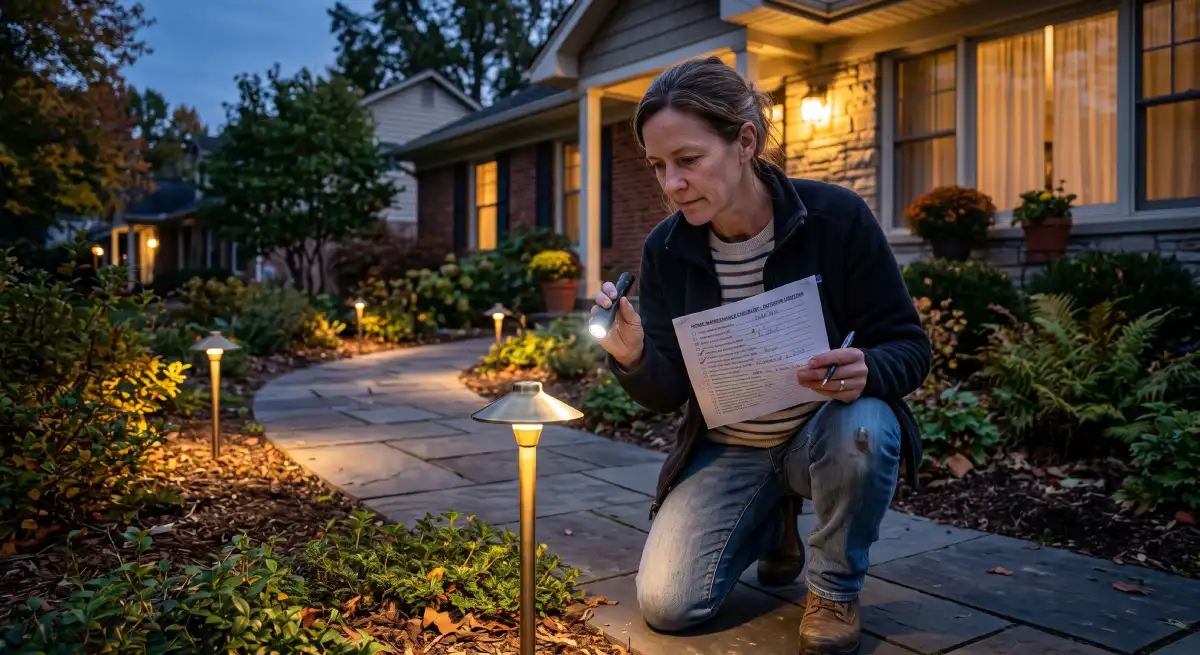
When was the last time you really looked at your outdoor lighting? Most homeowners focus on interior maintenance but overlook the exterior fixtures that illuminate their homes every evening. Neglected outdoor lighting doesn’t just dim your home’s curb appeal—it becomes a safety hazard that invites security vulnerabilities and potentially expensive repairs.
Whether you have low voltage landscape lighting system, deck lights, or security fixtures, understanding the fundamentals of outdoor lighting maintenance can extend the lifespan of your installation and keep your property safer. This comprehensive guide walks you through everything you need to know about outdoor fixture care, from basic inspection routines to troubleshooting common problems.
What you’ll learn:
- The 12 critical outdoor lighting maintenance checks
- How to prevent corrosion and weather damage
- Budget-friendly cleaning and repair solutions
- Step-by-step landscape lighting care instructions
- When to call professionals for exterior light repair
Let’s dive in.
1. Why Regular Outdoor Lighting Maintenance Matters
Your outdoor lighting system faces harsh elements year-round—rain, snow, UV rays, temperature fluctuations, and seasonal debris accumulation. Without consistent outdoor lighting upkeep, fixtures deteriorate quickly and stop functioning properly.
Regular outdoor light maintenance accomplishes several things:
Safety and Security: Broken or dimming lights create blind spots that increase accident risks and reduce your home’s security. Well-maintained pathway lighting and security light maintenance prevents trips, falls, and creates a deterrent against intruders.
Extended Equipment Life: Preventive exterior lighting maintenance adds years to your fixtures’ lifespan. A bulb that costs $50 to replace is far cheaper than replacing an entire $500+ fixture.
Energy Efficiency: Dirty lenses and corroded contacts reduce light output, forcing your system to work harder. Proper outdoor LED maintenance and regular cleaning restore optimal performance and lower energy bills.
Aesthetics: Clean, functioning lights make your landscape more inviting. Poor outdoor lighting maintenance makes even beautiful landscaping look neglected.
Think of outdoor lighting maintenance like maintaining your car—small, regular service prevents catastrophic breakdowns.
2. The 12 Must-Do Outdoor Lighting Maintenance Checks

Essential Monthly Inspections
Check #1: Visual Inspection of All Fixtures Walk around your property at dusk and note which lights work and which don’t. Look for fixtures that seem dimmer than usual—this indicates interior corrosion or dirty lenses. Document problem areas so you can address them systematically. This simple routine inspection is the foundation of landscape lighting care.
Check #2: Look for Water Intrusion Signs Water inside fixtures causes 80% of outdoor lighting failures. Inspect lens covers for cracks, corrosion around seams, and any discoloration inside the fixture. Even small gaps allow moisture infiltration. Address any exterior light damage immediately to prevent this issue.
Check #3: Check Lens and Cover Clarity Dirty lenses reduce light output by 40% or more. Use a soft cloth and mild soap to clean exterior light fixtures during your monthly routine. Hazy or yellowed covers need replacement—they’re usually $10-30 and worth every penny for landscape lighting maintenance.
Seasonal Outdoor Lighting System Care
Check #4: Clear Debris and Vegetation Leaves, spider webs, and pollen clog fixtures and reduce light output. Before each season, clear debris from around fixtures and wipe them clean as part of your exterior lighting cleaning routine. Trim vegetation that blocks light paths—this is crucial for security light maintenance around entry points.
Check #5: Inspect Wiring and Connections Weather degrades outdoor wiring over time. Look for exposed wires, loose connections, or visible damage along conduit runs. Damaged low voltage lighting maintenance becomes critical—exposed wires can short out your entire system or create hazards. Tighten any loose connectors you find.
Check #6: Test Dimming and Automation If your outdoor lighting troubleshooting reveals inconsistent performance, it may be a timer or sensor issue. Test automated features to ensure they’re activating at appropriate times. Faulty sensors are common and easily replaceable during your exterior lighting maintenance.
Seasonal Deep Maintenance
Check #7: Corrosion Assessment Spring and fall are ideal times for thorough outdoor light fixture corrosion repair assessment. Look for white, green, or black oxidation on metal components. Light surface corrosion can be cleaned with a wire brush and white vinegar. Heavy corrosion means replacement time. This is part of comprehensive deck lighting maintenance and garden light maintenance.
Check #8: Sealed Connections Inspection UV exposure degrades caulking and seals around fixtures. Compromised seals are the top cause of water intrusion. Re-caulk any areas where sealant has cracked or peeled. Use outdoor-rated silicone caulk that won’t degrade in sunlight. This simple step prevents most exterior light repair problems.
Check #9: Bulb and LED Performance Review Filament bulbs burn out predictably, but LED fixtures sometimes dim gradually before failure. Replace any bulbs showing reduced brightness or discoloration. Keep extra bulbs on hand—the standard for outdoor lighting maintenance is replacing bulbs annually or per manufacturer recommendations. Outdoor LED maintenance extends fixture life significantly.
Professional-Level Checks
Check #10: Electrical System Ground Continuity If you have low voltage lighting maintenance concerns or notice flickering lights, ground continuity issues may be the culprit. This requires a multimeter and basic electrical knowledge—or call a professional for outdoor lighting service. Poor grounding causes premature component failure and safety issues.
Check #11: Power Supply and Transformer Health For systems with low voltage outdoor lighting, the transformer is critical. Listen for humming noises, check for warmth (slight warmth is normal; too much heat indicates problems), and verify consistent voltage output. Transformers typically last 7-10 years before needing replacement.
Check #12: System-Wide Load Assessment As you add fixtures, transformer load increases. Over-loading causes dimming and equipment failure. During annual outdoor lighting inspection, verify your system isn’t exceeding transformer capacity. This prevents cascading failures and is essential for maintaining backyard lighting system reliability.
3. Step-by-Step Outdoor Lighting Maintenance Checklist
Here’s your practical outdoor lighting maintenance checklist pdf equivalent:
| Maintenance Task | Frequency | Difficulty | Time Required | DIY-Friendly |
|---|---|---|---|---|
| Visual fixture inspection | Monthly | Easy | 15 minutes | Yes |
| Lens and cover cleaning | Quarterly | Easy | 20-30 minutes | Yes |
| Debris removal around fixtures | Seasonal | Easy | 30 minutes | Yes |
| Wire and connection check | Seasonal | Medium | 30-45 minutes | Yes |
| Corrosion inspection and cleaning | Bi-annually | Medium | 45-60 minutes | Yes |
| Re-caulking and sealing | Annual | Medium | 1-2 hours | Yes |
| Bulb replacement | Annual | Easy | 15-30 minutes | Yes |
| Ground continuity testing | Annual | Hard | 30-45 minutes | No (professional) |
| Transformer inspection | Annual | Medium | 20-30 minutes | Partial |
| Complete system inspection | Annual | Hard | 1-3 hours | Partial |
| Professional maintenance visit | Annual | Professional | 1-2 hours | No |
4. How to Clean Outdoor Light Fixtures Safely
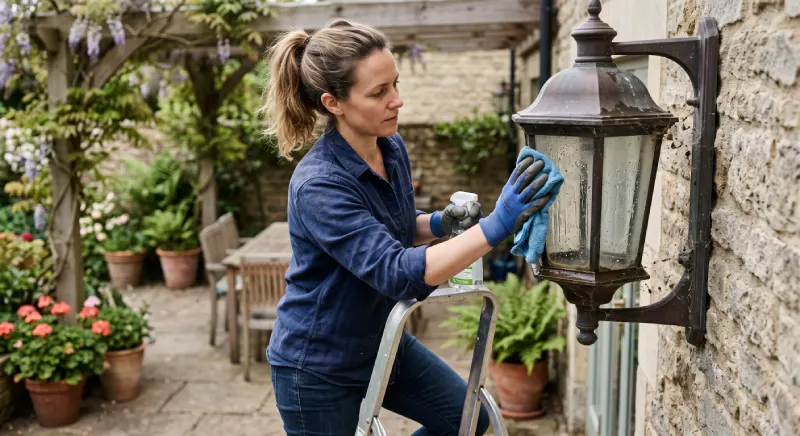
Proper exterior lighting cleaning prevents damage and extends fixture lifespan. Here’s the best way to clean outdoor light fixtures safely:
Materials Needed
- Soft-bristled brush or cloth
- Mild dish soap and water
- Soft sponge or microfiber cloth
- Non-abrasive scrub pad
- White vinegar (for light corrosion)
- Wire brush (for stubborn corrosion)
- Safety glasses and gloves
Step-by-Step Process
Step 1: Turn Off Power Always turn off power at the circuit breaker before outdoor fixture cleaning. This prevents electrical shock and protects you while handling wet components.
Step 2: Allow Time for Cooling If fixtures have been on, let them cool for 30 minutes before touching. This prevents burns and protects sensitive components.
Step 3: Remove Debris Gently brush away leaves, cobwebs, and dirt from fixture exteriors. Be careful not to force particles into seams or openings.
Step 4: Mix Cleaning Solution Combine mild dish soap with warm water in a bucket. For light corrosion, substitute white vinegar for some of the water.
Step 5: Wipe Lenses and Covers Use a soft cloth or sponge dampened (not dripping) with your solution to gently wipe all visible lens surfaces. Never use abrasive materials—they scratch and cloud protective coatings.
Step 6: Clean Fixture Bodies Wipe down the fixture body carefully, paying attention to corners and crevices where moisture accumulates.
Step 7: Address Corrosion For light corrosion, use a wire brush with gentle pressure. For heavy corrosion or stubborn buildup, this is when to consider professional outdoor lighting service.
Step 8: Dry Everything Completely Use a clean, dry cloth to remove all moisture. Residual water defeats the purpose of maintenance and invites new problems.
Step 9: Inspect as You Clean Use this opportunity to check for damage, loose components, or moisture inside fixtures. Note any issues for later repair.
Step 10: Restore Power and Test Once everything is dry, turn power back on and verify fixtures are functioning properly.
This clean exterior light fixtures safely approach should be part of your regular landscape lighting maintenance routine.
5. Preventing and Repairing Outdoor Lighting Damage
Common Damage Types and Prevention
| Damage Type | Causes | Prevention Strategies | Repair Difficulty |
|---|---|---|---|
| Water intrusion | Cracked seals, loose fixtures | Annual re-caulking, tight installation | Medium |
| Corrosion | Moisture + metal oxidation | Protective coatings, quick water removal | Medium-Hard |
| Physical damage | Weather, animal contact | Guards/screens, sturdy installation | Medium |
| Electrical shorts | Water in components | Proper sealing, drainage holes | Hard |
| Dimming lights | Dirty lenses, internal corrosion | Regular cleaning, preventive maintenance | Easy-Medium |
| Timer/sensor failure | UV degradation, moisture | Quality components, regular testing | Easy |
| Bulb/LED failure | Heat stress, manufacturing defect | Proper ventilation, temperature monitoring | Easy |
| Ground faults | Poor installation, corrosion | Professional installation, annual inspection | Hard |
When to Call a Professional
Some exterior light repair tasks require professional expertise:
Electrical Issues: If you notice voltage inconsistencies, frequent tripping breakers, or flickering that persists after bulb replacement, call an electrician. These indicate underlying problems beyond basic outdoor lighting troubleshooting.
Transformer Replacement: Transformers step down voltage for low voltage landscape lighting maintenance systems. Replacement requires electrical expertise and should be handled professionally.
Ground Faults: If lights flicker or perform inconsistently despite your maintenance efforts, ground continuity issues may exist. Professional testing identifies the problem quickly.
Water-Damaged Components: Severely water-damaged fixtures often can’t be salvaged. Professionals can determine what’s replaceable versus what needs complete replacement.
Major Corrosion: Severe corrosion affecting structural integrity or electrical components usually means professional removal and replacement.
6. Outdoor Lighting Maintenance Cost: What to Budget
Understanding outdoor lighting maintenance costs helps you plan expenses effectively.
DIY Maintenance Costs
- Cleaning supplies: $15-30 (one-time)
- Replacement bulbs: $10-50 per bulb annually
- Caulk and sealants: $5-15 per tube
- Replacement lenses/covers: $10-30 per fixture
- Annual DIY cost: $100-300 for typical residential outdoor lighting maintenance
Professional Service Costs
- Annual inspection and service: $150-400
- Fixture replacement: $200-1500+ per fixture
- Transformer replacement: $300-800
- Electrical repairs: $200-500+ depending on complexity
- Water damage repairs: $500-2000+
- Annual professional outdoor lighting maintenance cost: $300-1000
Most homeowners benefit from annual professional inspections combined with quarterly DIY maintenance.
7. Outdoor Lighting Troubleshooting Guide
Problem: Lights Won’t Turn On
Likely Causes:
- Breaker tripped
- Dead bulb
- Timer malfunction
- Transformer failure
Solutions:
- Check circuit breaker first
- Replace bulb with known-good replacement
- Test timer settings and replace if necessary
- Have transformer tested professionally
Problem: Lights Dim or Flicker
Likely Causes:
- Dirty lenses reducing output
- Low voltage system overload
- Ground continuity issues
- Corroded connections
Solutions:
- Clean all fixture lenses thoroughly
- Count fixture load; remove or upgrade transformer if exceeded
- Test ground connections for corrosion; clean or replace
- Check all wire connections for tightness
Problem: Water Inside Fixtures
Likely Causes:
- Deteriorated seals
- Cracked lenses
- Loose fixture mounting
Solutions:
- Replace deteriorated caulk immediately
- Replace cracked lenses (usually $15-30)
- Tighten fixture mounting bolts
- Consider complete fixture replacement if damage is severe
Problem: Uneven Brightness Across System
Likely Causes:
- Multiple bulb burnouts
- Voltage drop over long runs
- Partial ground faults
Solutions:
- Systematically replace all bulbs as part of outdoor LED maintenance
- Have professional assess voltage throughout system
- Professional electrical testing required for ground faults
Problem: Outdoor Light Fixture Corrosion Visible
Likely Causes:
- Moisture exposure
- Metal-to-different-metal contact (galvanic corrosion)
- Age and UV exposure
Solutions:
- Light corrosion: Clean with wire brush and vinegar
- Heavy corrosion: Plan replacement
- Prevent future corrosion with protective spray coatings
- Ensure proper drainage around fixtures
8. Seasonal Outdoor Lighting System Care Schedule
Following a seasonal routine ensures you catch problems before they become expensive:
Spring Outdoor Lighting Maintenance
- Deep clean all fixtures (winter debris removal)
- Inspect and repair winter weather damage
- Test all automation systems
- Verify timer settings for changing daylight hours
- Check for winter ice damage to exposed wiring
Summer Outdoor Lighting Care
- Clean lenses monthly (pollen accumulation)
- Verify proper ventilation around fixtures (heat stress)
- Inspect for heat-related insulation damage
- Test ground faults during dry weather
- Check for animal-related damage
Fall Landscape Lighting Maintenance
- Remove leaf debris thoroughly
- Inspect seals before winter moisture season
- Test all fixtures before seasonal darkness
- Re-caulk any deteriorated sealant
- Verify outdoor LED maintenance is current
Winter Security Light Maintenance
- Clear snow and ice from fixtures carefully
- Inspect for ice-related damage
- Verify safety lighting around walkways functions properly
- Check for salt-damage corrosion
- Test backup systems if applicable
9. Outdoor Lighting Maintenance for Different System Types
Low Voltage Landscape Lighting Maintenance
Low voltage systems (typically 12V) are popular for residential installations:
Maintenance Specifics:
- Transformers are critical—test annually
- Voltage drop increases with wire length; long runs need monitoring
- Connectors corrode easily; use dielectric grease
- LED bulbs provide reliability and efficiency
- Professional balance testing recommended
Solar Garden Light Maintenance
Solar fixtures have different requirements:
Maintenance Specifics:
- Keep solar panels free from debris and dirt
- Replace battery cells every 2-3 years
- Check for water intrusion in sealed compartments
- Verify panel orientation hasn’t shifted
- Test charging during cloudy periods
Deck Lighting Maintenance
Deck lights take significant weather beating:
Maintenance Specifics:
- Inspect ledger and mounting connections frequently
- Watch for wood damage beneath fixtures
- Treat seams around deck-mounted fixtures especially
- Replace moisture-compromised components promptly
- Consider stainless steel fixtures for deck areas
Security Light Maintenance
Security lights demand reliable operation:
Maintenance Specifics:
- Test motion sensors monthly
- Verify light coverage hasn’t changed (overgrown vegetation)
- Check battery backup systems
- Ensure wiring damage won’t compromise security
- Professional grade equipment justified by security importance
10. FAQ: Common Questions About Outdoor Lighting Maintenance
Q: How often should I perform outdoor lighting maintenance? A: Monthly visual inspections are ideal for early problem detection. Quarterly cleaning, seasonal deep maintenance, and annual professional inspection provide comprehensive outdoor lighting system care. Most homeowners find this schedule prevents major issues.
Q: Can I do my own outdoor LED maintenance or should I hire professionals? A: Basic LED maintenance—cleaning, bulb replacement, and visual inspection—is DIY-friendly and recommended. However, electrical testing, ground continuity checks, and transformer work should be handled by licensed professionals. A hybrid approach combining quarterly DIY care with annual professional service is ideal.
Q: What’s the best way to prevent outdoor lighting damage?
A: Prevention beats repair every time. Regular cleaning removes corrosive debris. Annual re-caulking of seams prevents water intrusion (the cause of 80% of failures). Prompt attention to small problems prevents cascade failures. Proper installation with drainage considerations prevents many issues before they start.
Q: How long do outdoor fixtures typically last with proper maintenance?
A: Well-maintained fixtures last 15-25 years or more. Fixtures receiving basic outdoor lighting upkeep last 8-12 years. Neglected fixtures may fail within 3-5 years. Maintenance investment directly extends asset lifespan and protects your home’s appearance and safety.
Q: Should I upgrade to LED lights as part of outdoor lighting maintenance?
A: Yes. LED fixtures cost more upfront but last 2-3 times longer than incandescent bulbs, use 75% less energy, and produce better light quality. For outdoor LED maintenance specifically, they’re more durable and require less frequent replacement. The return on investment typically pays for itself within 2-3 years through energy savings.
Q: What’s the difference between outdoor lighting maintenance I can DIY and what requires professionals?
A: DIY tasks include cleaning, debris removal, bulb replacement, simple caulking, and visual inspection. Professional tasks include electrical testing, ground continuity assessment, transformer work, major corrosion repair, and water damage assessment. When in doubt, consult a professional—it’s safer and often cheaper than fixing mistakes.
11. Exterior Lighting Cleaning: Best Practices
Beyond basic cleaning, here are pro tips for maintaining beautiful, functional fixtures:
Use Protective Coatings: After cleaning and corrosion removal, apply marine-grade protective spray to exposed metal. This creates a barrier against future oxidation and extends outdoor lighting maintenance intervals.
Replace Hazy Lenses Immediately: Yellowed or hazy lens covers reduce light output significantly. Replacement lenses are inexpensive ($10-30) and worthwhile investments for landscape lighting maintenance.
Apply Dielectric Grease: On electrical connections and seams, dielectric grease prevents moisture infiltration and corrosion. It’s a simple step that prevents major problems.
Create a System: Rather than random maintenance, develop a routine. First Saturday of each month for visual checks, before each season for deep cleaning, annual professional appointment. Routine prevents oversight.
Document Your System: Photograph fixture locations, take notes on installation dates and specifications, and keep receipts. This documentation proves invaluable when repairs are needed and helps guide future outdoor lighting maintenance.
12. Choosing Between DIY Maintenance and Professional Service
Both approaches have value:
Choose DIY When:
- You’re mechanically inclined and comfortable on ladders
- Tasks are cleaning-based or involve simple replacement
- Your budget is limited
- You have time for quarterly maintenance
- You enjoy hands-on home projects
Choose Professional Service When:
- Electrical issues are involved
- You lack confidence with electrical components
- Your time is limited
- System complexity exceeds your comfort level
- Warranty terms require professional installation
- Troubleshooting hasn’t resolved issues
The Hybrid Approach (Recommended):
- Perform quarterly DIY cleaning and visual inspection
- Schedule annual professional inspection and maintenance
- Call professionals for electrical, transformer, or complex repairs
- DIY simple replacements; professional handle complicated ones
This balanced approach catches problems early while ensuring electrical safety and system reliability.
Conclusion: Take Action on Your Outdoor Lighting Today
Your outdoor lighting system is an investment worth protecting. Regular outdoor lighting maintenance—combining monthly visual checks, quarterly cleaning, seasonal deep maintenance, and annual professional service—keeps your home safe, beautiful, and functional while protecting your investment.
Start this week with a simple visual inspection. Walk around your property at dusk and note which lights work, which seem dim, and any visible damage. Then schedule your first professional outdoor lighting inspection if you haven’t had one in over a year.
The small amount of time you invest in outdoor lighting upkeep now prevents expensive failures later. Better lighting means better security, safer pathways, and improved curb appeal.
Ready to maintain your outdoor lighting properly? Contact a local outdoor lighting service professional for a comprehensive inspection, or start with the DIY checklist above. Either way, your home’s exterior lighting will thank you—and so will your safety and wallet.
Related Topics to Explore:
- Solar landscape lighting options and maintenance
- Smart outdoor lighting automation systems
- Landscape design with lighting integration
- Energy-efficient exterior lighting solutions
- Professional landscape lighting installation guide