
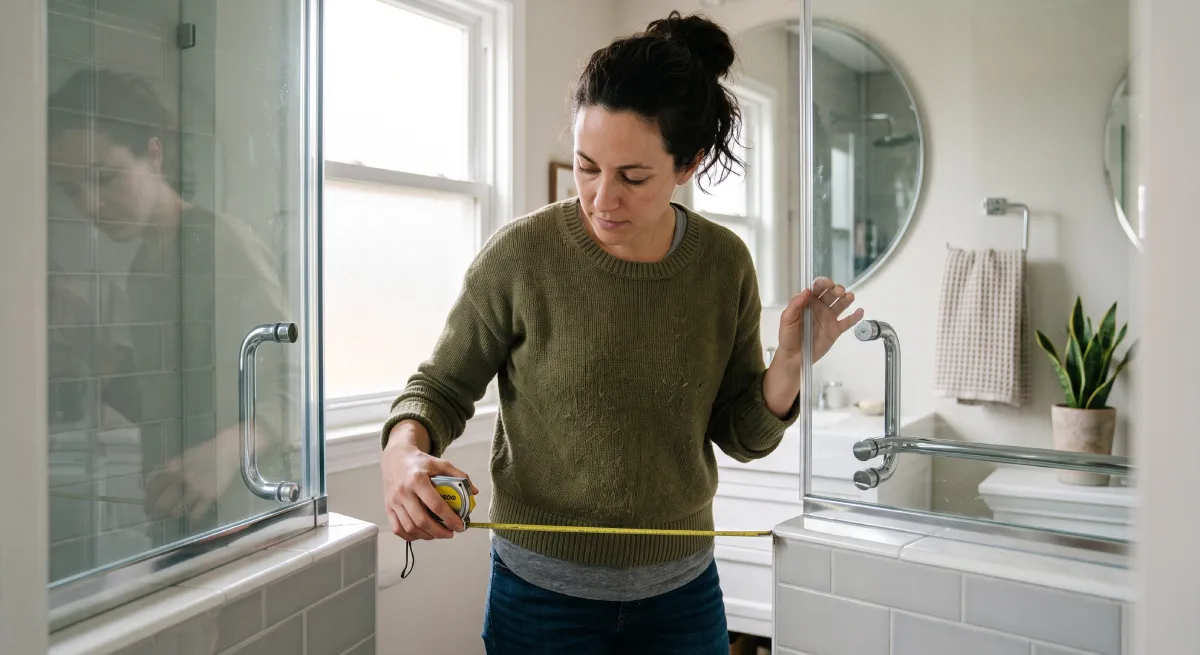
Shopping for a new shower door can feel more complicated than it should be. Between frameless versus framed options, glass thickness, hardware finishes, and the dreaded bottom guide that always seems to wear out first, it’s easy to get overwhelmed. That’s exactly why we put together this Shower Door Guide — to walk you through everything you need to know before you buy, install, or repair a shower door, without the confusing jargon.
Whether you’re renovating a small powder room, upgrading a walk-in shower, or simply trying to figure out why your sliding shower door bottom guide keeps popping off its track, this Shower Door Guide will help you make a confident, informed decision. We’ll cover shower door types, sizes, glass options, installation costs, maintenance tips, and one of the most searched repair topics out there: shower door bottom guide replacement.
By the end of this guide, you’ll know exactly how to choose a shower door, what it should cost, and how to keep it running smoothly for years to come.
Why a Good Shower Door Guide Matters Before You Buy
A reliable Shower Door Guide isn’t just about aesthetics — it’s about function, safety, and long-term value. The wrong shower door can lead to leaks, drafts, difficult cleaning, or hardware that fails within a year or two. The right one, on the other hand, can transform a bathroom’s entire look while holding up for a decade or more.
Before diving into specific shower door types, it helps to understand what actually separates a great shower enclosure from a mediocre one:
- Glass quality and thickness — thicker tempered glass (3/8″ to 1/2″) tends to look more premium and resist damage better than thinner budget glass.
- Hardware durability — rollers, tracks, hinges, and the bottom guide all wear differently depending on material quality.
- Frame style — frameless, semi-frameless, and fully framed doors each bring different maintenance and cost considerations.
- Configuration — sliding (bypass), pivot, hinged, and neo-angle doors fit different shower and bathtub layouts.
Keeping these fundamentals in mind will make every other decision in this Shower Door Guide much easier.
Shower Door Types Explained
One of the first steps in any Shower Door Guide is understanding your options. Shower doors generally fall into a few main categories, each suited to different bathroom layouts and budgets.
Frameless Shower Doors
Frameless shower doors use thicker glass (typically 3/8″ to 1/2″) with minimal metal hardware, giving a clean, modern look. They’re a popular choice for walk-in showers and larger bathrooms because they create an open, spacious feel. The tradeoff is a higher price point due to the thicker glass and precision installation required.
Semi-Frameless Shower Doors
A semi-frameless shower door blends some of the sleekness of frameless designs with a bit more structural framing around the edges. This option is a great middle ground for homeowners who want a modern appearance without paying full frameless prices.
Framed Shower Doors
Framed shower doors use thinner glass surrounded by a full metal frame for extra support. They’re generally the most budget-friendly option and are still widely available at retailers like Home Depot, making them a practical choice for standard bathroom remodels.
Sliding (Bypass) Shower Doors
Sliding shower doors are ideal for tub/shower combos and spaces where a swinging door isn’t practical. These doors glide along a top track and a bottom guide (or bottom track), which is why sliding shower door bottom guide replacement is such a common topic — that small plastic or metal piece takes a lot of daily wear.
Pivot and Hinged Shower Doors
Pivot and hinged doors swing open like a traditional door and typically require more clearance space. They’re a good fit for larger walk-in showers where swing clearance isn’t an issue.
| Shower Door Type | Best For | Average Cost Range | Maintenance Level |
|---|---|---|---|
| Frameless | Modern walk-in showers | $800–$2,500+ | Low-Medium |
| Semi-Frameless | Mid-range remodels | $500–$1,200 | Medium |
| Framed | Budget-friendly installs | $200–$600 | Medium |
| Sliding (Bypass) | Tub/shower combos | $250–$900 | Medium-High (bottom guide wear) |
| Pivot/Hinged | Larger walk-in showers | $400–$1,500 | Low |
Shower Door Sizes and Measurements: Getting It Right
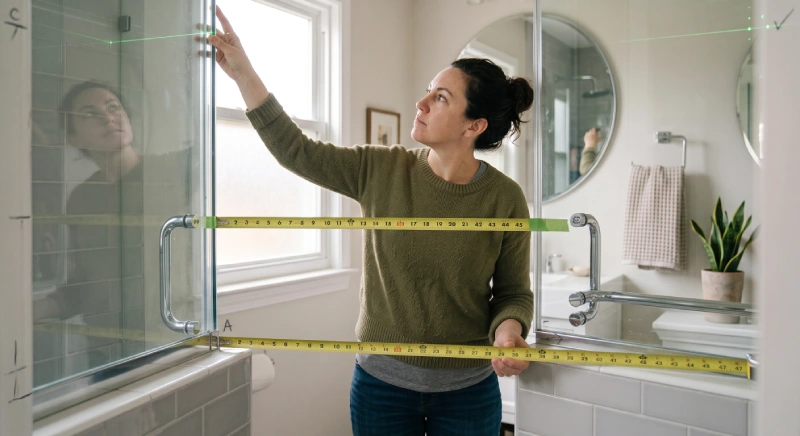
No Shower Door Guide is complete without covering measurements, since an incorrectly sized door is one of the most common (and expensive) mistakes homeowners make.
Standard shower door sizes typically range from 22″ to 36″ wide per panel, with heights commonly between 70″ and 78″. However, every bathroom is different, and small variations in your existing shower enclosure can affect which door fits.
How to measure for a shower door:
- Measure the width of the opening at the top, middle, and bottom — walls and tubs are rarely perfectly straight.
- Measure the height from the shower base or tub lip to the top of the opening.
- Note the thickness of any existing tile or curb, since this affects track and guide placement.
- Always use the smallest width measurement to ensure a proper fit.
- If replacing an existing sliding shower door bottom guide, measure the width of the current guide (1″ and 1-1/2″ sliding shower door bottom guide sizes are among the most common) to match your replacement part correctly.
If your measurements fall outside standard shower door sizes, a custom frameless option may be necessary, which will increase both cost and lead time.
Shower Door Bottom Guide Replacement: A Common Repair Explained
If you searched for a Shower Door Guide because your sliding door feels wobbly or keeps jumping off its track, you’re not alone. The bottom guide is one of the most frequently replaced parts on any sliding shower door, and fortunately, it’s also one of the easiest and cheapest fixes.
What Does a Shower Door Bottom Guide Do?
The bottom guide (sometimes called a guide and retainer) keeps the bottom of a sliding shower door aligned within its track as it opens and closes. Over time, these small plastic or nylon pieces wear down, crack, or become brittle from constant moisture exposure, causing the door to wobble, stick, or derail.
Common Sliding Shower Door Bottom Guide Sizes
Replacement guides are typically sold by width, with 1″ and 1-1/2″ sliding shower door bottom guide sizes being the most widely available. Many replacement kits also include a sliding shower door bottom guide with screw for a more secure, tool-fastened installation instead of a simple snap-in design.
How to Replace a Shower Door Bottom Guide
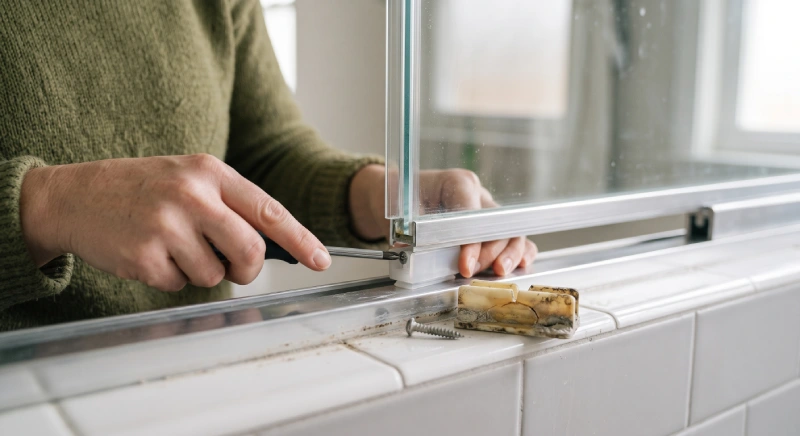
- Slide the shower door fully to one side to access the bottom guide.
- Remove the old guide by unscrewing it (if screw-mounted) or gently prying it free.
- Match the new guide’s width and mounting style to your old part — this is where accurate shower door guide sizes matter most.
- Insert or screw in the new sliding shower door bottom guide and retainer.
- Slide the door back and forth several times to confirm smooth, even movement.
Most homeowners can find shower door bottom guide replacement parts at Home Depot, Lowe’s, or specialty hardware retailers, and prices typically range from $5 to $20 depending on brand and design.
| Bottom Guide Issue | Likely Cause | Recommended Fix |
|---|---|---|
| Door wobbles side to side | Worn or cracked guide | Replace with matching-size guide |
| Door jumps off track | Guide too small or missing | Install correct shower door guide size |
| Door sticks when sliding | Mineral buildup or debris | Clean track, replace guide if damaged |
| Guide keeps popping out | Snap-in style failing | Upgrade to guide with screw mount |
Shower Door Glass: Thickness, Safety, and Style
Glass is arguably the most important material decision in this entire Shower Door Guide, since it affects safety, sound, durability, and overall appearance.
All shower door glass sold today should be tempered safety glass, which is designed to break into small, rounded pieces rather than sharp shards if it shatters. Beyond safety, thickness plays a major role in both look and feel:
- 1/4″ glass — common in framed shower doors, more affordable but less substantial feeling.
- 3/8″ glass — a popular middle-ground thickness for semi-frameless designs.
- 1/2″ glass — the standard for premium frameless shower doors, offering a heavier, high-end appearance.
Glass finishes also vary, including clear, frosted, rain, and textured patterns, which can add privacy without sacrificing natural light.
Shower Door Hardware, Finishes, and Installation
Hardware choices tie the whole look of a shower enclosure together while directly impacting how well the door functions over time.
Popular Shower Door Finishes
Chrome, brushed nickel, matte black, and oil-rubbed bronze are among the most requested finishes, and most manufacturers offer coordinating handles, hinges, and tracks so the entire enclosure feels cohesive.
Shower Door Installation Considerations
Installation cost varies significantly based on door type. Framed and sliding doors are generally easier and cheaper to install, often within reach of an experienced DIYer, while frameless doors typically require professional installation due to the precision needed for heavy glass panels and wall-mounted hardware.
Typical installation costs range from $150 to $500 for standard doors, and $300 to $800+ for frameless installations, not including the cost of the door itself.
Swing Clearance and Configuration
If you’re considering a pivot or hinged door, always check swing clearance requirements against your bathroom layout. A door that swings into a walkway or collides with a vanity is a common — and avoidable — design mistake.
How Much Does a Shower Door Cost? Full Breakdown
Cost is often the deciding factor for homeowners working through a Shower Door Guide, so here’s a realistic breakdown covering the full range of options.
| Cost Factor | Budget Option | Mid-Range Option | Premium Option |
|---|---|---|---|
| Door Type | Framed | Semi-Frameless | Frameless |
| Glass Thickness | 1/4″ | 3/8″ | 1/2″ |
| Hardware Finish | Standard chrome | Brushed nickel | Matte black/custom |
| Installation | DIY-friendly | Basic professional install | Full custom professional install |
| Total Estimated Cost | $200–$500 | $600–$1,200 | $1,500–$3,000+ |
Shower Door Maintenance Tips to Extend Its Life
A well-chosen shower door still needs regular care to stay looking and functioning like new.
- Squeegee after every use to prevent hard water spots and soap scum buildup.
- Clean tracks and bottom guides weekly to avoid grime that leads to sticking or misalignment.
- Use a vinegar-based or glass-safe cleaner rather than abrasive chemicals that can dull the glass over time.
- Inspect the bottom guide and rollers every few months, replacing worn parts before they cause bigger issues.
- Dry metal hardware and frames to prevent corrosion, especially in humid climates.
Following these habits will significantly extend the life of both the glass and the hardware, reducing how often you’ll need a shower door bottom guide replacement or other repairs.
How to Choose a Shower Door for Your Bathroom
Bringing everything in this Shower Door Guide together, here’s a simple framework for making your final decision:
- Measure your space accurately, including width, height, and curb thickness.
- Decide on a door type based on your layout — sliding for tub combos, pivot or frameless for open walk-in showers.
- Choose your glass thickness and finish based on budget and desired style.
- Match hardware finishes to existing bathroom fixtures for a cohesive look.
- Factor in installation cost and complexity, especially if choosing a frameless design.
- Plan for maintenance, including easy access to bottom guides and tracks for cleaning or replacement.
Frequently Asked Questions About Shower Doors
What is the standard size of a shower door?
Most shower doors range from 22″ to 36″ wide and 70″ to 78″ tall, though exact shower door sizes vary by manufacturer and enclosure type.
How do I know what size bottom guide I need?
Measure the width of your existing sliding shower door bottom guide — common sizes include 1″ and 1-1/2″ sliding shower door bottom guide options — and match the mounting style (snap-in or with screw) when shopping for replacement parts.
Is a frameless or framed shower door better?
Frameless doors offer a modern look with thicker, more durable glass but cost more, while framed doors are more budget-friendly and easier to install. The best choice depends on your style preference and budget.
Where can I buy a shower door bottom guide replacement?
Shower door bottom guide replacement parts are widely available at Home Depot, Lowe’s, and online hardware retailers, usually for under $20.
How much does professional shower door installation cost?
Installation typically costs $150–$500 for standard doors and $300–$800 or more for frameless installations, depending on complexity and glass size.
Final Thoughts: Choosing the Right Shower Door with Confidence
Choosing a new shower door doesn’t have to be stressful once you understand the key factors: door type, glass thickness, accurate measurements, hardware finish, and ongoing maintenance like bottom guide replacement. This Shower Door Guide was designed to walk you through each of these decisions so you can shop smarter, avoid common mistakes, and enjoy a shower enclosure that looks great and functions smoothly for years.
Ready to upgrade your bathroom? Browse trusted shower door options at your local home improvement retailer, or consult a professional installer to get accurate measurements and a quote tailored to your space. A little research now — starting with this Shower Door Guide — will save you time, money, and frustration down the road.