
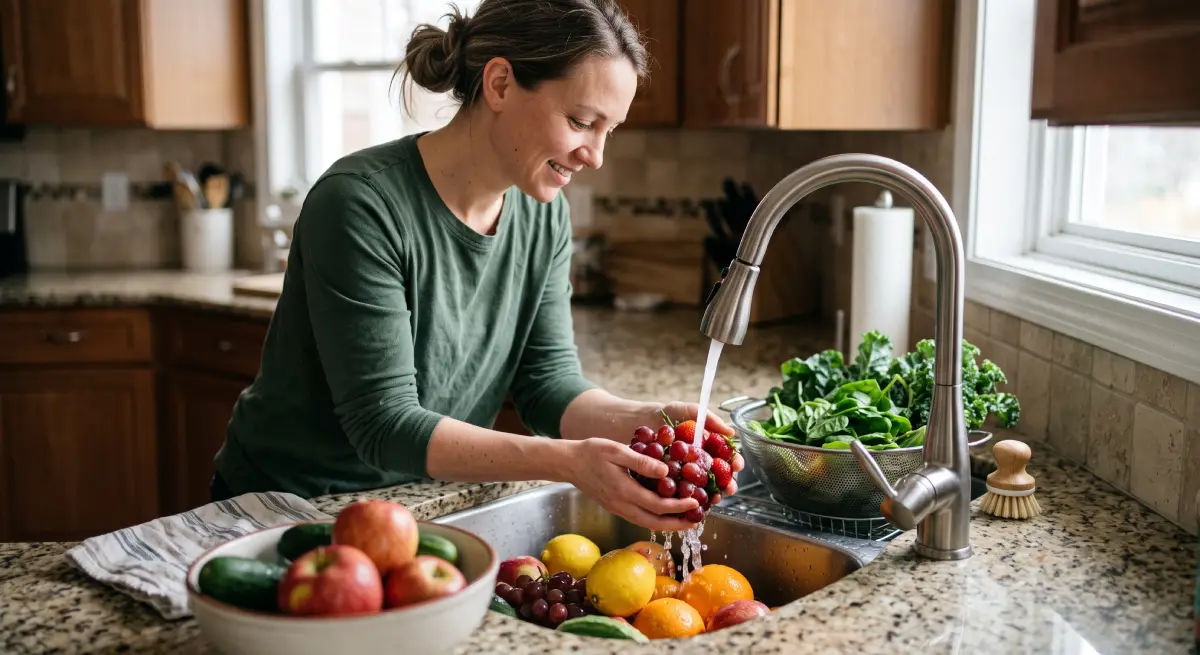
Grocery store apples, strawberries, and grapes often carry more than just their natural skin — think dirt, wax coatings, handling residue, and traces of spray. That’s why so many home cooks are turning to a DIY fruit wash instead of relying on plain tap water alone. A good homemade fruit wash is inexpensive, takes just a few minutes to prepare, and uses ingredients most people already have in the kitchen.
In this guide, you’ll learn nine practical, easy-to-follow tips for making your own fruit and vegetable wash at home — including a DIY fruit wash with vinegar, a DIY fruit wash with baking soda, and a version for anyone who wants a DIY fruit wash without vinegar. We’ll also cover soak times, drying tips, and the biggest mistakes people make when cleaning produce, so you can build a simple routine that works for your whole kitchen.
What Is a DIY Fruit Wash and Why Does It Matter?
A DIY fruit wash is a simple, homemade solution — usually made with water plus vinegar, baking soda, or a bit of salt — used to rinse fresh fruits and vegetables before eating or cooking them. The goal of any homemade produce wash is to loosen surface dirt, reduce residue, and help rinse away anything that plain water might leave behind.
Washing fruit matters for a few practical reasons:
- Produce travels through many hands before it reaches your kitchen, from harvesting to transport to store shelves.
- Some fruits and vegetables are treated with wax coatings to extend shelf life, which water alone doesn’t fully remove.
- A quick soak in a natural produce cleaner can make fruit feel and taste fresher, especially with berries, grapes, and leafy greens.
It’s worth noting that a homemade fruit wash isn’t a certified food-safety treatment, and no home method has been proven to eliminate all residues or pathogens. Still, a proper fruit washing method is a smart, low-cost habit that many nutrition-conscious households build into their routine.
Tip 1: DIY Fruit Wash With Vinegar (The Classic Method)
The most popular version of a homemade fruit wash uses distilled white vinegar, thanks to its mild acidity and easy availability. To make a basic DIY fruit wash with vinegar, combine:
- 1 cup water
- 1/4 cup white vinegar (or apple cider vinegar)
Place your fruit or vegetables in a bowl, pour the vinegar wash over them, and let them soak for 5–10 minutes. Swish gently, then rinse thoroughly under cool running water. This vinegar produce wash works well for firmer fruits like apples, pears, and citrus.
If the vinegar smell feels too strong, dilute the mixture further with extra water — the goal of this fruit cleaning solution is a gentle rinse, not a strong soak.
Tip 2: DIY Fruit Wash With Baking Soda
For a milder alternative, a DIY fruit wash with baking soda is a favorite among people who dislike the smell of vinegar or want an option that’s gentler on delicate skins. Baking soda is mildly abrasive and slightly alkaline, which helps loosen dirt and surface residue.
Basic homemade veggie wash with baking soda recipe:
- 1 teaspoon baking soda
- 2 cups cool water
Soak produce for about 12–15 minutes, gently rub the surface with your hands or a soft brush, then rinse well. This method doubles as a homemade veggie wash for sturdier vegetables like cucumbers, carrots, and bell peppers.
Homemade Veggie Wash With Baking Soda for Sensitive Produce
For produce with thin, delicate skin — like tomatoes or peaches — use a lighter ratio (half a teaspoon of baking soda per 2 cups of water) and reduce the soak time to avoid softening the flesh.
Tip 3: DIY Fruit Wash Without Vinegar
If you’re out of vinegar, sensitive to its smell, or simply prefer another option, a DIY fruit wash without vinegar is easy to put together. A few alternatives include:
- Baking soda wash (see Tip 2)
- Salt water soak: 1 tablespoon salt dissolved in 2 cups water, soaked for 10 minutes
- Lemon juice rinse: a few tablespoons of fresh lemon juice mixed into a bowl of water
Yes, you can wash fruit with lemon juice — its natural acidity works similarly to vinegar, and it leaves a lighter scent behind. Any of these methods make a solid homemade fruit cleaner when vinegar isn’t an option.
Tip 4: Best Homemade Wash for Berries and Grapes
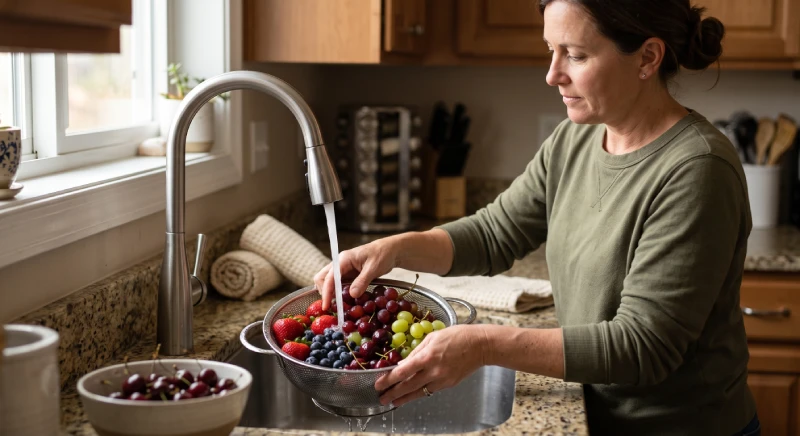
Berries and grapes need a gentler touch because their skins are thin and their surfaces are packed tightly together, trapping dirt and moisture. The best homemade wash for berries and grapes typically uses a light vinegar-water ratio:
- 3 cups water
- 1 tablespoon vinegar
Soak berries for no more than 5 minutes, swirl gently, then drain in a colander. Avoid scrubbing — berries bruise easily. This approach is one of the safest ways to clean strawberries naturally without damaging the fruit, and it works just as well for grapes and cherries.
Tip 5: How Long Should Fruit Soak?
One of the most common questions about any homemade produce wash is how long fruit should actually soak. Soaking too briefly may not loosen residue, while soaking too long can affect texture and flavor.
| Produce Type | Recommended Soak Time | Best Wash Method |
|---|---|---|
| Berries & grapes | 3–5 minutes | Diluted vinegar wash |
| Leafy greens | 5–10 minutes | Baking soda or salt water |
| Apples & pears | 10 minutes | Vinegar produce wash |
| Citrus fruit | 5–10 minutes | Baking soda or vinegar |
| Root vegetables | 10–15 minutes | Baking soda wash with light scrubbing |
| Tomatoes & peaches | 3–5 minutes | Light baking soda solution |
As a general rule, most fruit should soak for 5 to 15 minutes, depending on skin thickness and firmness.
Tip 6: Rinsing, Drying, and Storing Washed Produce
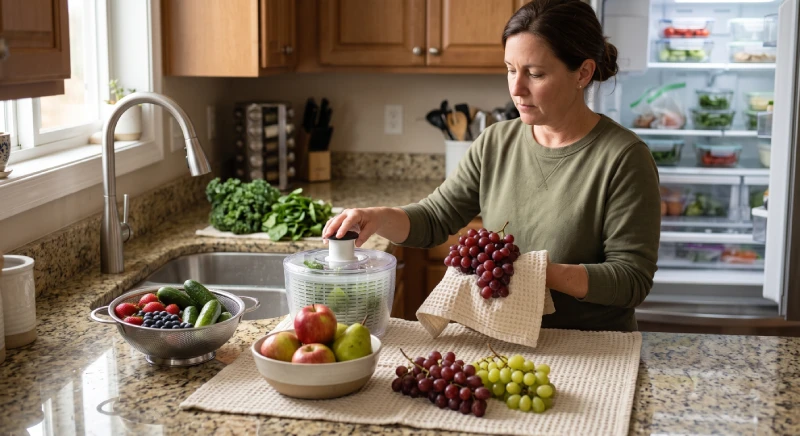
After soaking, rinsing is just as important as the wash itself. Always rinse fruit under cool running water for at least 20–30 seconds to remove any leftover vinegar, baking soda, or soap-like residue.
For drying:
- Use a clean kitchen towel or paper towels for firmer fruit.
- Use a salad spinner for leafy greens and berries to avoid bruising.
- Let fruit air-dry fully before refrigerating, since trapped moisture speeds up spoilage.
Yes, washed fruit should generally be refrigerated once dry, especially berries, grapes, and cut produce — but whole, unwashed fruit often keeps longer if you wash it only right before eating.
Tip 7: DIY Fruit Wash for Apples and Oranges (Thicker-Skinned Produce)
Apples and citrus fruits often carry a wax coating applied after harvest, which plain water struggles to remove. A DIY fruit wash for apples and oranges benefits from a slightly stronger solution:
- 1 cup warm water
- 2 tablespoons baking soda or 1/4 cup vinegar
Soak for 10–12 minutes, then scrub gently with a soft brush, focusing on stems and any dimpled areas where residue tends to collect. Rinse thoroughly afterward.
Tip 8: What NOT to Use When Washing Fruit
Not every kitchen product belongs in a homemade fruit wash. Some ingredients can leave behind unsafe residue or damage produce.
| Avoid Using | Why It’s a Problem |
|---|---|
| Dish soap or detergent | Porous produce can absorb soap residue, which isn’t meant to be ingested |
| Bleach | Even diluted, bleach isn’t approved for direct food contact at home |
| Hydrogen peroxide (undiluted) | Can alter taste and isn’t necessary for typical home use |
| Excessive vinegar (undiluted) | Can affect texture and leave a strong, lingering taste |
A simple rule: if it’s not food-safe or specifically formulated for produce, skip it. Water, vinegar, baking soda, salt, and citrus juice remain the safest, most tested homemade options.
Tip 9: Building a Simple Fruit Washing Routine
Consistency matters more than complexity. Here’s a quick, repeatable routine using any of the methods above:
| Step | Action |
|---|---|
| 1 | Choose your solution (vinegar, baking soda, or salt water) |
| 2 | Soak produce for the recommended time |
| 3 | Gently rub or swish to loosen residue |
| 4 | Rinse thoroughly under cool running water |
| 5 | Dry completely before storing |
Keeping a small labeled spray bottle of diluted vinegar produce wash near the sink makes this routine even faster for daily use — just spray, rub, and rinse.
Frequently Asked Questions About DIY Fruit Wash
What is a DIY fruit wash?
A DIY fruit wash is a homemade solution — typically made with water combined with vinegar, baking soda, or lemon juice — used to rinse dirt and surface residue from fresh produce before eating.
How do you make a DIY fruit wash?
Mix 1 cup water with 1/4 cup white vinegar, or 1 teaspoon baking soda with 2 cups water. Soak produce for 5–15 minutes, then rinse well under running water.
Is homemade fruit wash safe?
Yes, when made with food-safe ingredients like vinegar, baking soda, or salt in the right proportions. Avoid soap, bleach, or undiluted harsh chemicals, which aren’t meant for food contact.
Does fruit wash remove pesticides?
A homemade produce wash can help reduce surface residue, but no home method is proven to remove all pesticide traces completely. Thorough rinsing and gentle scrubbing offer the most noticeable improvement.
Is water enough to wash fresh fruit?
Plain water removes some loose dirt, but it’s less effective against wax coatings and stickier residues. A vinegar or baking soda wash typically does a more thorough job on firmer produce.
Final Thoughts: Make DIY Fruit Wash Part of Your Routine
Building a habit around a DIY fruit wash doesn’t require special equipment or expensive products — just a few pantry staples and a little extra time before meals. Whether you prefer a vinegar produce wash, a baking soda soak, or a vinegar-free alternative, the goal is the same: cleaner, fresher produce you can feel good about serving.
Try one of the nine methods above this week, and see which homemade fruit wash fits best into your kitchen routine. Small habits like this one add up to a healthier, more mindful way of eating.
Have a favorite homemade produce wash recipe of your own? Share it in the comments below, or explore our other kitchen guides for more simple, natural ways to keep your food fresh.