
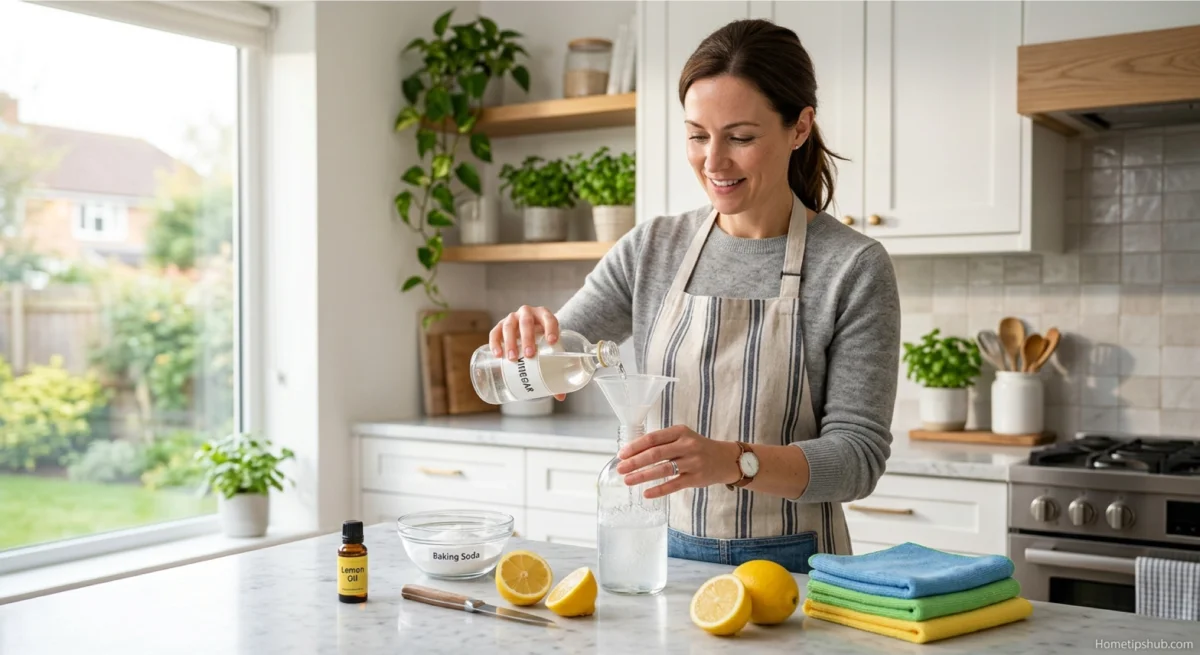
Tired of spending a fortune on store-bought cleaners full of harsh chemicals? You’re not alone. Millions of homeowners are switching to homemade cleaning solutions — and for good reason.
These DIY cleaners are cheap, effective, and safe for your family and pets. In fact, most recipes use ingredients you already have in your kitchen, like white vinegar, baking soda, and lemon juice.
In this guide, you’ll discover the best homemade cleaning solutions for every room in your home. Whether you’re tackling greasy stovetops or grimy bathroom tiles, there’s a simple, natural cleaner recipe that gets the job done fast.
Why Homemade Cleaning Solutions Are Worth It
Switching to homemade cleaning solutions is one of the smartest decisions you can make for your home. Let’s look at why so many people are making the switch.
Are Homemade Cleaners Really Effective?
Absolutely. Many natural cleaning ingredients have been scientifically proven to disinfect and degrease surfaces. Vinegar, for example, contains acetic acid, which kills bacteria and dissolves mineral deposits. Baking soda is a mild abrasive that scrubs without scratching.
Store-bought products often add fragrances, dyes, and synthetic preservatives that aren’t necessary for cleaning power. Homemade cleaning solutions skip all that noise.
What Are the Key Benefits?
Here’s why making your own DIY cleaning solutions makes sense:
- Cost savings — A bottle of homemade all-purpose cleaner costs pennies compared to store brands.
- Safer ingredients — No harsh fumes, no toxic residues, no risk to children or pets.
- Eco-friendly — Less plastic waste, no harmful chemicals going down the drain.
- Customizable — Add essential oils like lavender or tea tree for fragrance and extra germ-fighting power.
- Readily available — Most ingredients are already in your pantry.
Once you start making your own natural household cleaners, you’ll wonder why you ever paid more for less.
Essential Ingredients for Homemade Cleaning Solutions
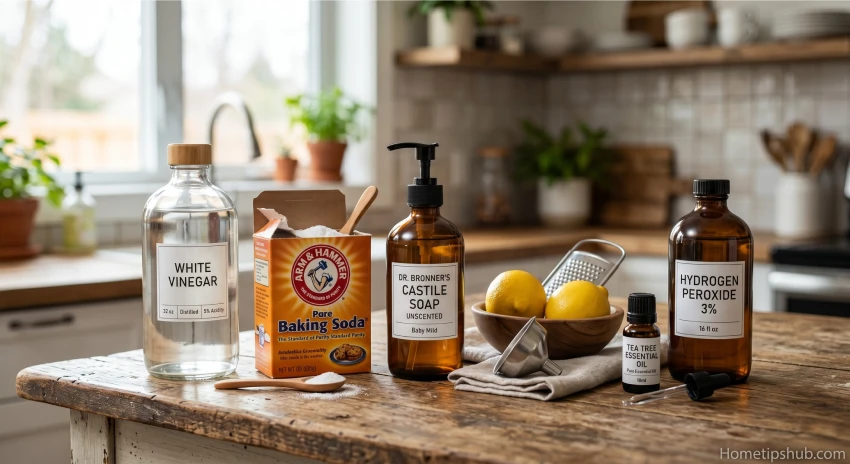
Before you start mixing, stock your cleaning cabinet with these powerhouse ingredients. They’re the backbone of almost every homemade cleaning solution recipe.
The Big Three
1. White Vinegar Distilled white vinegar is the MVP of DIY cleaning. Its acidity cuts through grease, dissolves soap scum, and kills many common household bacteria. Always use a 5% acidity variety for best results.
2. Baking Soda Baking soda (sodium bicarbonate) is a gentle abrasive and natural deodorizer. It works brilliantly on sinks, tubs, and even carpet stains. It also neutralizes odors rather than just masking them.
3. Liquid Castile Soap Castile soap is plant-based and biodegradable. A few drops added to any homemade cleaning solution boost its cleaning power without adding toxins.
Bonus Boosters
- Lemon juice — Natural bleaching agent and grease-cutter with a fresh scent
- Hydrogen peroxide — Powerful natural disinfectant for surfaces and grout
- Tea tree oil — Antifungal and antibacterial essential oil for mold-prone areas
- Rubbing alcohol — Quick-drying and effective for glass and stainless steel
Top Homemade Cleaning Solutions by Room
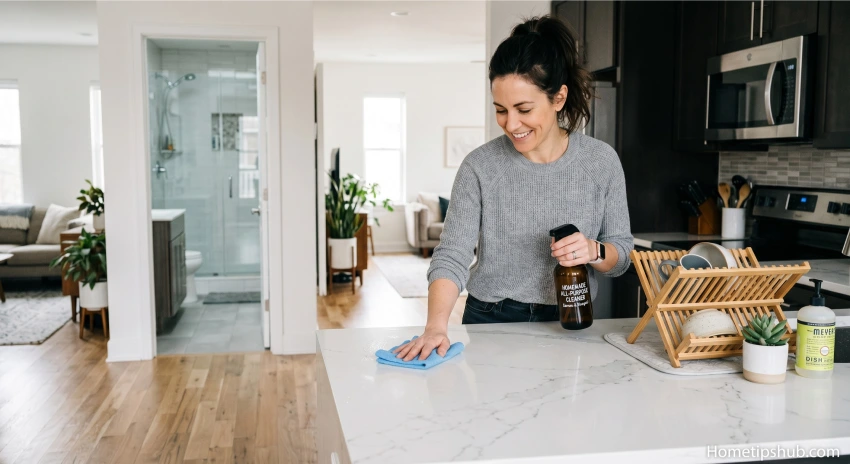
Let’s break it down room by room. Each of these homemade cleaning solutions is simple, fast, and effective.
Kitchen Homemade Cleaning Solutions
All-Purpose Kitchen Spray Mix 1 cup white vinegar, 1 cup water, and 15 drops of lemon essential oil in a spray bottle. Use it on counters, appliances, and cabinet fronts. It cuts grease and leaves surfaces gleaming.
Stovetop Degreaser Paste Combine baking soda with a few drops of dish soap and just enough water to make a paste. Apply to the stovetop, let it sit for 10 minutes, then scrub with a damp sponge. Works like magic on baked-on grease.
Bathroom Homemade Cleaning Solutions
Tile and Grout Scrub Sprinkle baking soda on tiles, spray with undiluted white vinegar, and scrub with an old toothbrush. The fizzing action lifts grime from grout lines without any commercial scrubbing powder.
Toilet Bowl Cleaner Pour ½ cup baking soda and ½ cup white vinegar into the toilet bowl. Let it fizz for 15 minutes, scrub with a toilet brush, then flush. Add a few drops of tea tree oil for extra disinfecting power.
Mirror and Glass Spray Mix 1 cup water, 1 cup rubbing alcohol, and 1 tablespoon white vinegar. Spray on glass and wipe with a microfiber cloth. Streak-free every time.
Living Room and General Surface Cleaners
Wood Surface Polish Combine ¼ cup olive oil with ¼ cup white vinegar and 20 drops of lemon essential oil. Apply a small amount to a cloth and buff wood furniture to a natural shine.
Upholstery Stain Remover Mix 1 tablespoon liquid dish soap, 1 tablespoon white vinegar, and 2 cups of warm water. Blot stains on sofas or chairs with a clean cloth. Always test on a hidden spot first.
Homemade Cleaning Solutions: Quick Reference Table
| Cleaning Task | Main Ingredients | Mix Ratio | Best For |
|---|---|---|---|
| All-purpose spray | Vinegar + water + essential oil | 1:1 + 15 drops | Counters, appliances |
| Bathroom scrub | Baking soda + dish soap | Paste consistency | Tubs, sinks, tiles |
| Glass cleaner | Water + rubbing alcohol + vinegar | 1:1:1 tbsp | Mirrors, windows |
| Toilet cleaner | Baking soda + vinegar | ½ cup each | Toilet bowls |
| Wood polish | Olive oil + vinegar + lemon oil | 1:1 + 20 drops | Wood furniture |
| Carpet stain spray | Dish soap + vinegar + water | 1 tbsp:1 tbsp:2 cups | Fabric, upholstery |
| Stovetop degreaser | Baking soda + dish soap | Paste consistency | Stovetops, ovens |
| Mold remover | Hydrogen peroxide | Undiluted | Grout, caulk, tiles |
How to Make Homemade Cleaning Solutions Safely
Making your own natural cleaning products is safe and straightforward — but a few rules keep things working properly.
What Should You Never Mix?
This is important. Some combinations are dangerous, even with natural ingredients.
- Never mix vinegar and hydrogen peroxide in the same bottle — together they form peracetic acid, which is corrosive.
- Never mix bleach with vinegar or bleach with baking soda — these create toxic chlorine gases.
- Never combine rubbing alcohol with bleach — the result is harmful chloroform compounds.
Stick to tested recipes and you’ll be completely safe.
How Should You Store DIY Cleaners?
- Use dark glass or opaque spray bottles to protect ingredients from light degradation.
- Label every bottle with the recipe and date.
- Store in a cool, dry place away from children.
- Most homemade cleaning solutions last 1–4 weeks. Recipes with fresh lemon juice should be used within a week.
Homemade Cleaning Solutions That Save You Money
Let’s talk dollars and cents. The average American household spends over $600 per year on cleaning products. Switching to homemade cleaning solutions can cut that cost by up to 80%.
Here’s a simple cost comparison:
- A 32 oz bottle of commercial all-purpose cleaner: ~$4–$6
- A 32 oz bottle of homemade all-purpose spray (vinegar + water + essential oil): ~$0.30–$0.50
That’s a savings of over $5 per bottle. Multiply that across all your cleaning products — kitchen spray, bathroom cleaner, glass cleaner, floor mopper — and the savings add up fast.
Beyond the financial benefits, you’re also reducing your household’s chemical footprint. Fewer synthetic chemicals in your home means better indoor air quality, which is especially important if you have kids, elderly family members, or anyone with respiratory sensitivities.
Best Homemade Cleaning Solutions for Tough Jobs
Some jobs need a little extra muscle. Here are the heavy-hitters in the world of DIY natural cleaning.
How Do You Remove Stubborn Mold Naturally?
Hydrogen peroxide is your best friend here. Pour 3% hydrogen peroxide directly onto moldy grout or caulk, let it sit for 10 minutes, then scrub with a stiff brush. It’s more effective than many commercial mold sprays and far less toxic.
For persistent mold, follow up with a spray of undiluted white vinegar and let it air dry. The one-two punch of hydrogen peroxide followed by vinegar (applied separately, never mixed) is extremely powerful.
What’s the Best Homemade Floor Cleaner?
Mix ½ cup white vinegar, 1 gallon of warm water, and 10 drops of peppermint essential oil. This works beautifully on tile, laminate, and sealed hardwood floors. It cleans, deodorizes, and leaves a refreshing scent.
For carpet cleaning, sprinkle baking soda liberally, let it sit for 30 minutes to absorb odors, then vacuum thoroughly. For stains, use the dish soap and vinegar solution mentioned earlier.
Tips to Get the Most From Your Homemade Cleaning Solutions
Making great DIY cleaners is just the first step. Here’s how to use them like a pro.
Smart Application Tips
- Spray and wait — Let your homemade cleaning solution sit on a surface for 2–5 minutes before wiping. This gives the active ingredients time to break down grime.
- Use microfiber cloths — They trap dirt and bacteria more effectively than paper towels and work perfectly with natural cleaning sprays.
- Work top to bottom — Clean shelves before counters, counters before floors. Gravity is on your side.
- Freshen drains naturally — Pour baking soda down the drain, follow with white vinegar, wait 15 minutes, then flush with boiling water. It clears buildup and eliminates odors.
- Boost with heat — Warm surfaces absorb natural cleaners better. Wipe down a slightly warm stovetop for easier grease removal.
When to Upgrade to a Stronger Solution
Homemade cleaning solutions handle 90% of everyday cleaning tasks beautifully. However, for truly severe mold infestations, sewage-related contamination, or post-illness deep disinfection, consider consulting a professional or using an EPA-approved disinfectant.
FAQ: Homemade Cleaning Solutions
Q1: Are homemade cleaning solutions as effective as commercial products?
Yes, for most everyday cleaning tasks, DIY cleaning solutions perform just as well — sometimes better. Ingredients like white vinegar and hydrogen peroxide have proven antimicrobial properties. The difference is that commercial cleaners add fillers, synthetic fragrances, and preservatives that don’t improve cleaning power but do increase the price. For general cleaning, degreasing, and deodorizing, homemade cleaning solutions absolutely deliver results.
Q2: Can I use homemade cleaning solutions on all surfaces?
Most homemade cleaning solutions are safe for a wide range of surfaces, but there are exceptions. Vinegar-based cleaners should not be used on natural stone surfaces like marble or granite, as the acidity can etch the surface over time. Always test any DIY cleaner on a small hidden area first, especially on delicate materials like unsealed wood, silk, or antique finishes.
Q3: How long do homemade cleaning solutions last?
Most natural cleaning sprays last between 1 and 4 weeks when stored properly. Recipes with fresh citrus juice should be used within 5–7 days. Solutions made only with vinegar, water, and essential oils can last several months. Always label your bottles with the preparation date so you know when to refresh them.
Q4: Are homemade cleaning solutions safe for homes with children and pets?
Generally, yes — that’s one of the biggest advantages of natural homemade cleaners. Ingredients like vinegar, baking soda, and castile soap are non-toxic and safe when used properly. However, even natural essential oils can be irritating to pets in high concentrations, especially for cats. Always allow surfaces to dry fully before letting pets or children contact them, and keep spray bottles stored securely out of reach.
Q5: What’s the best homemade cleaning solution for removing odors?
Baking soda is the gold standard for odor elimination because it chemically neutralizes both acidic and alkaline odor compounds rather than just masking them. For a spray-on odor neutralizer, mix 1 cup water with 1 tablespoon baking soda and 10 drops of lavender essential oil. Spray on fabrics, carpets, or inside trash cans and let air dry. For fridge odors, place an open bowl of baking soda on a shelf and replace it monthly.
Conclusion
Switching to homemade cleaning solutions is one of the easiest, smartest upgrades you can make for your home. You save money, reduce chemical exposure, help the environment, and still get a spotlessly clean house — all at the same time.
The best part? You don’t need any special skills or equipment. A few pantry staples, some spray bottles, and a little know-how are all it takes to make powerful natural cleaners for every room in your home.
Start small. Pick one recipe — maybe the all-purpose kitchen spray or the toilet bowl fizz — and try it this week. Once you see how well these DIY cleaning solutions work, you’ll be hooked.
Your home deserves to be clean. Your family deserves to be safe. And your wallet deserves a break. Homemade cleaning solutions deliver all three.