

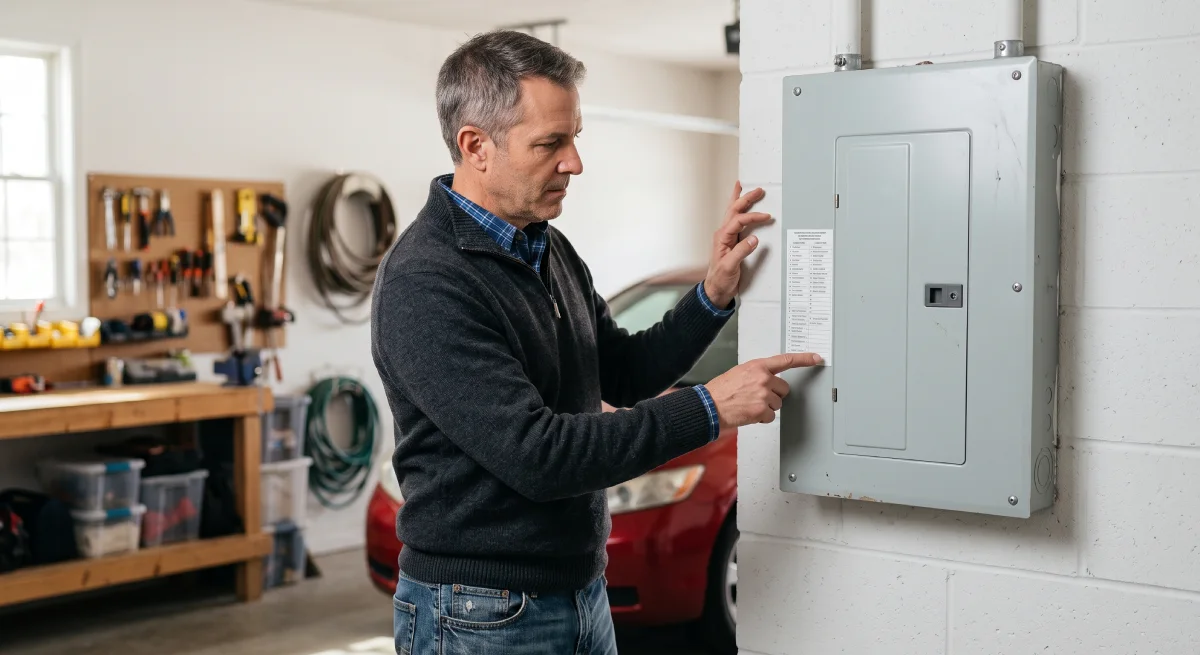
Your electrical panel works quietly in the background until something goes wrong — and by then, the problem is often already serious. Electrical panel maintenance is one of those home responsibilities that’s easy to ignore because the panel is tucked away in a garage, basement, or utility closet, out of sight and out of mind. But this metal box controls the power to every outlet, appliance, and light switch in your house, which makes its condition directly tied to your family’s safety.
In this guide, you’ll learn what electrical panel maintenance actually involves, the seven checks that matter most, warning signs you shouldn’t ignore, and when it’s time to call a licensed electrician instead of handling things yourself. Whether you own an older home with an aging panel or a newer build you simply haven’t inspected yet, these steps apply to almost every household.
Why Electrical Panel Maintenance Matters
A home’s electrical panel distributes incoming power to individual circuits through breakers. Over time, connections loosen, dust accumulates, components age, and demand on the system increases as households add appliances, electronics, and EV chargers. Without routine electrical panel care, small issues can turn into fire hazards or costly repairs.
Regular maintenance isn’t about becoming an electrician overnight. It’s about knowing what to look for so you can catch problems early and know when professional help is genuinely needed. A practical approach is treating your panel like your smoke detectors — something you check on a schedule, not just when something feels wrong.
Skipping electrical panel maintenance rarely causes an immediate failure. Instead, small issues sit unnoticed for years until a symptom finally becomes obvious.
What Is Electrical Panel Maintenance?
Electrical panel maintenance is the routine process of inspecting, cleaning, and evaluating your home’s breaker box to confirm it’s operating safely and efficiently. It includes visual checks, functional testing of breakers, and monitoring for signs of wear such as heat damage, corrosion, or loose wiring.
Unlike major electrical repairs, most maintenance tasks are observational rather than hands-on. You’re primarily watching for red flags and scheduling professional electrical inspection when something looks off. This distinction matters because opening a panel and touching internal components without training is dangerous — maintenance is about awareness, not amateur repair work.
Understanding the basic electrical panel components helps this process make more sense. A typical panel includes a main breaker, individual circuit breakers, a neutral bus bar, a ground bus bar, and the wiring that connects each circuit throughout the house. You don’t need to memorize every part, but recognizing the main breaker and knowing how to safely observe the others goes a long way toward effective electrical panel maintenance.
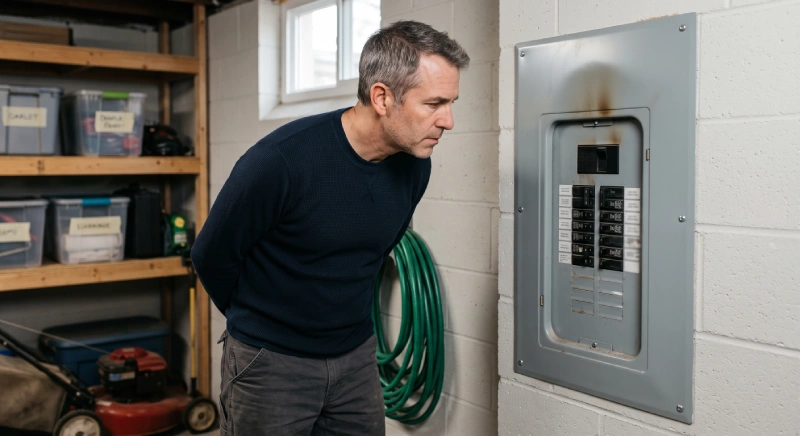
1. Inspect the Panel’s Exterior Condition
Start with what you can see without opening the panel door. Check the electrical panel condition by looking for:
- Rust or corrosion on the metal enclosure
- Discoloration or scorch marks around the cover
- A door that doesn’t close or latch properly
- Moisture stains suggesting water intrusion nearby
Rust often signals a humidity or leak problem in the surrounding area, while discoloration frequently points to heat buildup from a failing connection. Neither issue should be dismissed as cosmetic. For best results, do this walk-around check every few months as part of your general home maintenance routine.
A quick electrical panel check like this takes only a couple of minutes but often reveals the earliest visible clues that something inside needs closer attention.
2. Check for Overheating Signs

An overheating circuit breaker is one of the clearest warning signs of an underlying electrical problem. Heat buildup usually stems from a loose connection, an overloaded circuit, or a breaker nearing the end of its lifespan.
Signs to watch for include:
- A warm or hot panel cover to the touch
- A faint burning or “hot plastic” smell near the panel
- Buzzing or crackling sounds coming from inside the box
- Breakers that feel unusually warm compared to others
If you notice any of these signs, treat it as urgent. Turn off nonessential circuits if possible and contact a licensed electrician promptly — overheating components are a leading cause of residential electrical fires, and this is not a do-it-yourself repair.
3. Test and Exercise Circuit Breakers as Part of Electrical Panel Maintenance
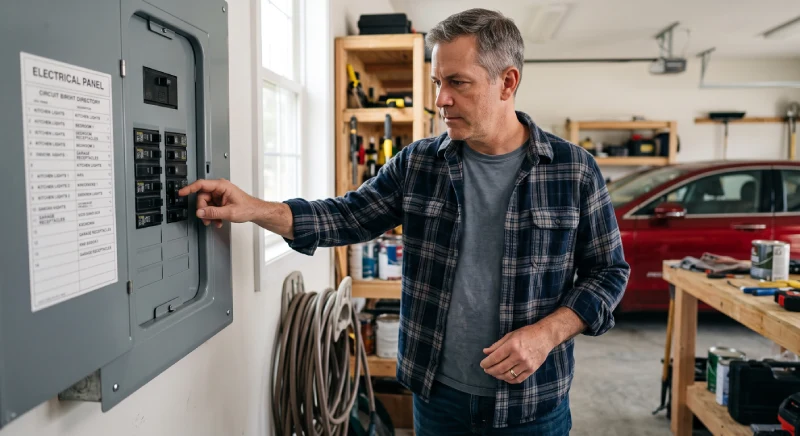
Breakers that sit untouched for years can develop mechanical stiffness, which affects how reliably they trip during an overload. Circuit breaker inspection should include manually switching each breaker off and back on once or twice a year.
Here’s a simple process:
- Turn off major appliances connected to the circuit you’re testing.
- Flip the breaker fully off, then back to on.
- Confirm power returns to that circuit as expected.
- Repeat for each breaker, one at a time.
This exercise keeps the internal mechanism moving freely and helps you notice a damaged circuit breaker — one that feels loose, won’t stay in position, or doesn’t restore power — before it fails during an actual overload.
This step is one of the simplest forms of breaker box maintenance you can do yourself, and it doubles as a way to confirm your labeling is still accurate, since you’ll see exactly which circuit loses power each time.
4. Review Panel Labeling and Documentation
Electrical panel labeling often gets overlooked, but accurate labels are essential during emergencies, renovations, or when troubleshooting an issue. A mislabeled panel wastes precious time when you need to shut off power quickly.
| Labeling Task | Time Required | Why It Matters |
|---|---|---|
| Verify existing labels | 15–20 minutes | Confirms accuracy after past renovations |
| Test unlabeled circuits | 30–45 minutes | Identifies which breaker controls each room |
| Update label chart | 10 minutes | Keeps future work faster and safer |
One common mistake is assuming labels from a previous homeowner or contractor are still correct. Circuits get rewired during remodels far more often than labels get updated, so it’s worth confirming rather than trusting old information. Good labeling is a small task, but it’s one of the most underrated parts of thorough electrical panel maintenance because it directly affects how quickly you or an electrician can respond during an emergency.
5. Watch for Overloaded Circuits
An overloaded electrical panel struggles to keep up with modern power demands, especially in older homes not originally wired for today’s appliances, electronics, and charging equipment. Warning signs include breakers that trip frequently, flickering lights when multiple devices run at once, and outlets that feel warm.
A good rule of thumb is that if you’re regularly resetting the same breaker, that circuit is telling you something — it’s not just an inconvenience to work around, and it’s a clear cue that electrical panel maintenance is overdue for that part of your home. Professionals typically recommend evaluating whether the panel’s total amperage still matches the household’s actual usage, particularly in homes built before central air conditioning or electric vehicles became common.
6. Look for Loose Electrical Connections
Loose electrical connections are among the most common causes of panel-related problems, and they tend to worsen gradually rather than fail all at once. Vibration, temperature changes, and simple age can loosen wire connections inside the panel over time.
Because tightening internal connections requires opening the panel and working near live components, this is squarely a job for a licensed electrician, not a homeowner electrical panel maintenance task. What you can do as a homeowner is recognize the symptoms — flickering lights, intermittent power loss, or a persistent burning smell — and schedule an inspection rather than waiting for a full outage to force the issue.
7. Schedule Routine Professional Inspections
Even with consistent homeowner checks, nothing replaces a qualified electrician’s eyes on your system. Electrical panel inspection frequency generally depends on the age of your home and panel:
- Newer panels (under 10 years): every 3–5 years
- Older panels (10–25 years): every 2–3 years
- Homes with known electrical issues or older wiring types: annually
An electrician can test for issues that aren’t visible during a homeowner walk-through, such as connection resistance or capacity concerns tied to your home’s actual electrical load. Combining homeowner-level electrical panel maintenance with periodic professional visits gives you the most complete picture.
What Does Professional Electrical Panel Maintenance Cost?
Costs vary depending on your location, the panel’s age, and whether any repairs are needed alongside the inspection. As a general guideline:
- A standalone inspection typically runs on the lower end, since it involves testing and observation rather than parts replacement.
- Minor repairs, like tightening connections or replacing a single breaker, add moderate cost.
- Full panel replacement is the most expensive option and is usually only necessary when a panel is outdated, undersized, or unsafe to repair.
Pricing differs significantly by region and by the electrician’s rates, so it’s worth getting a couple of quotes before committing to larger work. Routine electrical panel maintenance is almost always far less expensive than dealing with fire damage, code violations, or an emergency after-hours service call, which makes budgeting for periodic checkups a genuinely sound investment.
Electrical Panel Replacement Signs to Know
Maintenance can extend a panel’s usable life, but it can’t fix everything. Recognizing electrical panel replacement signs early prevents you from relying on a system that’s genuinely unsafe.
| Sign | What It Usually Means | Recommended Action |
|---|---|---|
| Frequent breaker trips | Overloaded or aging panel | Have capacity evaluated |
| Burning smell near panel | Overheating components | Call an electrician immediately |
| Panel is 25+ years old | Outdated technology/materials | Schedule a full inspection |
| Visible rust or scorching | Corrosion or heat damage | Assess for replacement |
| Flickering lights house-wide | Loose main connections | Professional diagnosis needed |
If two or more of these apply to your home, it’s worth getting a professional opinion rather than continuing routine checks alone. No amount of electrical panel maintenance can fully compensate for a system that has genuinely reached the end of its safe service life.
Building an Electrical Maintenance Checklist for Your Home
An electrical maintenance checklist keeps this process consistent instead of something you only think about after a problem appears. A simple seasonal checklist might include:
- Visual exterior inspection of the panel
- Checking for unusual smells or sounds
- Exercising each breaker
- Reviewing and updating labels
- Noting any newly added appliances or circuits
- Scheduling professional inspection if due
Keeping this checklist somewhere accessible, like taped inside a nearby cabinet, makes home electrical safety a habit rather than an afterthought. This approach also supports broader residential electrical safety, since a well-maintained panel is the foundation the rest of your home’s electrical system depends on.
Final Thoughts on Electrical Panel Maintenance
Consistent electrical panel maintenance won’t eliminate every risk, but it dramatically reduces the odds of being caught off guard by a hazard that had warning signs all along. The goal isn’t to turn yourself into an electrician — it’s to notice the small clues, like unusual smells, warm surfaces, or breakers that won’t stay reset, before they become serious electrical panel hazards.
Make the seven checks above part of your regular home maintenance routine, keep your labeling current, and don’t hesitate to bring in a licensed electrician when something looks or feels off. If it’s been more than a few years since anyone assessed your panel professionally, that’s a reasonable place to start today.
3. Comparison / Information Table
Both tables above (Labeling Task overview and Electrical Panel Replacement Signs) are included within the article at their relevant sections to support decision-making without repeating the surrounding text.
4. FAQ Section
FAQ 1: How often should electrical panel maintenance be done?
For most homes, a homeowner-level visual check every few months is sufficient, paired with a professional inspection every 2–5 years depending on the panel’s age. Homes with older wiring or a history of electrical issues generally benefit from annual professional checkups.
FAQ 2: Can I perform electrical panel maintenance myself?
You can safely handle exterior inspections, exercising breakers, and checking labels yourself. However, any task that requires opening the panel and touching internal wiring — such as tightening connections — should be left to a licensed electrician due to the risk of electric shock.
FAQ 3: What are the warning signs of a failing electrical panel?
Common warning signs include frequently tripping breakers, warm or discolored panel surfaces, buzzing sounds, a burning smell, and flickering lights throughout the home. Any of these signs warrants a professional evaluation rather than a wait-and-see approach.
FAQ 4: How do I know if my electrical panel is overloaded?
An overloaded electrical panel often shows itself through breakers that trip repeatedly, dimming or flickering lights when several appliances run together, and outlets that feel warm to the touch. An electrician can measure your panel’s actual load against its rated capacity to confirm the issue.
FAQ 5: Is it expensive to maintain an electrical panel?
Routine maintenance is generally inexpensive compared to emergency repairs or full panel replacement. Costs depend on your location and the electrician’s rates, but preventive checkups typically cost far less than addressing fire damage or a complete panel failure down the road.