

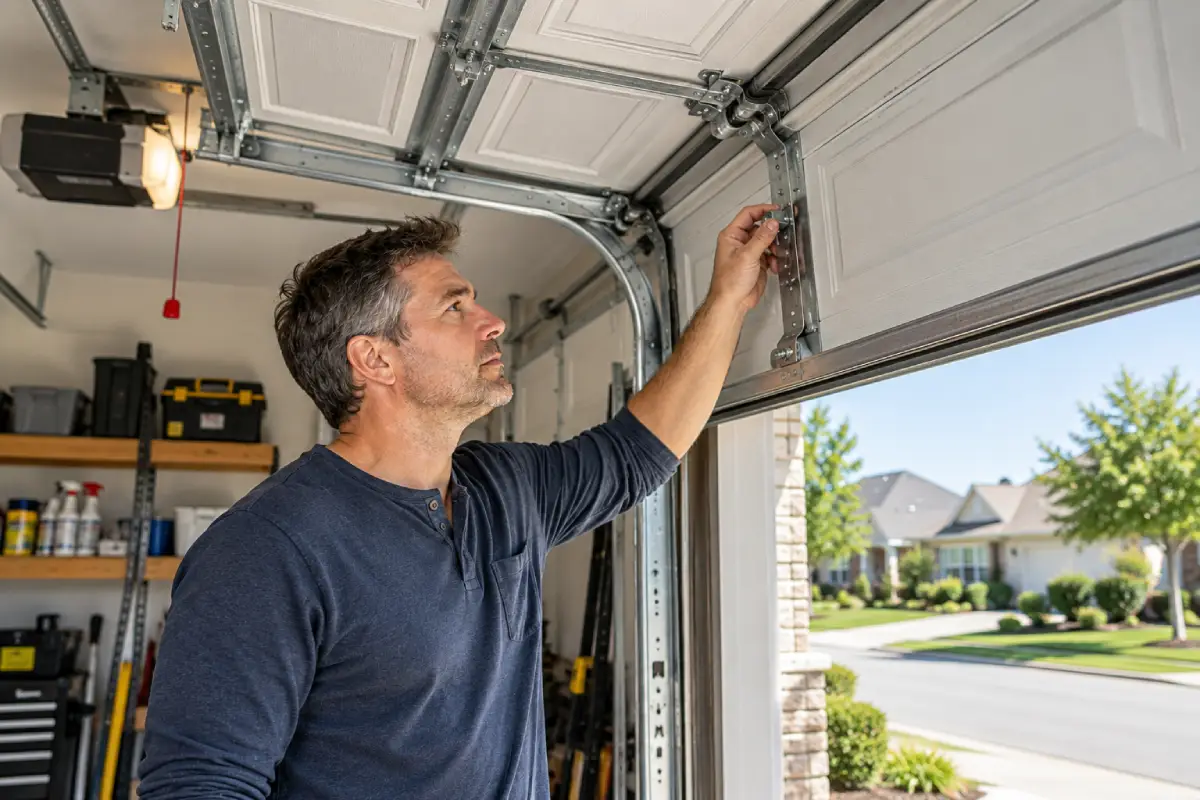
Your garage door is probably the largest moving part in your home, and you use it several times a day without a second thought. That is why problems sneak up on you. A few practical garage door maintenance tips can stop the groaning, shuddering, or stuck door before it ruins your morning.
This guide covers the inspections, cleaning, and lubrication that keep a door running smoothly, plus the jobs that belong to a professional. Whether you prefer a quick checklist or a year-round plan, these garage door maintenance tips give you both.
Why Do Garage Door Maintenance Tips Matter for Homeowners?
Regular garage door maintenance matters because your door is a system of springs, cables, rollers, tracks, and an opener that wear down with every cycle. Routine garage door care catches loose hardware and worn parts early, which improves safety, extends the door’s life, and helps you avoid sudden breakdowns.
Think of it like caring for a car. You would not wait for the engine to fail before checking the oil. Following garage door maintenance tips consistently works the same way, because small fixes cost far less than emergency repairs. Climate matters too. Road salt, coastal air, humidity, and freezing winters all speed up corrosion and break down lubricant faster.
Most of the routine needs only a socket wrench, a rag, a sturdy stepladder, and the right lubricant, so it fits easily into a weekend morning.
What Is the Best Garage Door Maintenance Schedule?
A garage door maintenance schedule is a repeating plan that spreads visual checks, safety tests, cleaning, and lubrication across the year. A good rule of thumb is to tie the twice-yearly jobs to spring and fall so they are easy to remember.
| Garage Door Maintenance Tips | How Often | Difficulty | DIY or Pro |
|---|---|---|---|
| Visual inspection | Monthly | Easy | DIY |
| Auto-reverse and photo-eye test | Monthly | Easy | DIY |
| Tighten hardware | Every 3 months | Easy | DIY |
| Clean tracks, door, and seals | Every 3–6 months | Easy | DIY |
| Lubricate moving parts | Every 6 months | Easy | DIY |
| Balance test | Twice a year | Moderate | DIY test, pro adjustment |
| Full professional inspection | Yearly | N/A | Pro |
| Spring and cable replacement | As needed | Hard | Pro only |
Shorten the intervals in these garage door maintenance tips if you live near the coast or where roads are salted in winter.
Garage Door Maintenance Tips Checklist: 11 Essential Steps

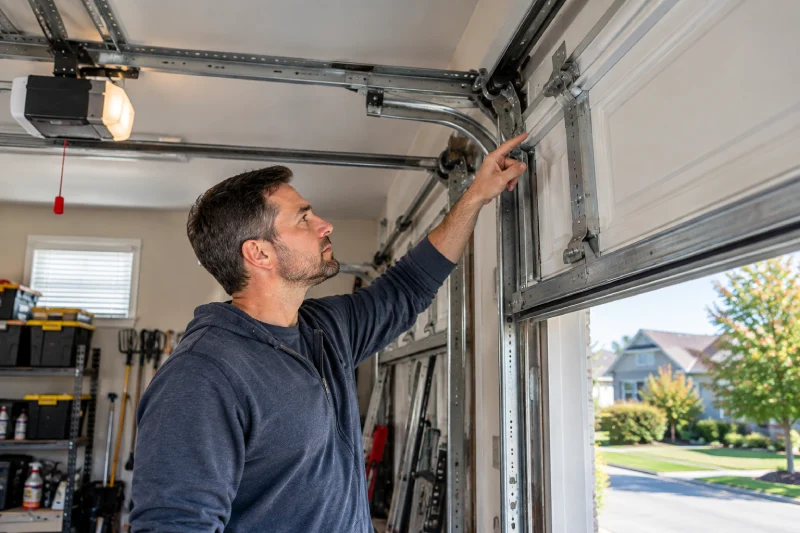
Use this garage door inspection checklist for a complete tune-up. Each step takes only a few minutes.
- Watch and listen. Run the door through a full cycle and note any grinding, popping, or jerky movement.
- Tighten hardware. Snug loose bolts on hinges, brackets, and track mounts with a socket wrench.
- Inspect rollers and hinges. Look for cracks, wear, or wobbling.
- Check the tracks. Make sure they are straight, free of dents, and firmly attached to the wall.
- Look at the springs and cables. Check for gaps, rust, or fraying, but never touch them.
- Test the balance. With the door closed, pull the red release cord, lift it halfway, and see if it stays put.
- Test the photo eyes. Break the beam with an object while the door closes; it should stop and reverse.
- Check the auto-reverse. Lay a 2×4 flat under the door; it should reverse on contact.
- Clean and lubricate. Wipe the tracks, then apply lubricant to hinges, rollers, springs, and the opener’s chain or screw.
- Inspect the weatherstripping. Replace the bottom seal if it is cracked, brittle, or flattened.
- Schedule a professional inspection. Even the best garage door maintenance tips cannot replace a yearly check of spring tension and cables.
What Are the Best Garage Door Maintenance Tips for Lubrication?
For best results, use a silicone-based or white lithium garage door lubricant on hinges, roller stems, springs, and bearing plates every six months. Wipe off the excess, and avoid heavy grease on the tracks, since it attracts dust and grit.
Garage door lubrication deserves a place in any list of garage door maintenance tips because friction is the main enemy of every moving part. One common mistake is relying on WD-40 alone. It loosens rust well, but it is not designed for long-term lubrication. If your rollers are nylon with sealed bearings, a light spray on the stem is enough. Skip the rubber weatherstripping and the belt on a belt-drive opener, and wear safety glasses while you spray.
How Do You Clean a Garage Door and Its Tracks?
Dirt and road salt quietly corrode metal and dull finishes, so cleaning belongs in your garage door maintenance tips as a regular task. Wash the door with mild dish soap, warm water, and a soft brush, then rinse and dry it. Avoid harsh solvents and pressure washers on painted or wood doors, since they can strip finishes and force water into seams.
Garage door track maintenance takes a different approach. Wipe out dirt and old grease with a rag and household degreaser, then dry them completely. Clean tracks let rollers glide freely, which is why the most effective garage door maintenance tips for a noisy door start here. Repeat every three to six months, and while you are up close, wipe the bottom seal and photo-eye lenses so dirt does not cause false sensor errors.
Which Garage Door Parts Should You Leave to a Professional?
Garage Door Maintenance Tips for Springs and Cables
Garage door spring maintenance is mostly observation. Springs carry the door’s weight under high tension, so adjusting or replacing them yourself is dangerous. Look for gaps in the coil, rust, or a broken section, and call a professional if anything looks wrong. The same goes for frayed cables, and you should never touch the bottom brackets.
Rollers
Garage door roller maintenance starts with listening: worn rollers wobble, squeal, or feel rough. You can often replace the ones held in the hinges yourself, but leave the bottom rollers to a pro because they attach to the high-tension bracket.
Opener Care
Opener care is one of the simpler garage door maintenance tips to follow. Replace remote and keypad batteries yearly, test the backup battery if your model has one, and check your manual before adjusting chain or belt tension. Chain and screw drives usually need light lubrication, while belt drives do not. If the opener strains, the door is often out of balance.
What Safety Tests Should Your Garage Door Pass?

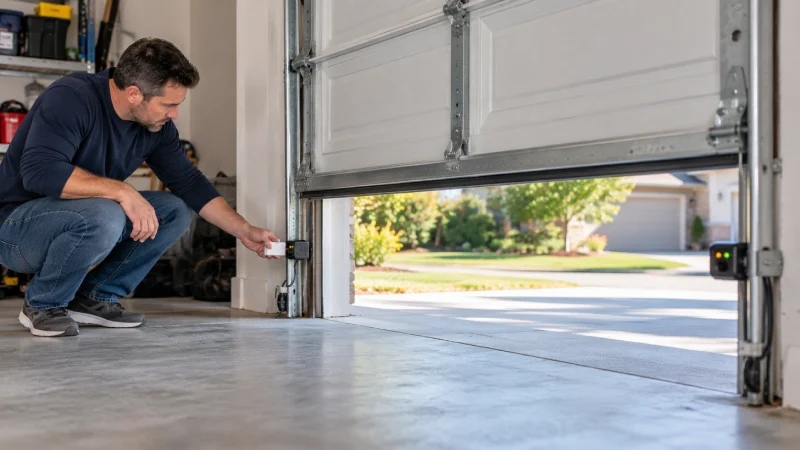
A safe garage door passes three quick tests: it holds steady when lifted halfway, it reverses when it meets an obstruction, and it reverses when something breaks the photo-eye beam. Check the reversing features monthly and the balance twice a year.
Treat these garage door maintenance tips as your at-home garage door safety inspection, and keep children and pets clear while you test. Photo eyes should sit no more than six inches above the floor, and both lenses should face each other with steady indicator lights. If the door fails any test, stop using the opener and call a professional.
One of the most important garage door safety tips is to do the balance test only when the door is fully closed and to keep your fingers away from the hinges and track gaps. Repeat the tests after any repair, since garage door maintenance tips only help when the safety features still work.
When Do Garage Door Maintenance Tips Stop Being Enough?
If you notice any of these garage door repair signs, stop relying on routine upkeep and call a professional:
- The door sags, jams, or moves unevenly
- You hear a loud bang, or see a gap in a spring coil
- Cables look frayed or hang loose
- Rollers jump out of the tracks
- The opener hums, but the door will not move
- The door closes unevenly or reverses for no clear reason
One common mistake is ignoring a small symptom because the door still works. Another is buying the cheapest part without confirming it matches your door’s weight and size, which matters most for springs. Costs vary by region, door type, and parts, but preventive maintenance based on these garage door maintenance tips usually costs less than an emergency repair.
Garage Door Maintenance FAQs
FAQ 1: What are the most important garage door maintenance tips?
Inspect the door monthly, test the auto-reverse and photo eyes, tighten loose hardware, lubricate moving parts twice a year, and leave springs and cables to a professional. Doing these regularly helps prevent many avoidable breakdowns.
FAQ 2: How often should you lubricate a garage door?
Lubricate hinges, roller stems, springs, and bearing plates about every six months. If you live in a coastal, very humid, or snowy region, check every three to four months. Wipe away extra lubricant so it does not attract dirt, and keep it off the tracks and weatherstripping.
FAQ 3: How do you know if your garage door needs repair instead of maintenance?
Minor noise, squeaks, and slow movement usually respond to cleaning, tightening, and lubrication. Sticking to these garage door maintenance tips can fix these small issues, but sagging, frayed cables, broken springs, or a door that will not reverse mean it is time to call a professional.
FAQ 4: Can you handle regular garage door maintenance yourself?
Yes, for most visual checks, cleaning, lubrication, and safety tests. Springs, cables, and bottom brackets are the exceptions because they hold dangerous tension. A practical approach is to handle the routine tasks in these garage door maintenance tips yourself and hire a professional for an annual inspection and any spring work.
FAQ 5: What should you avoid when maintaining a garage door?
Avoid adjusting springs or cables, using thick grease on tracks, spraying lubricant on rubber seals, and ignoring warning signs like grinding or a crooked door. Never bypass the photo eyes, because they protect people and pets.
Keep Your Garage Door Reliable Year After Year
Good garage door maintenance tips come down to a simple habit: look, listen, clean, lubricate, and test. Spend ten minutes each month on inspection and safety checks, plan a seasonal tune-up, and leave springs and cables to a professional. That routine protects your investment, reduces surprise repairs, and keeps the door safe for your family.
Ready to get started? Print or bookmark this checklist, set a reminder, and complete your first inspection this weekend. Put these garage door maintenance tips to work today, and book a professional inspection if anything looks worn or unsafe.