
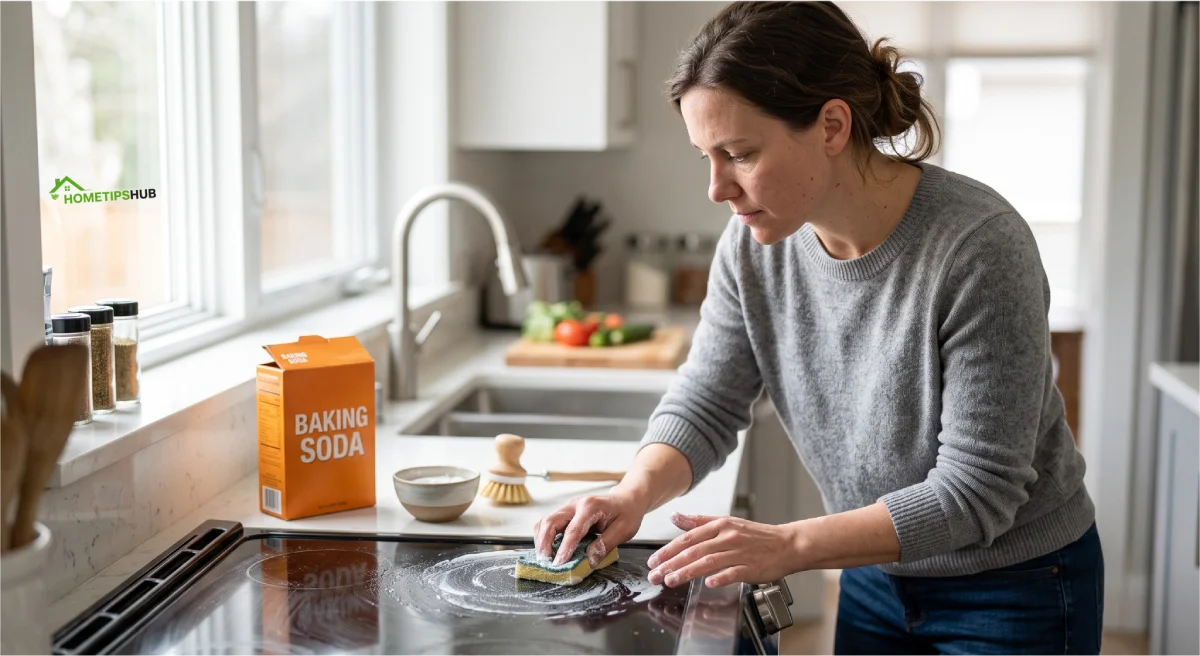
Look under almost any American kitchen sink and you’ll find it: a plain orange box of baking soda, usually pushed to the back next to the drain cleaner it’s about to replace. That humble box is one of the most effective, affordable, and safe cleaning tools you already own, and most people only use it for a fraction of what it can do.
If you’ve ever searched for a way to clean your home without a cabinet full of chemical sprays, baking soda cleaning deserves a serious look. It’s gentle enough for a baby’s high chair, tough enough for a burnt casserole dish, and cheap enough that you won’t think twice about using it liberally. In this guide, you’ll learn how to use baking soda for cleaning almost every surface in your house — from the kitchen stovetop to the bathroom grout, the couch cushions to the mattress you sleep on.
We’ll walk through room-by-room techniques, simple homemade baking soda cleaner recipes, safety notes, and answers to the questions people ask most. By the end, you’ll have a practical, repeatable system for cleaning house with baking soda that saves money and cuts down on harsh chemical exposure.
Why Baking Soda Cleaning Works So Well
Before jumping into the hacks, it helps to understand why baking soda cleaning is genuinely effective and not just a trend.
Baking soda, or sodium bicarbonate, is a mild alkali. When it meets acidic substances — grease, food residue, body oils, hard water deposits — it neutralizes them chemically while also acting as a gentle abrasive. That combination lets a baking soda cleaner lift dirt without scratching most surfaces, which is why baking soda household cleaning routines are so popular with people who have granite counters, cast iron pans, or delicate upholstery.
It’s also naturally deodorizing. Baking soda doesn’t just mask smells the way a scented spray does — it actually absorbs the acidic and basic odor molecules that cause bad smells in the first place. That’s the science behind the classic “box in the fridge” trick, and it’s also why baking soda carpet cleaning and baking soda mattress cleaning routines work so well for odor removal.
Finally, it’s inexpensive and non-toxic, which makes it ideal for households with kids, pets, or anyone sensitive to fumes from commercial baking soda cleaning products.
| Benefit | Why It Matters |
|---|---|
| Mild abrasive | Scrubs away grime without scratching most surfaces |
| Odor absorption | Neutralizes smells instead of covering them up |
| Non-toxic | Safe around kids, pets, and food-contact surfaces |
| Low cost | A single box costs a fraction of specialty cleaners |
| Versatile | Works in the kitchen, bathroom, laundry room, and beyond |
Baking Soda Kitchen Cleaning: 8 Practical Hacks
The kitchen is where baking soda cleaning earns its reputation. Grease, burnt food, and hard water stains are all acidic in nature, which means baking soda’s alkaline properties go straight to work.
1. Baking Soda to Clean Pots and Pans
For burnt-on food, sprinkle a generous layer of baking soda over the bottom of the pot or pan, add a small amount of hot water to form a paste, and let it sit for 15–20 minutes. Then scrub with a non-abrasive sponge. This method works especially well on stainless steel and cast iron, and it’s far gentler than steel wool.
2. Baking Soda to Clean Stove Top
For a stubborn stovetop, especially glass or ceramic cooktops, mix baking soda with a small amount of water to make a spreadable paste. Apply it to cooled burner rings or the cooktop surface, let it sit for 10 minutes, then wipe clean with a damp cloth. For baked-on grease, cover the paste with a warm, damp towel first to loosen the residue before wiping.
3. Sink Cleaning and Deodorizing
Baking soda sink cleaning is one of the simplest habits you can build. Sprinkle baking soda directly onto a damp sponge or into the basin, scrub, and rinse. For stainless steel sinks, this also helps restore shine without leaving scratch marks.
4. Microwave Cleaning
Combine two tablespoons of baking soda with a cup of warm water in a microwave-safe bowl, heat for two to three minutes until it steams, then wipe down the interior with a cloth. The steam loosens splattered food while the baking soda neutralizes odors.
5. Refrigerator Cleaning and Odor Control
For baking soda refrigerator cleaning, wipe shelves and drawers with a solution of one tablespoon baking soda to one quart of warm water. Keep an open box in the back of the fridge afterward to continue absorbing food odors between deep cleans.
6. Oven Cleaning
Baking soda oven cleaning is a go-to for anyone avoiding harsh fume-heavy oven cleaners. Make a thick paste of baking soda and water, spread it across the interior (avoiding heating elements), leave overnight, then wipe out the residue in the morning and finish with a light vinegar spray to lift any leftover paste.
7. Cutting Boards and Countertops
Sprinkle baking soda directly on wood or plastic cutting boards, scrub with a cut lemon or damp cloth, and rinse. This deodorizes as well as cleans, which matters after cutting garlic, onions, or fish.
8. Coffee and Tea Stains on Mugs
A quick baking soda paste rubbed into a coffee-stained mug removes discoloration that a normal dish soap wash leaves behind.
Baking Soda Cleaner for Bathroom: Tackling Tile, Grout, and More
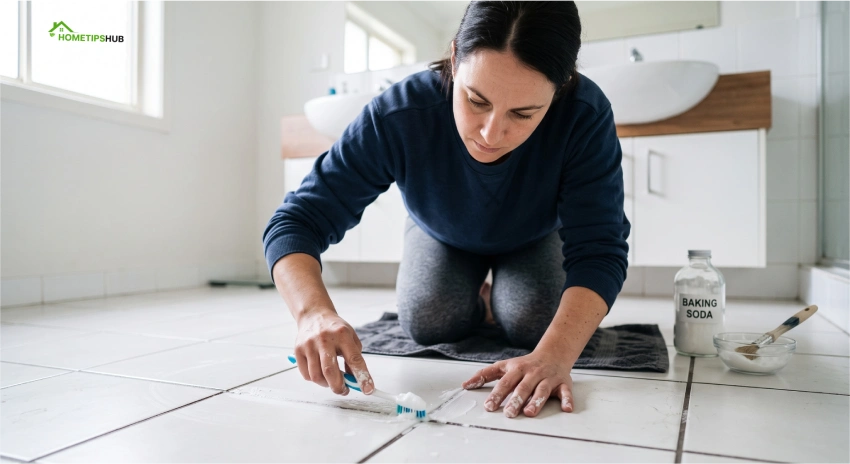
Bathrooms combine hard water, soap scum, and mildew — all prime targets for baking soda cleaning.
Baking Soda Tile Cleaning
Make a paste of baking soda and water, apply to tile with a soft brush, and scrub in circular motions to break down soap scum. Rinse thoroughly.
Baking Soda Grout Cleaning
For grout lines, mix baking soda with a small amount of hydrogen peroxide to form a thicker paste. Apply with an old toothbrush, let sit for 10 minutes, then scrub and rinse. This is one of the most requested baking soda cleaning hacks because grout is notoriously hard to keep white.
Baking Soda Toilet Cleaning
Sprinkle a half cup of baking soda into the toilet bowl, let it sit for a few minutes, then scrub with a toilet brush before flushing. For extra cleaning power, add a splash of white vinegar and let the fizzing reaction loosen mineral deposits.
Bathtubs and Showers
Sprinkle baking soda across the tub surface, scrub with a damp sponge, and rinse. It’s effective on both porcelain and acrylic tubs without dulling the finish.
| Bathroom Area | Method | Time Needed |
|---|---|---|
| Tile | Baking soda paste + brush | 5–10 minutes |
| Grout | Baking soda + hydrogen peroxide paste | 15–20 minutes |
| Toilet bowl | Baking soda + vinegar | 10 minutes |
| Tub/shower | Baking soda sprinkle + sponge | 5–10 minutes |
| Faucets | Baking soda paste + soft cloth | 5 minutes |
Baking Soda for Cleaning Fabric, Carpet, and Upholstery
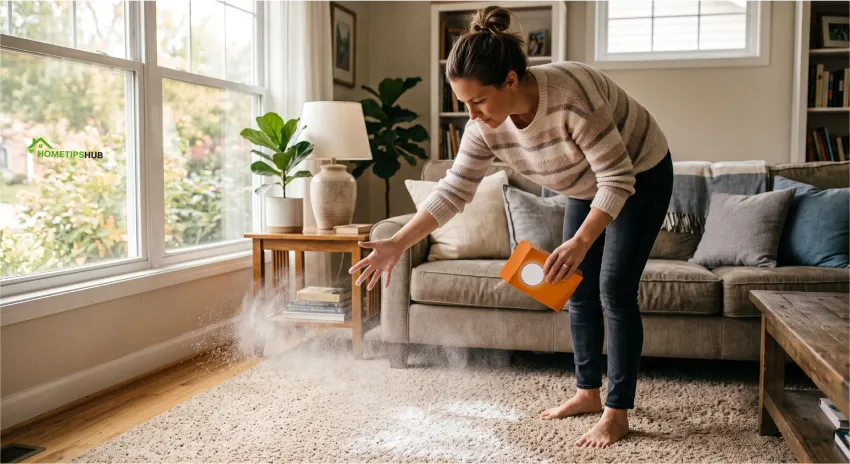
Fabric surfaces trap odors more than almost anything else in the home, which makes baking soda cleaning particularly useful here.
Baking Soda Carpet Cleaning
Sprinkle baking soda liberally across the carpet, let it sit for at least 15 minutes (longer for stronger odors, even overnight), then vacuum thoroughly. This is one of the easiest ways to freshen a room without renting equipment or buying carpet powder.
Baking Soda Couch Cleaning and Upholstery
For baking soda upholstery cleaning, dust the fabric with a light, even layer, gently work it into the fibers with a soft brush, let sit for 20–30 minutes, then vacuum with an upholstery attachment. This helps lift trapped dust, pet dander, and everyday odors.
Baking Soda Mattress Cleaning
Sprinkle baking soda across the mattress surface, let it sit for at least an hour (ideally while you’re out of the house), then vacuum thoroughly. This is especially helpful for mattresses that have absorbed sweat odors over time, and it’s a routine worth repeating every few months.
Baking Soda Cleaning for Stains
For fresh stains on carpet or fabric, blot (don’t rub) the area first, then apply a baking soda paste directly to the stain, let dry completely, and vacuum or brush away. This works well on wine, coffee, and grease stains when treated promptly.
Homemade Baking Soda Cleaner Recipes
One of the best parts of baking soda cleaning is how easily you can mix your own baking soda cleaning solution at home instead of buying commercial baking soda cleaning products.
All-Purpose Baking Soda Cleaning Solution
- 4 tablespoons baking soda
- 1 quart warm water
- Optional: a few drops of dish soap for extra grease-cutting power
Scrubbing Paste (for tough stains)
- 3 parts baking soda
- 1 part water
- Mix until it forms a spreadable paste
Baking Soda and Vinegar Drain Cleaner For baking soda drain cleaning, pour a half cup of baking soda down the drain, follow with a half cup of white vinegar, and let the mixture fizz for 10–15 minutes before flushing with hot water. This combination helps break down minor clogs from grease and soap buildup, though it isn’t a substitute for a plumber on serious blockages.
Deodorizing Spray
- 2 tablespoons baking soda dissolved in 2 cups warm water, shaken well and stored in a spray bottle for quick refreshes on fabric, trash cans, or gym bags
Can Baking Powder Be Used for Cleaning?
This is one of the most common questions people ask when they run out of baking soda mid-project. The short answer: baking powder for cleaning can work in a pinch, but it’s not the ideal substitute.
Baking powder contains baking soda plus an acidic ingredient (like cream of tartar) and a moisture-absorbing starch. This means it can still handle light cleaning tasks — like a quick wipe-down or mild deodorizing — but it’s less effective at cutting through grease and tougher grime because the acid component partially neutralizes its cleaning power before it even reaches the dirt. It can also leave a slight residue due to the added starch. For serious cleaning jobs, plain baking soda remains the better and more reliable choice.
Baking Soda Cleaning Tips for Long-Term Success
A few habits will help you get the most out of baking soda cleaning over time:
- Store an open box in the fridge and freezer, replacing it every 30 days for best odor absorption.
- Keep a dedicated container of baking soda cleaner solution under the sink so it’s always ready to grab.
- Always test a small hidden area first on delicate fabrics or finishes.
- Pair baking soda with vinegar for tasks that need extra fizzing power, but avoid combining it with bleach, which can create harmful fumes.
- Use warm water rather than cold when mixing pastes, since it dissolves baking soda more evenly.
| Task | Baking Soda Amount | Best Paired With |
|---|---|---|
| Pots and pans | 2–3 tbsp | Hot water |
| Stovetop | 2 tbsp | Warm damp cloth |
| Carpet | Light even layer | Vacuum only |
| Drains | 1/2 cup | White vinegar |
| Grout | 2 tbsp | Hydrogen peroxide |
| Mattress | Light even layer | Vacuum only |
Frequently Asked Questions
Is baking soda safe for all surfaces?
Baking soda is safe for most hard surfaces, fabrics, and food-contact areas, but it should be avoided on aluminum, gold-trimmed dishware, and some natural stone finishes, where its mild abrasiveness can cause dulling over repeated use.
How often should I use baking soda for cleaning carpets and mattresses?
For general odor maintenance, every one to three months is sufficient. Homes with pets or smokers may benefit from monthly treatments.
Can I mix baking soda and vinegar for cleaning?
Yes, this combination is popular for drain cleaning, toilet bowls, and tough grime because the fizzing reaction helps lift debris. Just use it in a well-ventilated space and never combine it with bleach.
Does baking soda actually kill germs?
Baking soda is primarily a cleaning and deodorizing agent rather than a disinfectant. It removes dirt, grease, and odor-causing residue effectively, but for full disinfection, pair it with a proper sanitizing product on high-touch surfaces.
What’s the difference between baking soda and baking powder for cleaning?
Baking soda is a pure alkaline compound, making it more effective for scrubbing and neutralizing odors. Baking powder for cleaning contains added acid and starch, which reduces its cleaning strength and can leave residue.
Final Thoughts: Make Baking Soda Cleaning Part of Your Routine
From baking soda to clean pots and pans after a long dinner to a full baking soda oven cleaning session on a Sunday afternoon, this single ingredient can realistically replace several specialty products in your cleaning cabinet. It’s affordable, it’s forgiving on most surfaces, and it tackles odor at the source instead of covering it up.
Start small: pick one room this week — the kitchen, the bathroom, or even just your mattress — and try one of the baking soda cleaning hacks above. Once you see the results, it’s easy to build it into a regular baking soda household cleaning routine that keeps your whole home fresher, naturally.
Have a favorite baking soda cleaning tip of your own? Try it out this weekend and see how much you can clean without reaching for a single harsh chemical spray.