If you just bought an air purifier — or you’ve had one collecting dust in the corner for a year — there’s a good chance you’re not getting the clean air you paid for. Most people plug in their unit, run it, and forget about it. That’s the number one mistake. Proper air purifier maintenance is what separates a machine that actually scrubs your air from one that’s just spinning a fan and pushing recycled dust around your living room.
In this guide, you’ll learn exactly how often to clean your machine, whether you can wash a HEPA filter (spoiler: usually no), how long an air purifier should run each day, and the specific steps that keep your unit performing like new. Whether you’re dealing with pet dander in Ohio, wildfire smoke drifting in from the West Coast, or just everyday household dust, this article covers the real-world air purifier maintenance routine that works.
Why Air Purifier Maintenance Actually Matters
Think of your air purifier like a car. You wouldn’t skip oil changes for three years and expect the engine to run smoothly. The same logic applies here. A clogged filter forces the motor to work harder, which spikes your energy bill, shortens the lifespan of the unit, and — worst of all — lets pollutants slip right back into your air instead of getting trapped.
Consistent air purifier maintenance isn’t just about cleanliness. It’s about protecting your investment and your health. According to the EPA, indoor air can be two to five times more polluted than outdoor air, which means the filter inside your machine is doing serious work every single day. Neglecting it defeats the entire purpose of owning the device.
Step-by-Step Air Purifier Maintenance Checklist
Here’s a practical breakdown of the maintenance tasks every air purifier owner should follow. This checklist covers the core of any solid air purifier maintenance routine, from daily habits to seasonal deep cleans.
| Step | Task | Frequency |
|---|---|---|
| 1 | Check the filter indicator light | Weekly |
| 2 | Wipe down the exterior housing | Weekly |
| 3 | Vacuum the pre-filter | Every 2 weeks |
| 4 | Inspect the HEPA filter for discoloration | Monthly |
| 5 | Clean the air intake grille | Monthly |
| 6 | Check and clean the sensor (if equipped) | Monthly |
| 7 | Replace the pre-filter | Every 3 months |
| 8 | Replace or deep-clean the HEPA filter | Every 6–12 months |
| 9 | Replace the carbon filter | Every 3–6 months |
| 10 | Clean the fan blades | Every 6 months |
| 11 | Check power cord and plug for wear | Every 6 months |
| 12 | Test airflow output | Every 6 months |
| 13 | Clean around and under the unit | Monthly |
| 14 | Reset filter-life indicator after replacement | Every replacement |
| 15 | Schedule a full teardown clean | Annually |
Following this air purifier maintenance schedule keeps your machine running at peak efficiency and helps you catch small issues before they turn into costly repairs.
1. Read Your Manual First
This sounds obvious, but skipping it is the most common mistake. Every brand designs its air purifier maintenance requirements a little differently. Some manufacturers allow light filter rinsing; others explicitly void your warranty if you get the HEPA filter wet. Five minutes with the manual saves you from an expensive mistake.
2. Check the Filter Indicator Light
Most modern units have a light that tells you when a filter needs attention. Don’t ignore it. This is your machine’s built-in air purifier maintenance reminder, and it’s there for a reason — a full filter can’t trap much of anything.
3. Vacuum the Pre-Filter Regularly
The pre-filter is your first line of defense, catching large particles like hair, lint, and coarse dust before they reach the HEPA layer. A quick vacuum every couple of weeks with a soft brush attachment prevents buildup and keeps air flowing freely into the unit.
How to Clean an Air Purifier Filter the Right Way
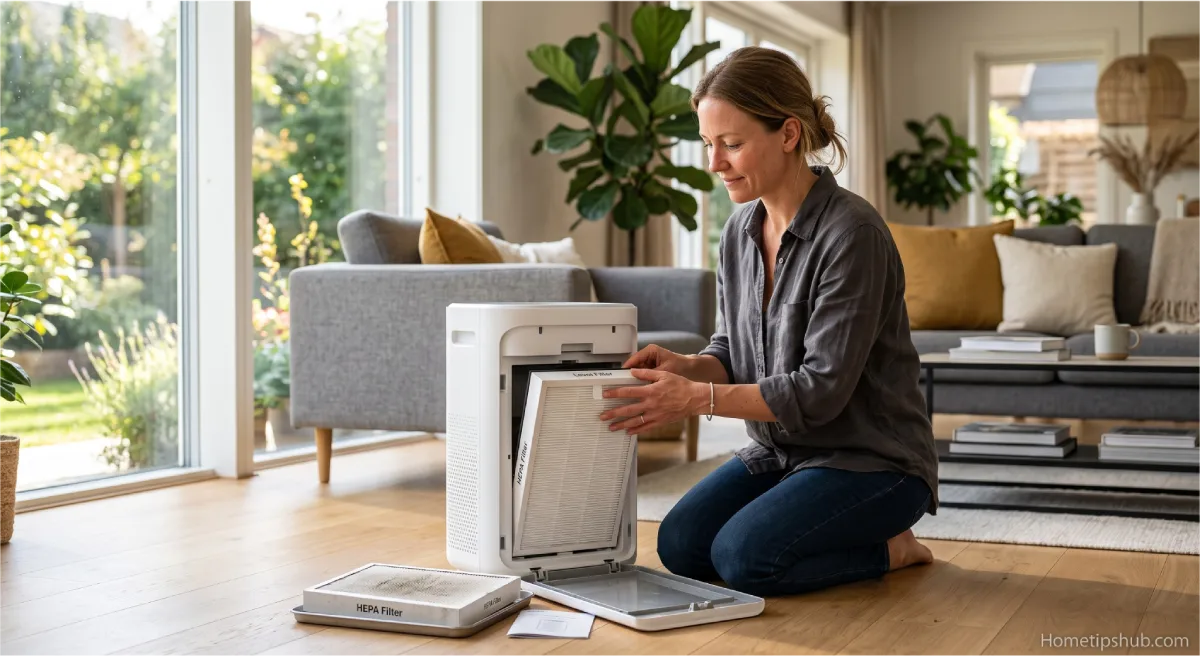
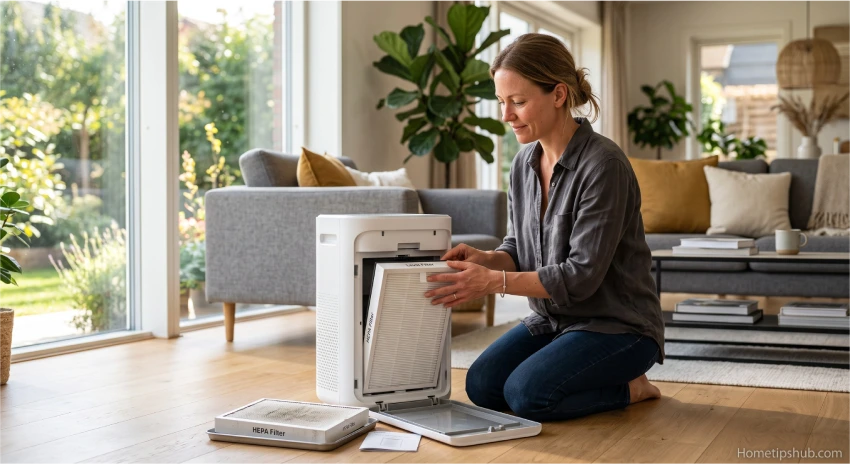
Knowing how to clean an air purifier filter properly is arguably the single most important skill in any air purifier maintenance routine. Here’s the safe process:
- Unplug the unit before touching any internal component.
- Remove the filter according to your model’s release mechanism (usually a latch or twist-lock).
- Tap out loose debris outdoors over a trash can or tarp.
- Vacuum gently using a low-suction handheld vacuum or brush attachment, moving in the direction of the filter pleats.
- Inspect for damage — tears, heavy discoloration, or a musty smell mean it’s time to replace, not clean.
- Reinstall only once completely dry, and reset the filter indicator if your model has one.
Doing this every two to four weeks, depending on your household’s dust and pet dander levels, is a simple habit that dramatically extends filter life and keeps your air purifier maintenance costs down.
Can You Wash a HEPA Filter? Here’s the Truth
This is one of the most searched questions about air purifier maintenance, and the answer isn’t as simple as yes or no.
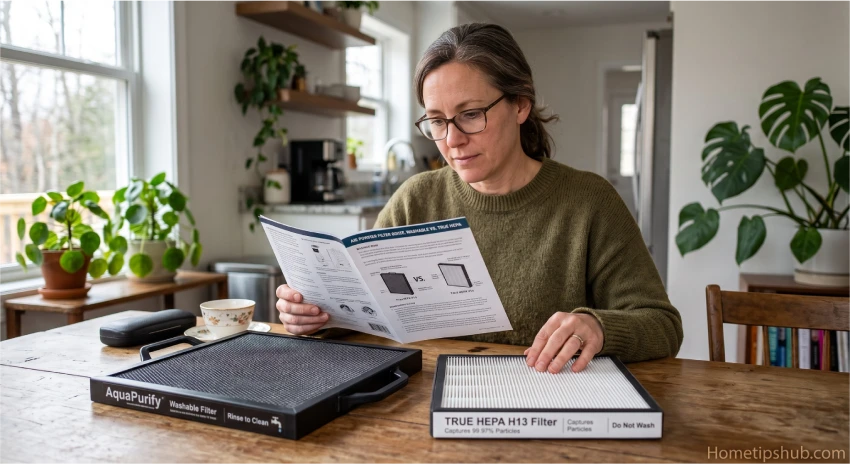
Are HEPA filters washable? In most cases, no. True HEPA filters are made of tightly packed synthetic fibers designed to trap particles as small as 0.3 microns. Water breaks down that fiber structure, warps the pleats, and permanently reduces filtration efficiency — even if the filter looks fine afterward. Washing a standard HEPA filter typically voids the manufacturer’s warranty too.
However, some brands manufacture “washable” or “permanent” HEPA-type filters specifically designed to handle water. These are clearly labeled by the manufacturer, and only these should ever touch water.
| Filter Type | Washable? | Recommended Cleaning Method |
|---|---|---|
| True HEPA filter | No | Gentle vacuuming only |
| HEPA-type filter | No | Gentle vacuuming only |
| Washable/permanent HEPA | Yes (check manual) | Rinse with cool water, air dry fully |
| Pre-filter (foam or mesh) | Usually yes | Rinse or vacuum |
| Carbon/charcoal filter | No | Cannot be cleaned; replace only |
If you’re ever unsure whether your filter is washable, check the manufacturer’s website or the sticker on the filter frame itself. When in doubt, don’t risk it — a $30 replacement filter is cheaper than a ruined $200 air purifier.
How Long Should an Air Purifier Run? Daily and Seasonal Guidance
A question just as common as filter care: how long should an air purifier run for best results? The honest answer is that most air purifiers are designed to run continuously, 24 hours a day, especially in the room you spend the most time in.
Running it constantly, rather than switching it on and off, keeps the air consistently filtered and actually reduces strain on the motor compared to frequent restarts. That said, your specific needs affect the ideal schedule:
- Allergy or asthma sufferers: Run continuously, especially during high pollen seasons in spring and fall.
- Pet owners: Run continuously or at least 12+ hours daily to manage dander and odor.
- Wildfire smoke or poor outdoor air quality days: Run on high continuously until air quality index (AQI) readings improve.
- General household use: A minimum of 8–12 hours daily, ideally overnight while you sleep.
How Often to Run Air Purifier for Different Rooms
How often to run an air purifier also depends heavily on the room itself. Here’s a quick breakdown:
| Room | Recommended Runtime | Notes |
|---|---|---|
| Bedroom | Overnight, 8–10 hours minimum | Improves sleep quality and reduces allergens |
| Living Room | Most of the day (10+ hours) | High-traffic area with more dust/pet activity |
| Kitchen | During and after cooking | Helps with smoke, grease particles, odors |
| Nursery | Continuous, low/quiet setting | Protects sensitive respiratory systems |
| Home Office | Work hours | Reduces dust from paper, electronics |
Regardless of the room, this is where air purifier maintenance and runtime intersect: the more hours a unit runs, the faster the filter fills up, which means your maintenance schedule should scale with your usage, not just the calendar.
Signs Your Air Purifier Needs Maintenance Right Now
Sometimes your unit tells you it needs attention before the indicator light even turns on. Watch for these warning signs:
- A musty or stale odor coming from the vents
- Noticeably weaker airflow than when the unit was new
- Increased noise or rattling from the fan
- Visible dust buildup on the intake grille
- A spike in your energy bill with no other explanation
- Allergy symptoms returning despite the purifier running
Any one of these is a signal that your air purifier maintenance routine has slipped, and it’s time for a deeper clean or filter swap.
Common Air Purifier Maintenance Mistakes to Avoid
Even well-intentioned owners make mistakes that shorten the life of their unit. Here are the ones we see most often:
- Washing a non-washable HEPA filter — this is the single most damaging mistake.
- Ignoring the filter indicator light for months at a time.
- Placing the unit against a wall or in a corner, which restricts airflow intake.
- Using scented candles or air fresheners near the purifier, which clogs carbon filters faster.
- Forgetting the exterior housing, letting dust recirculate into the intake vents.
- Buying cheap off-brand replacement filters that don’t fit properly and reduce suction efficiency.
Avoiding these mistakes is arguably 80% of good air purifier maintenance — it’s less about fancy techniques and more about consistency and common sense.
Frequently Asked Questions
Can you wash a HEPA filter?
No, not a true HEPA filter. Water damages the fiber structure and reduces filtration efficiency permanently. Only wash filters explicitly labeled “washable” by the manufacturer.
How long should an air purifier run each day?
Most experts recommend running your air purifier continuously, or at minimum 8–12 hours daily, especially overnight in bedrooms or during high-pollution days.
Are HEPA filters washable?
Standard HEPA filters are not washable. Rinsing them breaks down the dense fiber mesh that traps fine particles, which permanently lowers performance even if the filter appears clean.
How often to run an air purifier for allergies?
For allergy sufferers, running the unit continuously — 24 hours a day — in the bedroom and main living space produces the best symptom relief, particularly during pollen season.
How do I know when to replace vs. clean my filter?
If the filter is discolored, torn, has a lingering odor after cleaning, or is past the manufacturer’s recommended lifespan (usually 6–12 months for HEPA filters), replace it rather than attempting another clean.
Final Thoughts: Make Air Purifier Maintenance a Habit, Not a Chore
Good air purifier maintenance doesn’t require an engineering degree — it just requires consistency. Check your filter indicator weekly, vacuum the pre-filter every couple of weeks, and replace your HEPA and carbon filters on schedule. Skip the temptation to wash a non-washable HEPA filter, and let your unit run as close to continuously as your household allows.
A well-maintained air purifier doesn’t just last longer — it actually does its job, pulling allergens, smoke, and dust out of the air you and your family breathe every day. Set a recurring reminder on your phone today for your next filter check, and you’ll never let your air purifier maintenance routine slip again.
Ready to breathe easier?
Bookmark this guide, set your maintenance reminders now, and check back each season for updated tips on keeping your indoor air as clean as possible.