
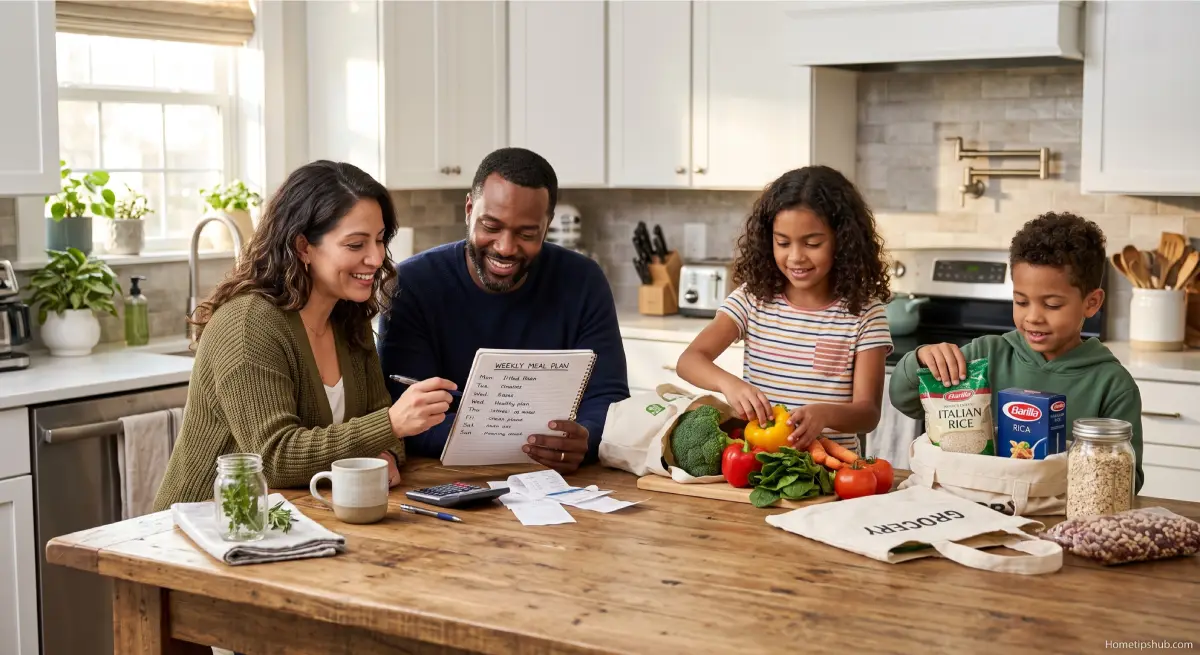
Grocery prices keep climbing, and if your weekly bill has left you staring at the receipt in disbelief, you’re not alone. The good news is that budget meal planning isn’t about eating sad, boring food — it’s about being smarter with what you already buy. With the right approach to meal planning on a budget, you can feed your family well, cut waste, and still have money left over at the end of the month.
In this guide, you’ll find 27 practical, real-world tips for budget meal planning, covering everything from grocery budget tricks to freezer meals, pantry meal ideas, and a weekly meal planner system you can start using tonight. Whether you’re cooking for one or feeding a whole household, these budget-friendly recipes and strategies will help you save money on groceries without sacrificing flavor or nutrition.
Why Budget Meal Planning Matters More Than Ever
Food is one of the few household expenses you have real control over. Unlike rent or utility bills, your grocery budget bends to your habits. That’s exactly why budget meal planning has become one of the most searched money-saving skills in America. A solid plan means fewer impulse buys, less food waste, and dinner decisions that don’t feel like a last-minute scramble.
Good meal planning on a budget also supports healthier eating. When you plan ahead, you’re less likely to order takeout or grab processed snacks out of desperation. Instead, you’re cooking homemade meals with ingredients you already chose intentionally. This is the core idea behind affordable meal planning: every dollar you spend at the store has a job to do.
The Real Cost of Not Planning
Without a plan, the average household throws away hundreds of dollars in spoiled produce and forgotten pantry items every year. Budget meal planning flips that script — every ingredient has a purpose, and nothing sits in the fridge until it’s unusable.
Who Benefits Most From Budget Meal Planning
Budget meal planning isn’t just for large families trying to stretch a paycheck. Students, retirees, single professionals, and couples all benefit from a structured approach to food budgeting. Anyone who has ever opened the fridge at 6 p.m. with no idea what to cook understands the appeal of a plan that’s already been decided in advance. The beauty of budget meal planning is that it scales — the same principles that help a family of five save money also work for a household of one.
27 Budget Meal Planning Tips That Actually Work
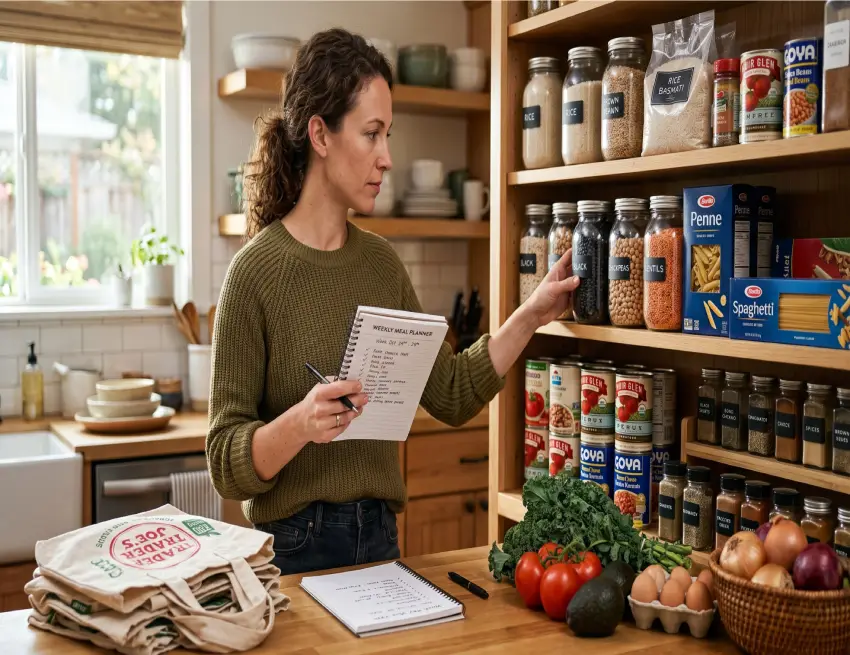
Here’s the heart of this guide: 27 actionable tips for smarter, cheaper, and healthier eating.
Planning & Organization
- Build a weekly meal planner — Write out breakfast, lunch, and dinner for seven days before you shop.
- Use a meal planning template — A reusable template (digital or printed) saves time every single week.
- Plan around sales, not cravings — Check your store’s weekly flyer before deciding what to cook.
- Batch your planning — Plan two weeks at once so you shop less often and stick to your grocery budget.
- Theme your nights — Taco Tuesday, Soup Sunday, and similar themes make budget meal planning almost automatic.
- Keep a running pantry inventory — Know what you already have before adding it to a shopping list.
- Plan leftovers on purpose — Cook extra portions intentionally so lunch the next day is already handled.
Grocery Shopping Strategy
- Shop with a list and stick to it — A written shopping list is the single best defense against impulse spending.
- Compare unit prices — The bigger package isn’t always cheaper per ounce.
- Buy store brands — Generic products often taste identical to name brands at a fraction of the price.
- Shop the perimeter first — Fresh produce, dairy, and meat are usually cheaper and healthier than packaged center-aisle items.
- Use cashback and coupon apps — A few minutes of scanning receipts can add real savings to your grocery budget over a year.
- Buy in bulk for staples — Rice, oats, beans, and frozen vegetables stretch further when purchased in larger quantities.
- Shop seasonally — Produce is cheapest and freshest when it’s in season locally.
- Don’t shop hungry — This classic advice holds up because hunger drives impulse buys that blow your grocery budget.
Cooking & Meal Prep
- Cook once, eat twice (or three times) — Meal prep on a budget means doubling recipes so extra portions become tomorrow’s lunch.
- Master a few one-pot meals — Fewer dishes and ingredients mean lower cost and less cleanup.
- Repurpose ingredients across meals — A roasted chicken can become dinner, then sandwiches, then soup.
- Cook dried beans instead of canned — Dried beans cost a fraction of canned versions and freeze beautifully.
- Bulk-cook grains and proteins — Cook a big batch of rice or chicken on Sunday to use across multiple budget-friendly recipes.
- Embrace pantry meal ideas — Canned tomatoes, pasta, rice, and beans can become dozens of cheap meal ideas in a pinch.
Freezer & Storage Tactics
- Build a freezer meal stockpile — Prepping and freezing meals in batches saves both money and weeknight stress.
- Freeze in single portions — Individually portioned freezer meals reduce waste and make grab-and-go lunches easy.
- Label everything with dates — A simple label prevents forgotten food from becoming wasted money.
- Use your freezer for sale-priced meat — Buy protein when it’s discounted and freeze it immediately for later use.
Family & Lifestyle Tips
- Involve the whole family in planning — Family meal planning works best when everyone helps choose meals they’ll actually eat.
- Track your spending monthly — Reviewing your food budgeting habits regularly helps you spot where money quietly disappears.
Sample Weekly Meal Planner for Budget-Friendly Recipes
A simple weekly dinner ideas framework makes economical recipes easier to execute:
- Monday: Lentil soup with cornbread
- Tuesday: Bean and rice tacos
- Wednesday: Baked chicken thighs with roasted vegetables
- Thursday: Pasta with canned tomato sauce and frozen spinach
- Friday: Homemade pizza using pantry staples
- Saturday: Sheet-pan sausage and potatoes
- Sunday: Big-batch soup or stew for next week’s freezer meals
This kind of inexpensive dinners rotation keeps grocery lists short, repeatable, and easy to shop for on a tight grocery budget.
Healthy Budget Meals Don’t Have to Be Complicated
A common myth is that healthy budget meals require expensive specialty ingredients. In reality, some of the most nutritious foods — beans, eggs, oats, frozen vegetables, and canned fish — are also some of the cheapest. Frugal cooking is about maximizing nutrition per dollar, not cutting corners on health.
Try building meals around a protein, a whole grain, and a vegetable. This formula alone can generate dozens of budget-friendly recipes without ever feeling repetitive.
Budget Grocery Shopping: Where the Real Savings Happen
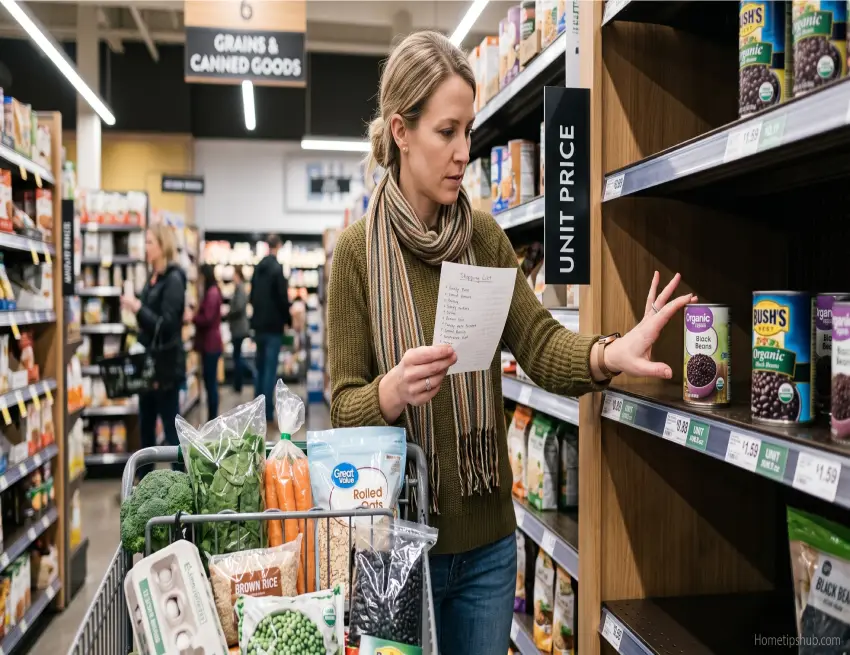
Grocery savings usually come from habits, not luck. Budget grocery shopping means comparing prices across stores, buying store brands, and resisting pre-cut or pre-packaged convenience items that carry a premium price tag. Combine these shopping habits with consistent budget meal planning, and your monthly food costs can drop significantly without any drastic lifestyle change.
It also helps to separate needs from wants before you even walk into the store. A written shopping list built directly from your weekly meal planner keeps you focused, while a flexible grocery budget with a small buffer for sales prevents the feeling of deprivation that causes many people to give up on budget cooking altogether. Over time, this combination of planning and discipline becomes second nature, and budget meal planning stops feeling like a restriction and starts feeling like a smarter way to shop.
Family Meal Planning Without the Stress
Family meal planning comes with its own challenges — picky eaters, different schedules, and varying appetites. The trick is building flexibility into your budget meal planning routine. Keep a rotating list of ten to fifteen family-approved, budget-friendly recipes and cycle through them instead of reinventing dinner every single night. This reduces decision fatigue and keeps your grocery list predictable, which in turn keeps your grocery budget predictable too.
Involving kids in age-appropriate ways, like choosing a vegetable side or helping assemble tacos, also builds buy-in. When the whole household feels ownership over the weekly dinner ideas, budget meal planning becomes a shared project rather than one person’s burden.
Frequently Asked Questions
What is budget meal planning?
Budget meal planning is the practice of deciding meals in advance based on your grocery budget, sales, and pantry inventory, so you buy only what you need and reduce food waste.
How much should a family spend on groceries per week?
This varies by household size and location, but the USDA publishes official food plan estimates that many families use as a benchmark for a realistic grocery budget.
What are the easiest cheap meal ideas for beginners?
Rice and beans, pasta with vegetables, soups, and egg-based dinners are some of the easiest cheap meal ideas because they use inexpensive, versatile pantry staples.
How do I start meal prep on a budget?
Start small: pick two or three budget-friendly recipes, double the batch, and freeze half. This is the simplest entry point into meal prep on a budget without overwhelming your schedule.
Can budget meal planning still be healthy?
Yes. Healthy budget meals rely on affordable staples like beans, eggs, oats, and frozen produce, proving that eating well and eating cheap aren’t mutually exclusive.
Final Thoughts: Make Budget Meal Planning a Habit, Not a Chore
Budget meal planning isn’t a one-time fix — it’s a habit that compounds over time. Every planned dinner, every smart grocery trip, and every frozen leftover adds up to real, noticeable savings. Start with just a few of these 27 tips, build your first weekly meal planner, and watch how quickly affordable, homemade meals become second nature.
Ready to take control of your grocery budget? Pick five tips from this list, write your first weekly meal planner today, and take the first step toward stress-free, budget-friendly eating.