

Walk into almost any home in the USA and you’ll notice something immediately — hardwood floors make a space feel warm, elevated, and alive. But that gorgeous wood grain doesn’t stay that way on its own. Without the right hardwood floor care routine, even the most expensive solid hardwood flooring can dull, scratch, warp, or lose its finish within a few years.
The good news? You don’t need to hire a professional every time something goes wrong. In this guide, you’ll discover 9 surprisingly powerful hardwood floor care hacks that homeowners swear by — from choosing the right hardwood cleaner to managing humidity levels, using protective pads, and knowing exactly when floor refinishing is worth the investment. Whether you have engineered hardwood in your kitchen or traditional solid hardwood flooring in your living room, these tips will help you protect your investment for decades.
Hack #1: Ditch the Wet Mop — Switch to a Microfiber Mop
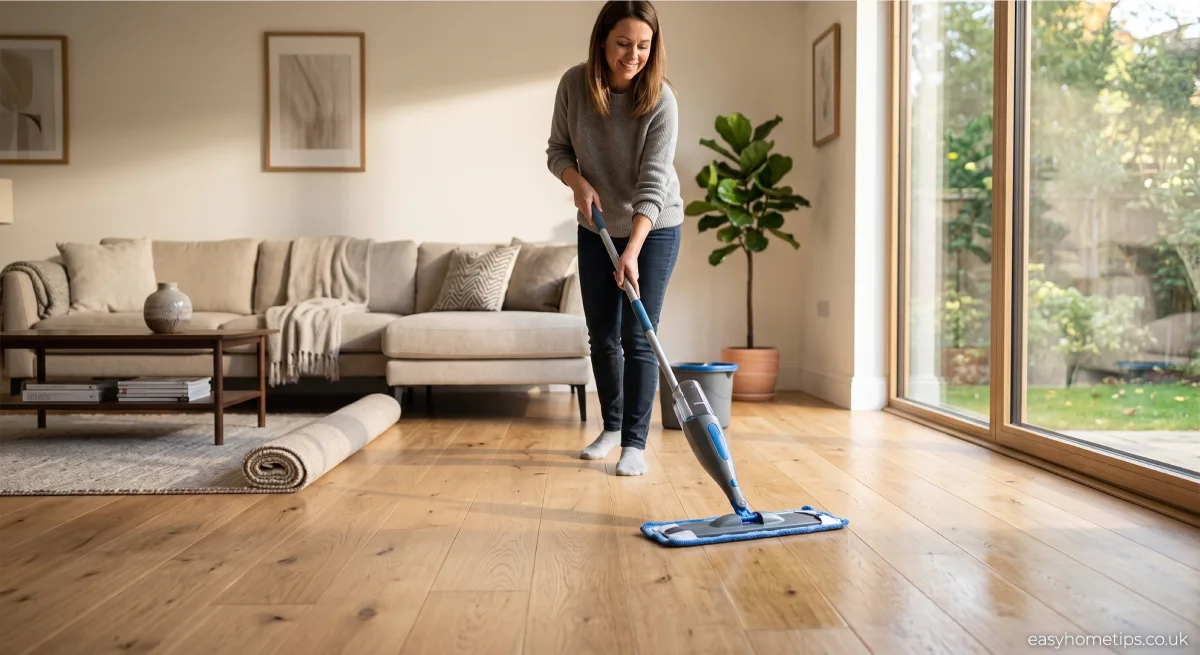
One of the most damaging things you can do during routine hardwood floor care is use a soaking-wet mop. Water is wood’s worst enemy. It seeps into the seams, causes warping, and destroys your floor finish faster than almost anything else.
The smarter move is a microfiber mop — slightly dampened, never soaked. Microfiber mop heads trap dust, pet hair, and fine debris without pushing water into the wood grain. For dry days, a dust mop does the job even better, gliding over the surface and capturing particles that a regular broom scatters into the air.
Pro tip: Always mop in the direction of the wood grain. This prevents micro-scratches and keeps your hardwood cleaner looking its best.
Hack #2: Choose the Right Hardwood Cleaner — Not Just Any Spray

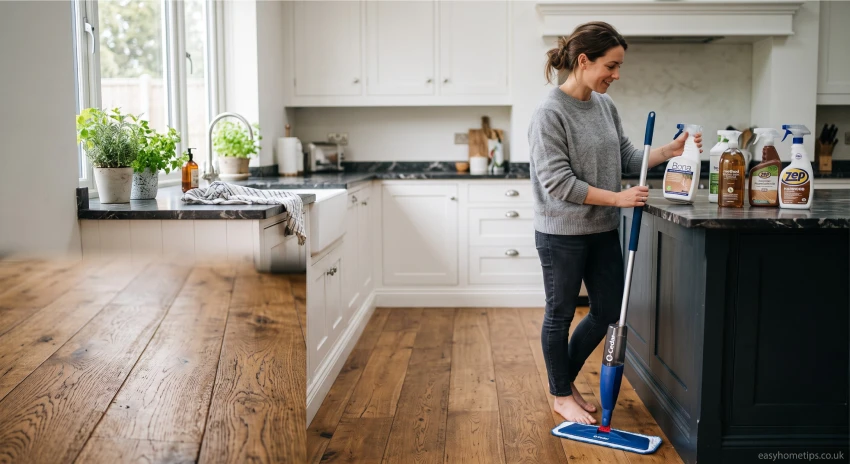
Walk down any cleaning aisle and you’ll find dozens of products claiming to be safe for wood flooring. Most aren’t. Many general-purpose cleaners contain ammonia, bleach, or harsh solvents that strip your floor finish over time, leaving dull, unprotected wood behind.
For genuine hardwood floor care, look for a pH-neutral hardwood cleaner specifically formulated for your floor type. If you have a polyurethane finish (which most modern floors do), avoid wax-based products entirely — they leave buildup that’s difficult to remove and interferes with future refinishing.
For engineered hardwood, check the manufacturer’s recommendations before using any product, since the top veneer layer is thinner and more sensitive than solid hardwood flooring.
A simple DIY option: mix a few drops of dish soap with warm water for light cleaning. But for regular maintenance, a dedicated hardwood cleaner is worth every penny.
Hack #3: Use Protective Pads on Every Single Piece of Furniture
Here’s a hardwood floor care hack that costs almost nothing but saves thousands. Furniture legs — chairs, sofas, tables, even beds — act like tiny chisels every time they’re dragged or shifted. A single dining chair moved without protective pads can leave a scratch that goes straight through your floor finish and into the wood grain below.
Felt protective pads are the gold standard. They’re inexpensive, easy to apply, and dramatically reduce the risk of scratches. Replace them every six to twelve months, as dirt can embed in the felt and turn them into sandpaper.
For heavy furniture that rarely moves, rubber cups are another great option. They grip the floor without scratching it, providing extra protection during vibrations or minor shifts.
Scratch prevention is far cheaper than floor restoration — always remember that.
Hack #4: Control Humidity Levels Like a Pro
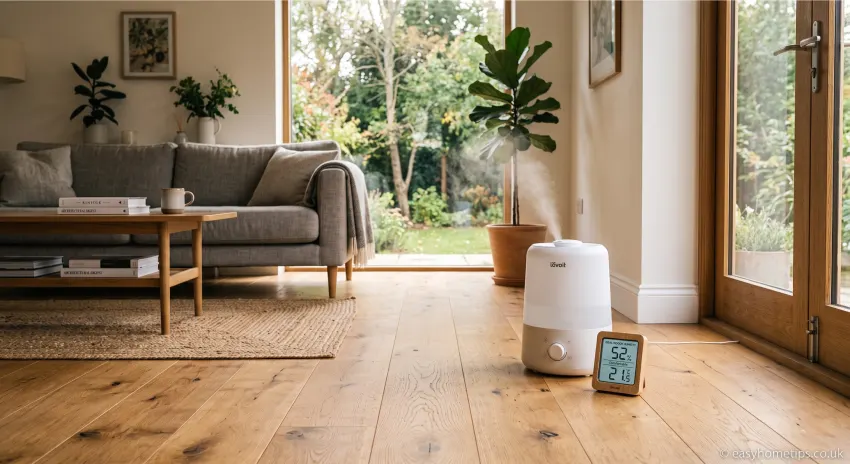
This is the one hardwood floor care secret that most homeowners overlook entirely: moisture control. Wood is a natural material. It expands when humidity levels rise and contracts when the air is dry. Over time, this constant movement causes gaps between boards, cupping (where edges curl upward), or crowning (where the center of boards rises).
The ideal humidity levels for most hardwood floors are between 35% and 55%. In the winter, when heating systems dry out the air, use a humidifier to keep levels stable. In the summer, air conditioning and dehumidifiers help keep moisture in check.
Investing in a simple hygrometer — a device that measures indoor humidity — gives you real-time data and takes the guesswork out of wood protection. This single habit can add years, even decades, to the life of your solid hardwood flooring.
Hack #5: Vacuum Smarter — Use the Right Vacuum for Hardwood Floors
Not all vacuums are safe for wood flooring. Beater bar attachments, designed to agitate carpet fibers, will scratch and dull a hardwood floor finish quickly. The right vacuum for hardwood floors has a hard floor setting that disables the brush roll, or uses a dedicated hard floor attachment.
Canister vacuums and stick vacuums tend to perform best for hardwood floor care. Look for models with soft rubber wheels and felt-lined edges to prevent micro-abrasions. Vacuuming is especially important in high-traffic areas where sand and grit accumulate — these tiny particles act like sandpaper under foot traffic, wearing down your floor finish with every step.
Vacuum at least twice a week in busy areas, and don’t forget corners and edges where debris tends to collect.
Hack #6: Apply Floor Polish to Restore That Lost Shine
Over time, even a well-maintained hardwood floor loses some of its luster. Before you jump to full floor refinishing, try a quality floor polish first. Floor polish is a quick, affordable way to restore shine and add a thin protective layer between foot traffic and your actual floor finish.
Floor polish works best on hardwood cleaner surfaces — always clean the floor thoroughly before applying. Use a flat mop applicator and work in thin, even coats, following the wood grain. Most floor polish products need 30–60 minutes to dry before foot traffic resumes.
Note: Floor polish is different from floor wax. Wax creates a thicker, softer coating that requires buffing and periodic stripping. On modern polyurethane finish floors, wax can actually do more harm than good. Stick to polish unless your floor has an oil or wax finish specifically.
Hack #7: Use a Wood Conditioner for Older or Dull Floors
If your hardwood floors look dry, faded, or tired — but you’re not ready for full floor refinishing — a wood conditioner can be a game-changer. Wood conditioner penetrates the surface to nourish the wood from within, restoring flexibility and natural color to aging boards.
This is particularly useful for older solid hardwood flooring that has been sanded multiple times and has a thinner wear layer remaining. A wood conditioner also preps the surface for accepting fresh coats of floor polish or a new polyurethane finish more evenly.
Apply wood conditioner with a soft cloth or applicator pad, allow it to penetrate for the manufacturer-recommended time, then wipe away any excess. Think of it as a moisturizer for your floors — a simple step that makes a visible difference in wood protection.
Hack #8: Know When Floor Refinishing Is the Right Move
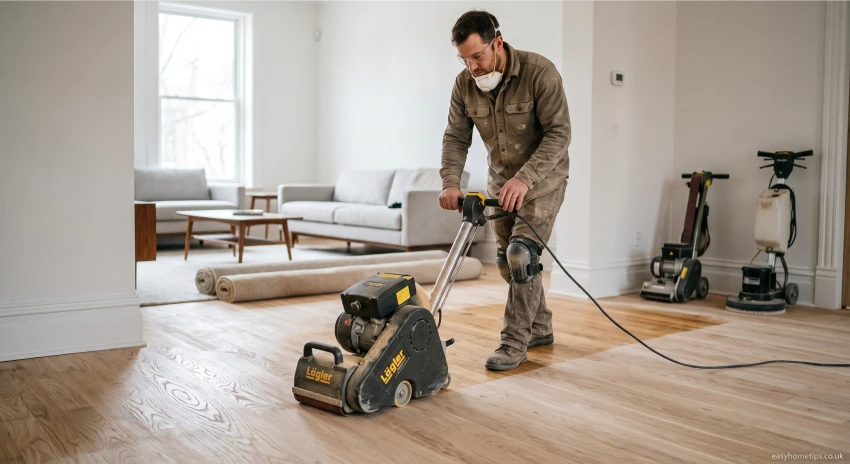
All the hardwood floor care in the world can’t reverse deep gouges, widespread discoloration, or a finish that’s worn down to bare wood. That’s when floor refinishing becomes necessary — and it’s not as daunting as it sounds.
Floor refinishing involves sanding the surface of your solid hardwood flooring down to fresh wood, then applying new stain (if desired) and a fresh polyurethane finish. A professionally refinished floor looks brand new and adds significant resale value to any home.
Signs it’s time for floor refinishing:
- Deep scratches that go through the finish and into the wood grain
- Gray or black stains from moisture damage
- Visible bare wood in high-traffic areas
- Floor restoration products no longer restore the shine
Most solid hardwood floors can be refinished five to ten times over their lifetime. Engineered hardwood can typically be refinished one to three times depending on the thickness of the top veneer.
Hack #9: Build a Daily Hardwood Floor Care Routine That Actually Sticks
The most powerful hardwood floor care hack isn’t a product — it’s consistency. A simple daily and weekly routine prevents the kind of buildup and damage that leads to expensive floor restoration or refinishing.
Daily: Use a dust mop or dry microfiber mop to remove loose debris. Place doormats at every entry point to capture dirt, sand, and moisture before they reach your wood flooring.
Weekly: Vacuum with a hardwood-safe vacuum for hardwood floors. Spot-clean spills immediately using a slightly damp cloth and a pH-neutral hardwood cleaner.
Monthly: Apply floor polish as needed to maintain your floor finish. Check humidity levels and adjust humidifier or dehumidifier settings seasonally.
Annually: Inspect the finish for wear. Consider a screen-and-recoat (a light buff with a fresh coat of polyurethane finish) in high-traffic areas before full wear-through occurs. This is far less expensive than complete floor refinishing.
FAQ: Hardwood Floor Care Questions Answered
Q: How often should I clean my hardwood floors?
Sweep or dust mop daily in high-traffic areas, and do a full damp mop with a hardwood cleaner once a week. Avoid over-mopping, as excess moisture damages wood flooring over time.
Q: What’s the difference between floor polish and floor wax for hardwood floor care?
Floor polish is a water-based product that adds shine and a thin protective layer on top of a polyurethane finish. Floor wax is a harder, oil-based coating best suited for older floors with an oil or wax finish — not modern polyurethane-finished wood flooring.
Q: Can I use a steam mop on solid hardwood flooring?
No. Steam mops force hot moisture directly into the wood grain and seams, which causes warping, swelling, and finish damage. Stick to a lightly dampened microfiber mop for safe hardwood floor care.
Q: How do I prevent scratches on my hardwood floors?
Install protective pads under all furniture legs, use rugs in high-traffic areas, keep pet nails trimmed, and vacuum regularly to remove grit and sand. These scratch prevention habits make a dramatic difference over time.
Q: When is refinishing worth it versus replacing the floor?
If the wood structure is solid and at least 3/4 inch thick with multiple sanding cycles remaining, floor refinishing is almost always more cost-effective than full replacement. Consult a flooring professional if you’re unsure about the remaining wear layer.
Conclusion: Your Hardwood Floors Deserve the Best Care
Your hardwood floors are one of the most valuable features in your home — and with the right hardwood floor care routine, they can stay stunning for generations. From switching to a microfiber mop and using the correct hardwood cleaner, to managing humidity levels and knowing when floor refinishing is necessary, every hack in this guide is designed to protect your investment with minimal effort.
Start small: pick two or three hacks from this list and build from there. Add protective pads today. Buy a hygrometer this weekend. Grab a quality floor polish for that room that’s lost its shine. Small, consistent steps are what separate floors that look beautiful after 30 years from floors that need replacing after 10.
Ready to upgrade your hardwood floor care routine? Share this guide with a neighbor, try one new hack this week, and watch the difference it makes.