

Most homeowners don’t think twice about the small white disc on their ceiling — until the batteries die, or worse, until there’s an actual emergency. Here’s something that might surprise you: according to the U.S. Fire Administration, roughly three out of every five home fire deaths involve properties where smoke alarms were either absent or not working properly. That’s not a statistic you want your home to be part of.
The good news? Proper smoke detector maintenance is one of the easiest — and most impactful — things you can do to keep your household safe. In this guide, you’ll learn 11 practical, no-fluff tips covering everything from smoke detector testing and cleaning to battery replacement, inspection schedules, and knowing exactly when it’s time to retire an aging unit. Whether you’re a first-time homeowner or just overdue for a safety check, this guide has you covered.
Why Smoke Detector Maintenance Actually Matters
Before jumping into the tips, it’s worth understanding what’s at stake. A smoke detector that looks perfectly fine on the outside can be completely non-functional on the inside. Dust accumulation, aging sensors, dead batteries, and environmental factors all silently erode performance over time.
Home smoke detector maintenance isn’t a once-and-done task. It’s an ongoing habit — one that fire safety experts, the National Fire Protection Association (NFPA), and the U.S. Consumer Product Safety Commission all strongly recommend. Skipping routine smoke alarm maintenance doesn’t just void manufacturer warranties; it can cost lives.
Tip #1 — Test Your Smoke Detector Every Single Month
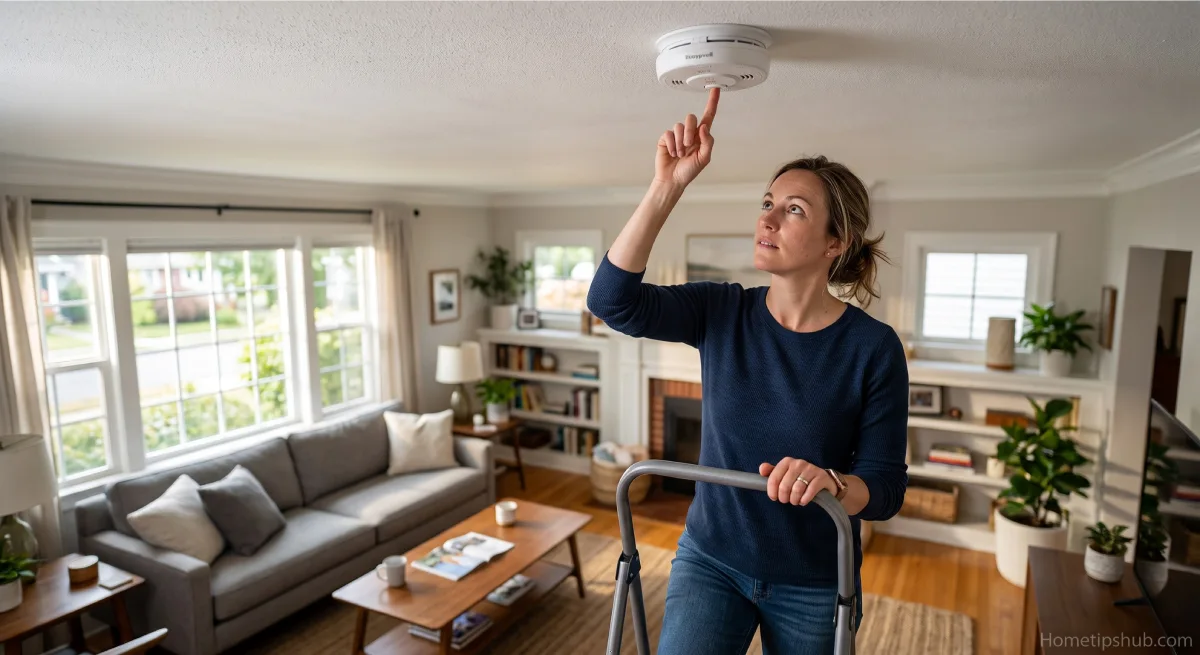
Smoke detector testing is the single most important maintenance task you can do, and it takes less than 30 seconds.
Press and hold the test button on your smoke alarm until you hear the alarm sound. If the alarm sounds loudly and clearly, you’re good. If the sound is faint, delayed, or absent, it’s time to troubleshoot — starting with the battery.
Make smoke alarm testing a monthly habit. Tie it to something you already do every month, like paying bills or changing your HVAC filter. That kind of habit-stacking is the simplest way to stay consistent with residential smoke detector maintenance.
Tip #2 — Replace Smoke Detector Batteries at Least Once a Year
Most smoke detector fires involve a unit where the battery was dead or missing. Don’t let that be yours.
The standard recommendation is to replace smoke detector batteries once a year. A popular approach used across the USA is to swap them out when you change your clocks for Daylight Saving Time — twice a year, just to be extra safe.
Here’s what you need to know about smoke detector battery replacement:
- 9-volt batteries are standard in most traditional smoke alarms.
- Sealed lithium batteries (found in newer models) last up to 10 years and don’t need annual replacement.
- Never ignore a low-battery chirp. That intermittent beeping every 30–60 seconds is your alarm telling you to replace smoke detector battery immediately — not in a week.
If your alarm keeps chirping after a fresh battery, it may be a sign of a deeper issue — time to move on to smoke detector troubleshooting.
Tip #3 — Clean Your Smoke Detector Every Six Months

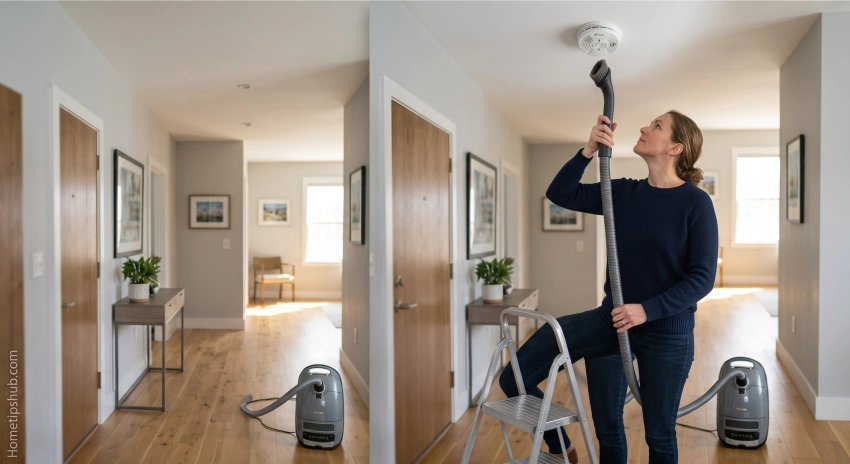
Dust, cobwebs, and airborne debris settle inside your smoke alarm and interfere with its sensors. Smoke detector cleaning is a simple but often overlooked step in home smoke detector maintenance.
How to clean a smoke detector properly:
- Remove the detector from its mounting bracket.
- Open the casing (if removable) and use a soft brush attachment on your vacuum to gently clear dust from the interior.
- Wipe the exterior with a dry or lightly damp cloth.
- Avoid aerosol cleaners, solvents, or water — these can permanently damage sensors.
- Reinstall and run a smoke detector test immediately after cleaning.
Aim for smoke detector cleaning at least every six months, or more frequently in kitchens, garages, and high-dust areas.
Tip #4 — Conduct a Full Smoke Detector Inspection Twice a Year
Monthly testing tells you if the alarm works. A biannual smoke detector inspection tells you why it might not be working as well as it should.
During your inspection, check for:
- Physical damage: cracks, discoloration, or yellowing plastic (yellowing can indicate the unit is aging)
- Loose mounting: the detector should sit flush and secure on the ceiling or wall
- Manufacturer date: check the label on the back to verify the detector’s age
- Sensor contamination: insects or heavy paint residue can block sensor chambers
- Interconnection integrity: if you have hardwired alarms, verify they trigger each other correctly
A thorough smoke detector inspection twice a year ensures you catch problems before they become emergencies.
Tip #5 — Know the Real Smoke Detector Lifespan
Here’s a fact that shocks most homeowners: smoke detectors don’t last forever. The smoke detector lifespan is typically 8 to 10 years from the date of manufacture — not the date you installed it.
After 10 years, the internal sensing components degrade, making the unit unreliable even if it still passes a button test. That test only checks whether the alarm circuit works — it doesn’t validate the accuracy of the sensing chamber.
To find your detector’s manufacture date, flip it over and look for a label on the back. If it’s approaching or past the 10-year mark, replacement isn’t optional — it’s necessary. This is a core element of responsible smoke detector care and home safety.
Tip #6 — Place Detectors in the Right Locations
Even perfect smoke alarm maintenance won’t help if your detectors are in the wrong spots.
The NFPA recommends:
- One smoke alarm on every level of the home, including the basement
- One inside every sleeping room
- One outside each sleeping area (in the hallway)
- At least 10 feet from cooking appliances to reduce nuisance trips
Avoid placing detectors near windows, doors, or vents where airflow can dilute smoke before it reaches the sensor. Don’t install them in garages or near strong exhaust fans.
Getting placement right is a one-time upgrade that multiplies the effectiveness of every other smoke detector maintenance step you take.
Tip #7 — Master Smoke Detector Troubleshooting Like a Pro
When something’s off with your alarm, smoke detector troubleshooting can save you from a false sense of security — or an unnecessary panic.
Common issues and what they mean:
| Problem | Likely Cause | Solution |
|---|---|---|
| Constant chirping | Low or dead battery | Replace smoke detector battery immediately |
| No sound during test | Dead battery, faulty wiring, or failed sensor | Replace battery; if still no sound, replace the unit |
| Frequent false alarms | Placed too close to kitchen/shower | Relocate; clean sensor chamber |
| Alarm won’t stop after smoke clears | Residual smoke or dust in sensor | Fan the alarm, clean with vacuum; replace if persistent |
| Alarm works intermittently | Loose battery connection or wiring | Check connections; replace battery |
If smoke alarm repair doesn’t resolve persistent problems — especially in hardwired systems — consult a licensed electrician. Never disable a malfunctioning alarm without immediately replacing it.
Tip #8 — Choose the Right Type of Detector for Each Room
Not all smoke alarms are created equal, and part of smart smoke detector care is matching the detector type to the room.
Ionization alarms respond faster to fast-flaming fires (like a grease fire). They’re best for living rooms and bedrooms away from the kitchen.
Photoelectric alarms are better at detecting slow, smoldering fires (like a couch cushion that catches slowly). These are ideal near sleeping areas.
Combination alarms offer both technologies in a single unit and are increasingly recommended by fire safety organizations for comprehensive protection.
If you have carbon monoxide risks (gas appliances, attached garage), a combination smoke/CO detector provides dual coverage with a single device — simplifying your smoke alarm maintenance routine.
Tip #9 — Don’t Ignore the Smoke Detector Maintenance Checklist
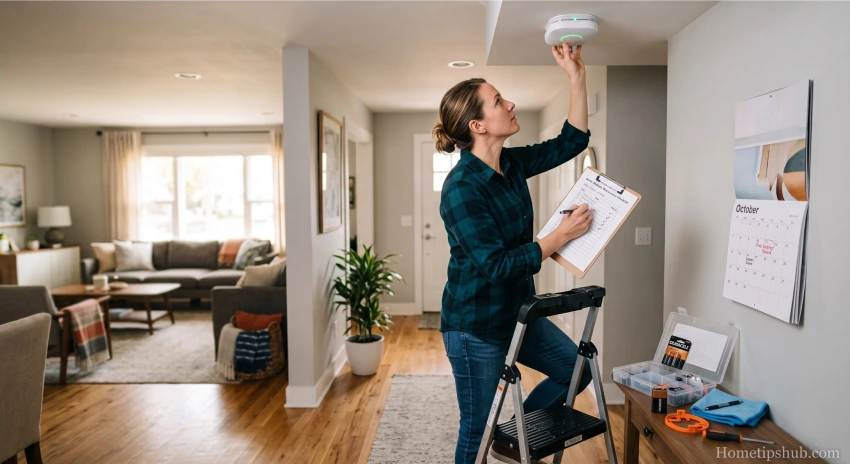
Having a checklist turns a vague intention into a concrete action. Print this out, put it on your fridge, or save it in your phone.
Smoke Detector Maintenance Checklist:
Monthly:
- Press test button on every smoke alarm
- Listen for strong, clear alarm tone
- Check that no low-battery chirps are occurring
Every 6 Months:
- Perform smoke detector cleaning (vacuum interior, wipe exterior)
- Conduct full smoke detector inspection (damage, mounting, age)
- Replace batteries in standard alarms (or check sealed battery status)
Every 10 Years:
- Check manufacture date on all detectors
- Replace any unit that is 10 years old or older
- Update detector placement based on any home changes or renovations
Following a smoke detector maintenance checklist consistently is what separates households with reliable protection from those that only think they’re protected.
Tip #10 — Hardwired vs. Battery-Operated: Maintenance Differences
Many homes in the USA have hardwired smoke alarms — units that connect directly to the home’s electrical system, often with a battery backup.
Here’s what changes for smoke alarm maintenance depending on your type:
Battery-operated alarms: Require annual smoke detector battery replacement (or every 6 months as a best practice). Simple to install and relocate. Entirely dependent on battery health.
Hardwired alarms: Powered continuously by your home’s electricity. Still require battery backup maintenance — replace these backup batteries annually. Hardwired systems can be interconnected so that when one alarm triggers, all alarms sound. Test interconnection during every smoke alarm testing session.
Hardwired alarm troubleshooting tip: If a hardwired alarm chirps even with a fresh backup battery, the unit itself may be at the end of its smoke detector lifespan or have a wiring issue. Call an electrician before assuming it’s fine.
Tip #11 — Involve the Whole Household in Smoke Alarm Safety
Smoke detector safety tips aren’t just for adults. Every person in your home should know what the alarm sounds like, what to do when it goes off, and who is responsible for maintenance.
Make it a household habit:
- Include smoke alarm testing in your family’s fire drill routine
- Teach children never to cover or tamper with detectors
- Assign one person as the “smoke detector champion” responsible for the maintenance schedule
- Keep a log of when batteries were replaced, when cleaning was done, and when units were inspected
Community awareness multiplies the impact of your own smoke detector care efforts. When everyone knows the plan, the plan actually works.
Frequently Asked Questions About Smoke Detector Maintenance
How often should I test my smoke detector?
You should perform smoke detector testing once a month. Press the test button on each unit and listen for a loud, clear alarm. Monthly smoke alarm testing is the minimum recommended by the NFPA and most fire safety authorities in the USA.
When should I replace smoke detector batteries?
Replace smoke detector batteries at least once per year. Many experts recommend doing this every six months for added reliability. If you hear a chirping sound every 30 to 60 seconds, that’s your alarm signaling a low battery — replace smoke detector battery immediately, don’t wait.
How long do smoke detectors last?
The smoke detector lifespan is 8 to 10 years from the manufacture date printed on the back of the unit. After that period, the internal sensors degrade and the unit should be replaced regardless of whether it still passes a button test. Checking the manufacture date is a critical part of any smoke detector inspection.
Why does my smoke alarm keep going off for no reason?
Frequent false alarms are usually caused by poor placement (too close to a kitchen or bathroom), a dirty sensor chamber, or a failing unit. Start with smoke detector cleaning — vacuum the interior gently. If false alarms continue after cleaning and relocation, the unit may need replacement. This falls under standard smoke alarm repair assessment.
How many smoke detectors does a house need?
According to NFPA guidelines, every home should have a smoke alarm on every level, inside every bedroom, and outside each sleeping area. Larger homes may need additional units to ensure proper coverage. Proper placement is just as important as routine smoke alarm maintenance.
Conclusion: Small Habit, Massive Impact
Smoke detector maintenance doesn’t require specialized skills, expensive tools, or a lot of time. What it requires is consistency. Test monthly, clean every six months, replace batteries annually, inspect twice a year, and replace aging units on schedule. Follow the smoke detector maintenance checklist in this guide, and you’ll have a system in place that genuinely works when it matters most.
The difference between a home that’s truly protected and one that just looks protected often comes down to these small, regular habits. And that difference could save your life.
Ready to get started? Walk through your home today, locate every smoke detector, and press the test button. It takes five minutes — and there’s no better time than right now to make smoke detector care a non-negotiable part of your household routine.