
If your utility bills make you wince every month, you’re not alone. Rising energy costs and a growing interest in greener living have made more homeowners ask the same question: how to design energy-efficient homes that actually work, without turning into a science project or blowing the budget.
The good news? You don’t need a mansion-sized budget or an engineering degree to get this right. Whether you’re starting from a blank lot or renovating, understanding how to design an energy-efficient house from scratch comes down to a handful of smart, repeatable decisions — orientation, insulation, materials, and layout, to name a few.
In this guide, we’ll walk through 17 practical, real-world hacks for designing a home that stays comfortable, cuts your energy consumption, and holds its value for decades. You’ll also get answers to the questions homeowners ask most, plus a few examples pulled from real builds across the U.S. Let’s get into it.
Best Ways to Design Energy-Efficient Homes: Start With Orientation
Before you pick paint colors or countertops, look at the sun. One of the best ways to design energy-efficient homes is to orient the house so its longest wall faces south (in the Northern Hemisphere). This single decision sets the stage for everything else.
Passive Solar Home Design Basics

Passive solar home design uses the sun’s natural path to heat and cool your home without mechanical systems doing all the work. In winter, low sun angles pour light through south-facing windows, warming interior thermal mass like concrete floors or brick walls. In summer, properly sized roof overhangs block the higher sun, keeping rooms cooler.
A few passive solar design ideas worth considering:
- Place living areas on the south side, garages or storage on the north
- Use deciduous trees on the south and west sides for seasonal shade
- Add thermal mass (tile, stone, concrete) in direct sun paths
- Keep window-to-wall ratios balanced — too much glass increases heat loss at night
Energy-Efficient Home Design Tips for the Building Envelope
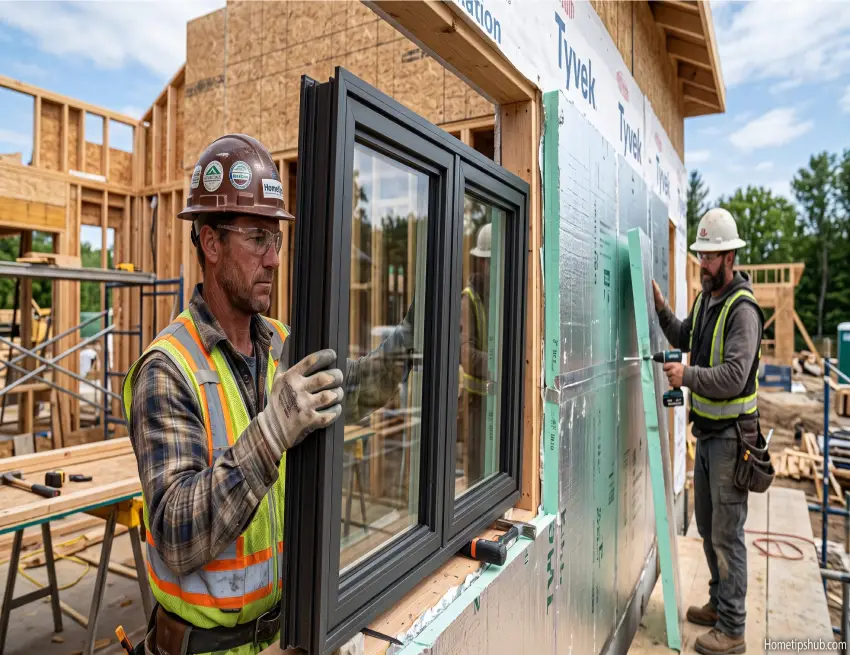
The building envelope — your walls, roof, windows, and foundation — is where most energy is lost or gained. Getting this right is one of the most impactful energy-efficient home design tips you can follow.
Insulation That Actually Performs
Don’t just meet the minimum code requirement. Consider continuous exterior insulation, which eliminates thermal bridging through wood studs. Spray foam, rigid foam board, and dense-pack cellulose all outperform standard batt insulation in real-world testing.
High-Performance Windows
Windows are often the weakest link. Look for:
- Low-E coatings to reflect heat
- Double or triple-pane glass with argon or krypton gas fill
- U-factor below 0.30 for cold climates
Air Sealing
A tightly sealed envelope, paired with proper ventilation, prevents drafts and moisture problems. Blower door testing during construction catches leaks before drywall goes up.
Energy-Efficient Floor Plan Ideas That Cut Waste
Layout matters as much as materials. Smart energy-efficient floor plan ideas reduce the amount of space you need to heat, cool, and light.
Compact, Simple Shapes
A square or rectangular footprint has less exterior wall surface area than a sprawling, angular design — meaning less surface for heat to escape or enter. Every jog, bump-out, or dormer adds cost and energy loss.
Zoning Rooms by Use
Group high-use spaces (kitchen, living room) together and away from unconditioned areas like garages. This creates a natural energy-efficient home layout where heating and cooling systems don’t have to work overtime to condition rarely used rooms.
Open-Concept With Purpose
Open floor plans can improve airflow and natural light, reducing reliance on artificial lighting and mechanical ventilation — but balance this with strategically placed doors to zone HVAC use in larger homes.
Energy-Efficient Home Architecture: Design Choices That Matter
Beyond layout, the architectural style and structural choices influence performance for the life of the building.
Roof Design and Overhangs
Wide overhangs (2-3 feet) shade windows in summer while allowing winter sun to reach deep into the home. Cool roofing materials with high solar reflectance also reduce attic heat gain.
Window Placement and Daylighting
Thoughtful energy-efficient home architecture uses daylighting — placing windows to bring in natural light without excess heat gain, cutting daytime lighting needs significantly.
Attached Garages and Mudrooms as Buffers
Placing a garage or mudroom on the north or west side creates a buffer zone that shields living spaces from harsh weather and temperature swings.
Affordable Energy-Efficient Home Design on a Budget
You don’t need every high-tech feature to see real savings. Affordable energy-efficient home design often comes down to prioritizing a few high-impact upgrades over dozens of small ones.
Where to Spend First
- Insulation and air sealing (biggest ROI)
- High-performance windows in key rooms
- A properly sized HVAC system (oversized systems waste energy and cycle inefficiently)
- LED lighting throughout
Where You Can Wait
Solar panels, smart home systems, and premium finishes can be added later. The envelope and orientation decisions, however, are much harder — and pricier — to fix after the foundation is poured.
Net-Zero Home Design Guide: Getting to Zero Energy
A net-zero home produces as much energy as it consumes over a year, usually through solar panels combined with an ultra-efficient envelope. Here’s a simplified net-zero home design guide:
- Reduce demand first — insulation, air sealing, efficient windows
- Choose efficient systems — heat pumps for heating/cooling and water heating
- Add renewable generation — properly sized solar array based on actual usage data
- Monitor performance — smart meters help track and adjust consumption
Many builders in states like California, Colorado, and New York now offer net-zero-ready packages, making this once-niche approach far more accessible than it was even five years ago.
Climate-Friendly Home Design Ideas for Different Regions
How to design energy-efficient homes changes depending on where you live. Climate-friendly home design isn’t one-size-fits-all.
Hot, Humid Climates (Southeast U.S.)
Prioritize shade, ventilation, and moisture control. Raised foundations and covered porches help manage both heat and humidity.
Cold Climates (Northeast, Midwest)
Focus on maximizing insulation values, minimizing north-facing glass, and using airtight construction to prevent heat loss.
Hot, Dry Climates (Southwest)
Thermal mass, deep overhangs, and light-colored exteriors reflect heat while cooling the interior overnight.
Modern Energy-Efficient Home Ideas Worth Considering
If you want your home to look as good as it performs, these modern energy-efficient home ideas blend style with substance:
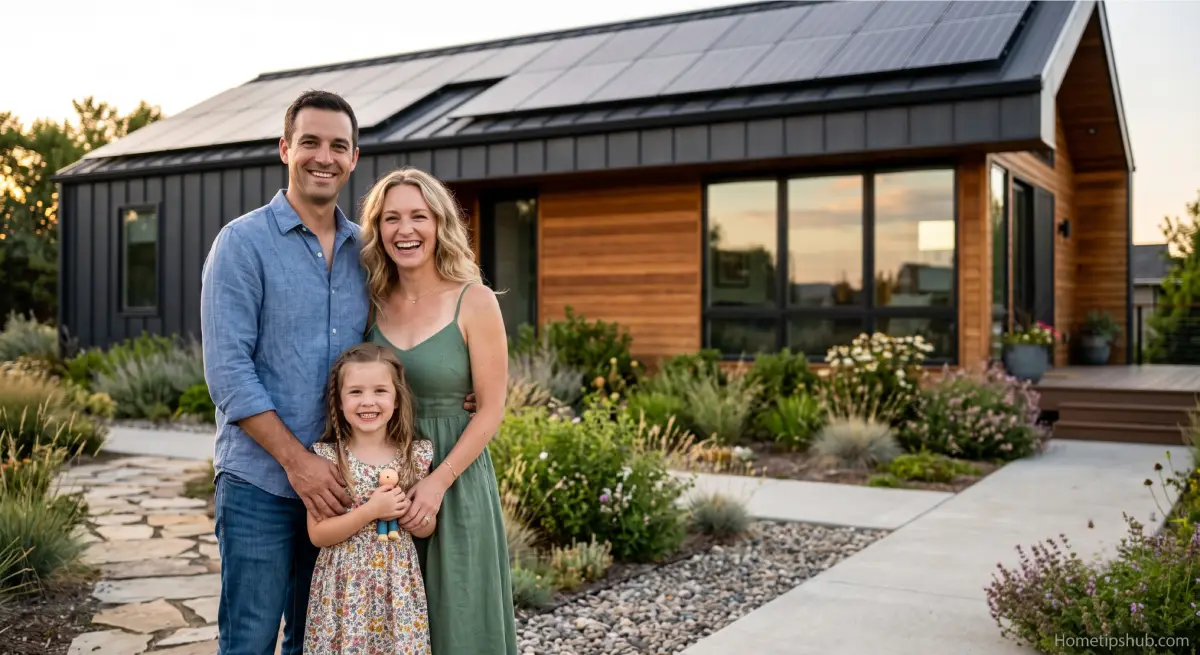
- Standing seam metal roofs — durable, reflective, and solar-ready
- Triple-glazed black-framed windows — a popular modern aesthetic with strong thermal performance
- Exposed concrete thermal mass floors — sleek and functional
- Integrated solar tiles — a subtler alternative to traditional panels
Energy-Efficient Home Features Worth the Investment
Some features consistently deliver strong returns on energy-efficient homes:
- Heat pump HVAC systems (up to 3x more efficient than furnaces)
- Heat pump water heaters
- ENERGY STAR-rated appliances
- Smart thermostats with occupancy sensing
- Whole-house mechanical ventilation with heat recovery (ERV/HRV)
How to Build an Eco-Friendly Home: Materials and Methods
Designing a sustainable house goes beyond energy use — it also considers the materials themselves. Learning how to build an eco-friendly home means looking at embodied carbon, not just operational energy.
- Choose FSC-certified or reclaimed wood framing
- Use low-VOC paints, sealants, and finishes
- Consider insulated concrete forms (ICFs) or structural insulated panels (SIPs) for faster, tighter builds
- Source materials regionally to cut transportation emissions
Efficient House Planning Tips for Working With Your Architect
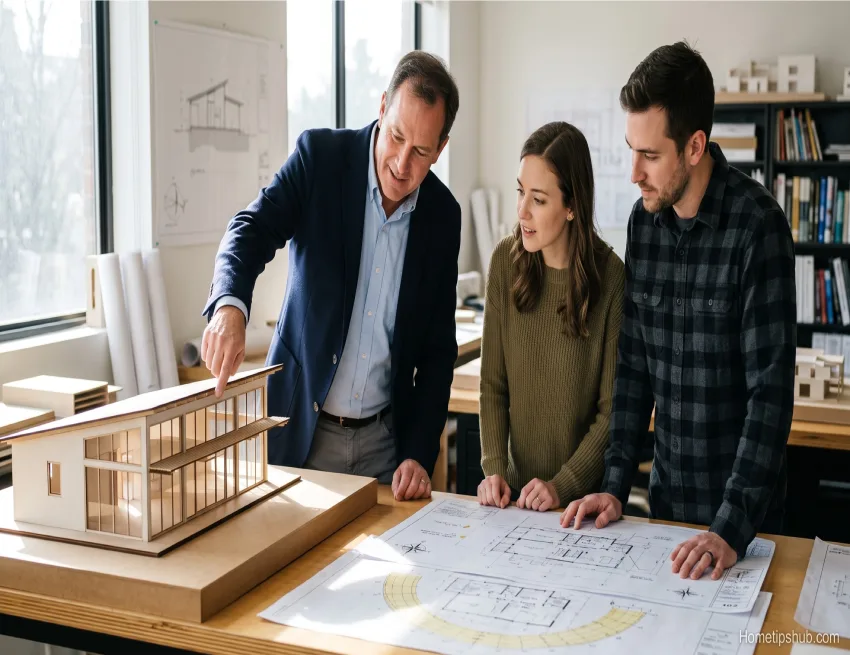
When you sit down with a designer or architect, come prepared. These efficient house planning tips help the conversation stay focused:
- Ask for a blower door test target (aim for under 3 ACH50)
- Request a HERS rating estimate during design, not after construction
- Discuss window-to-wall ratio by orientation, not just total square footage
- Get a load calculation (Manual J) before choosing HVAC equipment size
How to Reduce Home Energy Consumption After Move-In
Good design does most of the work, but daily habits and small upgrades help too. If you’re wondering how to reduce home energy consumption in an existing home:
- Seal visible gaps around doors, outlets, and attic hatches
- Add attic insulation if it’s below current code recommendations
- Switch to LED bulbs and smart power strips
- Schedule an annual HVAC tune-up
- Use ceiling fans to reduce reliance on air conditioning
FAQ: Designing Energy-Efficient Homes
What is the most cost-effective way to design an energy-efficient home?
Prioritizing insulation, air sealing, and proper orientation typically delivers the best return, since these decisions are cheapest to get right during design and expensive to fix afterward.
How much more does it cost to build an energy-efficient home?
Depending on the region and target performance level, expect a 2-8% premium over standard construction — often recovered within 5-10 years through lower utility bills.
Can I retrofit an existing home to be more energy-efficient?
Yes. Adding insulation, sealing air leaks, upgrading windows, and installing a heat pump system are among the most effective retrofits for older homes.
Is passive solar design only useful in sunny climates?
No. Passive solar principles — orientation, thermal mass, and shading — work in most climates, though the specific strategies shift based on regional sun angles and seasons.
Do energy-efficient homes cost more to insure or maintain?
Generally no. Many insurers offer discounts for impact-resistant, energy-efficient features, and lower-maintenance materials often reduce long-term upkeep costs.
Final Thoughts: Bringing It All Together
Designing a truly energy-efficient home isn’t about chasing every trend — it’s about stacking smart decisions from day one: orientation, envelope performance, layout, and material choices that work together instead of against each other. Whether you’re planning a net-zero build or simply want lower bills and a more comfortable home, these 17 strategies give you a practical, proven starting point.
If you’re ready to move forward, talk to a local architect or builder experienced in energy-efficient and passive design, and ask them to walk through these priorities with you before finalizing your plans. The earlier these decisions get made, the more you’ll save — in both energy and dollars — for decades to come.