

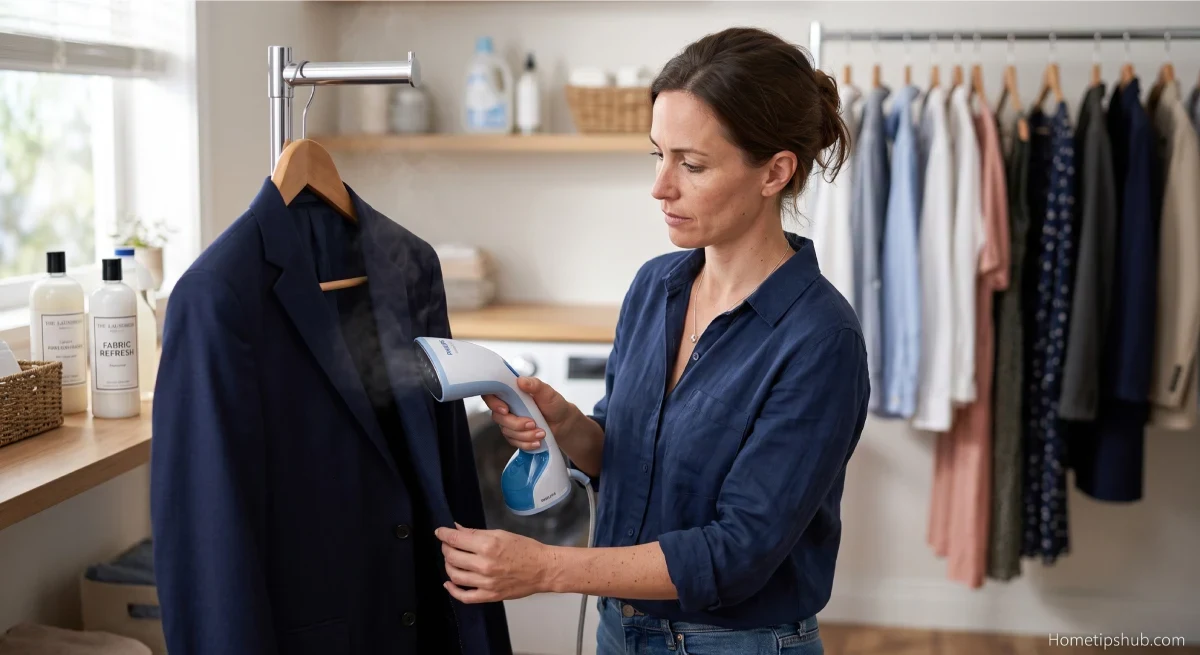
Dry cleaning bills add up fast. A single suit or wool coat can cost $15 to $25 per visit, and if you’re dropping off delicates every couple of weeks, that’s real money leaving your wallet for something you can often handle yourself. The good news? Learning how to do dry cleaning at home is far more achievable than most people assume, and you don’t need a professional setup to get great results.
This guide walks you through fifteen practical, tested methods for cleaning delicate garments safely at home — from suits and silk blouses to wool sweaters and winter jackets. You’ll learn how to do dry cleaning at home without a kit, using items you likely already have, as well as how kit-based methods work if you want extra convenience. By the end, you’ll know exactly which approach fits which fabric, how to tackle stains before they set, and how to keep your clothes looking fresh between real dry cleaning visits.
Whether you’re trying to save money, avoid harsh chemicals, or simply don’t have time to run to the cleaners every week, this is your complete, step-by-step roadmap for how to do dry cleaning at home — no professional equipment required.
If you’ve never tried it before, dry cleaning at home might sound intimidating. In reality, most of what a professional cleaner does can be approximated at home with a steamer, a few pantry staples, and some patience. That’s exactly what this guide breaks down, method by method.
Can You Dry Clean Clothes at Home? Here’s the Honest Answer
Yes — to a real extent. Professional dry cleaning uses a solvent (traditionally perchloroethylene) instead of water to lift dirt and oil from fabric without damaging fibers. At home, you can’t replicate industrial solvent tumbling, but you can achieve comparable results for most everyday garments using at-home dry cleaning kits, gentle hand methods, and smart spot-treatment.
The key is understanding what “dry cleaning at home” actually means in practice: it’s a combination of steaming, low-moisture spot cleaning, odor removal, and gentle handling designed to refresh clothes without soaking them in water or exposing them to a washing machine’s agitation. For garments labeled “dry clean only,” this at-home approach is often enough to extend the time between professional cleanings significantly.
If a garment has heavy stains, structured tailoring (like a lined blazer), or delicate embellishments such as beading or sequins, it’s still wise to send it to a professional occasionally. But for routine freshening and light stain removal, home methods work remarkably well — which is exactly why so many people are turning to dry cleaning at home instead of a weekly cleaner run.
The Best Way to Dry Clean Clothes at Home Without a Kit

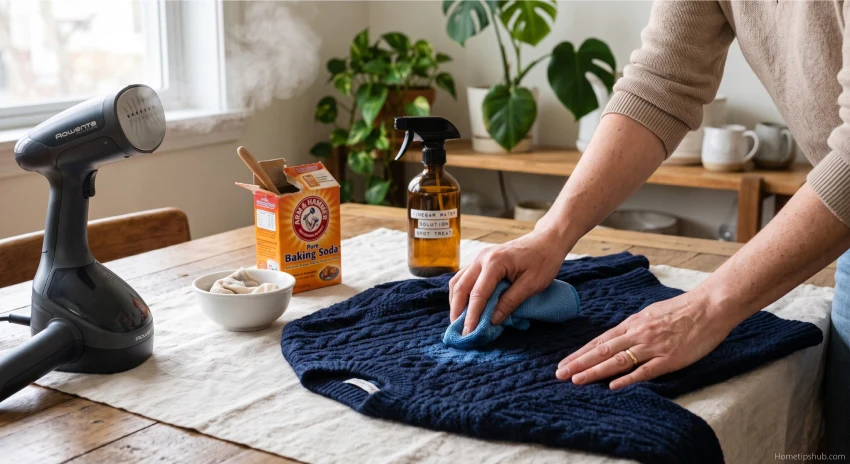
You don’t need to buy anything special to get started. If you’re looking for how to do dry cleaning at home without a kit, this is the best way to dry clean clothes at home using basic household supplies you likely already own.
What You’ll Need
- A spray bottle
- White vinegar or rubbing alcohol
- A clean microfiber cloth or soft-bristle brush
- A garment steamer or handheld iron with steam function
- Baking soda
- A well-ventilated space to air out clothes
Step-by-Step Dry Cleaning at Home Method
- Inspect the garment first. Check labels and look closely for stains, odors, or wrinkles before you begin.
- Spot-treat stains. Dab (never rub) a small amount of diluted vinegar or rubbing alcohol onto a cloth and gently blot the stained area.
- Deodorize with baking soda. Sprinkle a light dusting over the fabric, let it sit for 15–20 minutes, then brush or shake it off.
- Steam the garment. Hang the item and steam from top to bottom, holding the steamer a few inches away from the fabric.
- Air dry in a ventilated space. Let the garment hang for at least an hour before wearing or storing it.
This step-by-step dry cleaning at home routine takes about 30 minutes and works well for wool trousers, cotton blazers, and structured dresses that just need a refresh rather than a deep clean. It’s a great example of easy home dry cleaning method that beginners can master on the very first try.
How to Dry Clean Delicate Clothes at Home Safely
Delicate fabrics — think lace, chiffon, and lightweight blends — require a gentler touch than sturdier materials. Here’s how to dry clean delicate clothes at home without stretching, tearing, or discoloring them. This is one of the most common questions people have about dry cleaning at home, since delicate garments are the most likely to be damaged by the wrong method.
- Always test in an inconspicuous spot first. Apply any cleaning solution to an inner seam before treating the visible area.
- Use minimal moisture. Delicates react poorly to saturation, so a barely damp cloth is safer than a spray bottle.
- Steam from a distance. Hold the steamer at least six inches away to avoid direct heat contact with fragile fibers.
- Skip the dryer entirely. Always air dry delicates flat or on a padded hanger to preserve their shape.
- Store properly. Use breathable garment bags rather than plastic, which can trap moisture and cause mildew.
This method is especially useful for special-occasion pieces you want to wear multiple times without a trip to the cleaners after every event.
How to Dry Clean Suits at Home Without Ruining the Fit
Suits are structured garments with linings, interfacing, and tailoring that can warp if handled incorrectly. Still, learning how to dry clean suits at home is entirely doable if you follow a careful process, and it’s one of the most requested variations of dry cleaning at home for working professionals.
Jacket Care
- Hang the jacket on a sturdy, shoulder-shaped hanger.
- Brush the fabric with a soft lint brush to remove surface dust.
- Steam the shoulders, lapels, and sleeves, working in downward strokes to maintain the drape.
- Spot-clean any marks with a small amount of alcohol on a cloth, blotting gently.
Trouser Care
- Hang trousers by the cuffs to let gravity release wrinkles.
- Steam the waistband, pockets, and hemline where sweat and friction marks are most common.
- Press a damp cloth over stubborn creases and iron on low heat if the fabric allows.
Suits with heavy staining, especially on linings, are best left to professionals a few times a year. But for regular upkeep, this approach keeps a suit office-ready between deeper cleanings.
How to Dry Clean Wool at Home Without Shrinking It
Wool is notoriously sensitive to heat and moisture, which is exactly why so many people search for how to dry clean wool at home rather than risk the washing machine. Getting this right is a core part of doing dry cleaning at home successfully, since one wrong step can shrink a favorite sweater permanently.
- Never use hot water or high heat. Wool fibers contract and felt when exposed to heat, which causes permanent shrinkage.
- Steam instead of soaking. A garment steamer relaxes wrinkles and refreshes fibers without saturating them.
- Use a wool-safe fabric refresher. Light, alcohol-based fabric sprays help eliminate odors trapped in wool’s natural fibers.
- Brush away pilling and lint. A wool comb or sweater stone keeps knits looking new.
- Store folded, not hung. Hanging wool sweaters for long periods can stretch the shoulders out of shape.
For wool coats and blazers, occasional professional cleaning is still recommended, but sweaters and cardigans can go a long time between visits using just steam and spot-cleaning.
How to Dry Clean Silk at Home Without Water Stains
Silk is one of the trickiest fabrics to handle because water often leaves visible rings once it dries. If you’ve wondered how to dry clean silk at home, the trick is controlling moisture precisely — and it’s one of the more delicate applications of dry cleaning at home overall.
- Test any product on a hidden seam first, since silk can react unpredictably to alcohol-based solutions.
- Blot, don’t spray, water-based stains. Direct water contact is what typically causes rings on silk.
- Steam at a safe distance. Keep the steamer at least eight inches away and keep it moving constantly.
- Use a silk-specific fabric freshener formulated for protein fibers, which are more delicate than cotton or synthetic blends.
- Dry completely flat, away from direct sunlight, which can yellow silk over time.
This gentle process works well for blouses, scarves, and silk dresses that need regular refreshing without frequent professional visits.
How to Dry Clean Jackets at Home for Everyday Freshness
Outerwear collects odors, dust, and light stains faster than almost anything else in your closet. Here’s how to dry clean jackets at home, whether it’s a wool coat, a denim jacket, or a lightweight blazer — and why this is one of the easiest wins in dry cleaning at home overall.
- Brush off surface dirt with a lint roller or soft brush before doing anything else.
- Spot-treat cuffs and collars, which accumulate the most oil and grime from skin contact.
- Steam the interior lining, not just the outer shell, since odors often live in the lining fabric.
- Hang outdoors briefly on a dry day to air out lingering smells naturally.
- Use a fabric-safe deodorizing spray for jackets that see frequent wear, like work coats or travel jackets.
This routine is one of the easiest dry cleaning hacks for home use because jackets are worn repeatedly between washes and benefit enormously from quick, regular maintenance.
Dry Cleaning at Home Naturally: Chemical-Free Methods That Work
If you’re specifically looking for dry cleaning at home naturally, or dry cleaning without chemicals, you’re not limited to store-bought kits. Several household staples double as effective, non-toxic solutions:
- White vinegar neutralizes odors and works as a mild disinfectant.
- Baking soda absorbs smells and lifts light surface stains when left to sit.
- Lemon juice diluted with water can help brighten light-colored fabrics (test first).
- Cornstarch acts as a natural degreaser for oil-based stains on sturdier fabrics.
- Essential oil sprays (like lavender or cedar, diluted in water) freshen scent naturally without synthetic fragrances.
These natural methods are especially appealing for people with sensitive skin, allergies, or simply a preference for reducing chemical exposure at home. They prove that dry cleaning at home naturally doesn’t require anything harsh to be effective.
How to Remove Stains Before Dry Cleaning at Home
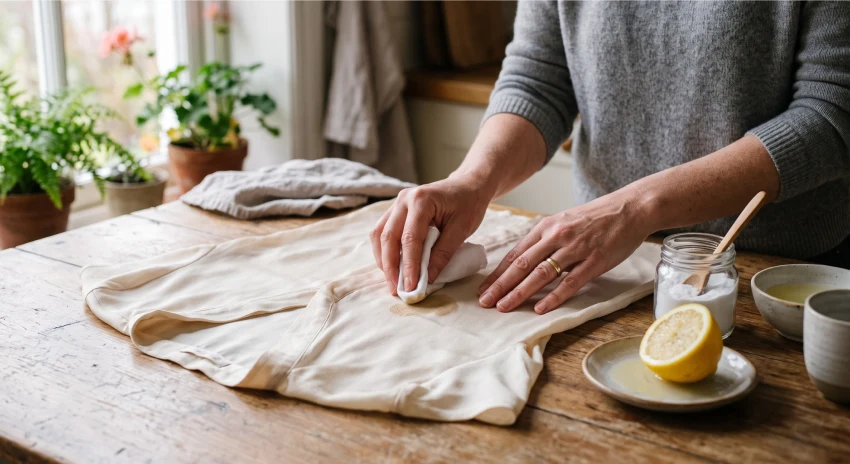
Knowing how to remove stains before dry cleaning at home can make the difference between a garment that’s saved and one that’s ruined. Timing and technique both matter.
- Act quickly. Fresh stains are dramatically easier to treat than set-in ones.
- Blot, don’t rub. Rubbing pushes the stain deeper into fibers and can damage delicate weaves.
- Match the treatment to the stain type. Oil-based stains respond well to cornstarch or talcum powder; protein-based stains (like sweat) respond better to diluted vinegar.
- Work from the outside in to avoid spreading the stain further across the fabric.
- Always let the area dry fully before steaming, since heat can set an improperly treated stain permanently.
This is one of the most requested dry cleaning hacks for home use, and mastering it will save you from countless ruined garments over time. It’s arguably the single most important skill in dry cleaning at home, since a poorly treated stain can undo every other step.
How to Freshen Clothes Without Dry Cleaning
Sometimes a garment doesn’t need cleaning at all — it just needs freshening. Here’s how to freshen clothes without dry cleaning when you’re short on time:
- Hang the item in a steamy bathroom for 15 minutes while you shower.
- Use a fabric refresher spray and let it air dry completely before wearing.
- Place the garment in the dryer with a damp cloth on the air-only (no heat) setting for 10 minutes.
- Air it outside on a hanger for an hour in dry, shaded weather.
These quick fixes work well between full cleanings and are some of the easiest dry cleaning hacks for home use available.
Frequently Asked Questions
Is it safe to dry clean all clothes at home?
Not always. Structured items with linings, sequins, or heavy staining are safer left to professionals occasionally. But for routine refreshing, dry cleaning at home works well for most fabrics.
What is the best way to dry clean clothes at home for beginners?
Start with steaming and spot-treatment rather than at-home kits. It’s the simplest, lowest-risk way to do dry cleaning at home and works for the widest range of fabrics.
Do at-home dry cleaning kits actually work?
Yes, for light soiling and odor removal. They use heat-activated cleaning cloths in the dryer and are convenient, though they’re not a full substitute for solvent-based professional cleaning.
How often should I really send clothes to a professional cleaner?
For suits, coats, and formalwear, every few wears or a few times per season is reasonable. Home methods can comfortably fill the gaps in between.
Can I use my washing machine instead of learning to dry clean at home?
Generally, no — machine washing “dry clean only” garments risks shrinkage, color bleeding, and structural damage. Home dry cleaning methods are the safer alternative.
Final Thoughts: Bring Dry Cleaning Home With Confidence
Learning how to do dry cleaning at home isn’t about replacing professional service entirely — it’s about extending the life of your clothes, saving money, and handling everyday freshening without added stress. Whether you’re steaming a wool coat, spot-treating a silk blouse, or deodorizing a suit jacket between wears, these fifteen methods give you a reliable, practical system to follow.
Start small: pick one garment in your closet that needs attention today, and try the method that matches its fabric. Once you see how effective these techniques are, you’ll wonder why you didn’t try dry cleaning at home sooner.