

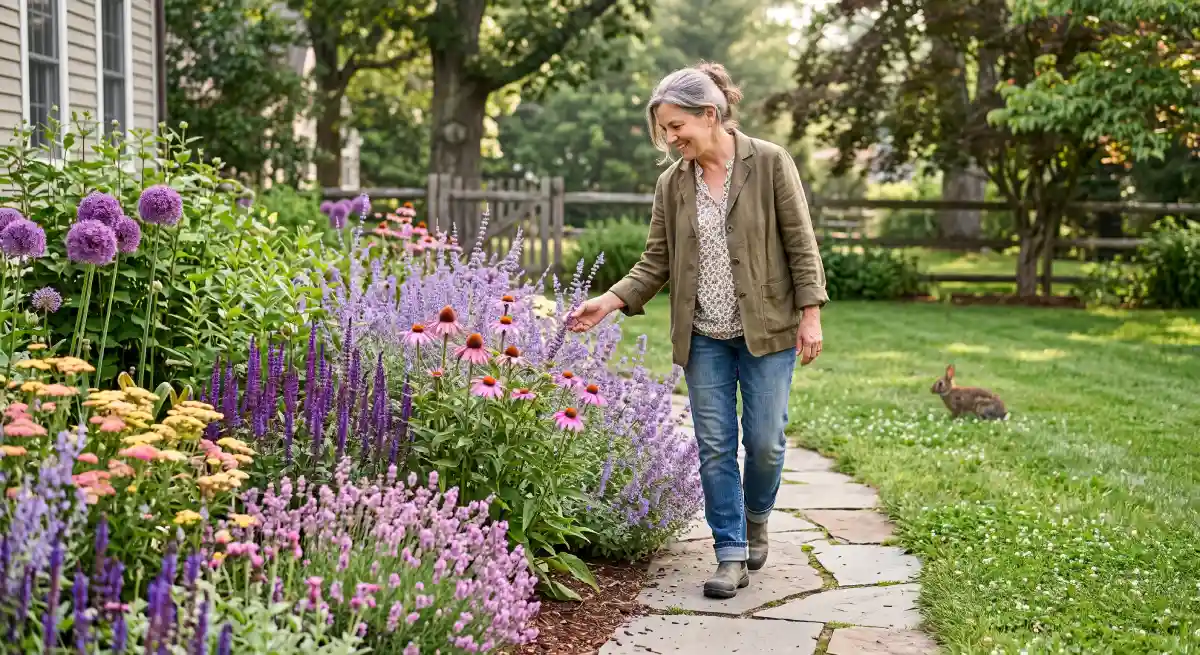
If you’ve ever stepped outside to find your prized tulips chewed to stubs overnight, you already know why so many gardeners go searching for rabbit resistant plants. Rabbits are cute from a distance, but up close in your flower beds, they can undo months of hard work in a single evening snack. The good news is that you don’t have to choose between a beautiful landscape and a rabbit-free one — you just need to know which plants rabbits tend to avoid.
In this guide, we’ll walk through 21 rabbit resistant plants for gardens of every style, from full-sun perennial borders to shady backyard corners. You’ll learn which bunny resistant flowers hold up best, what flowers do rabbits not eat, and how to build a rabbit resistant garden that still looks lush and colorful all season long. We’ll also cover rabbit resistant shrubs, herbs, ground covers, and a few bonus picks that double as perennial plants deer won’t eat, since the two problem animals often overlap in home landscapes.
By the end, you’ll have a practical, USA-friendly plant list plus tips for layering rabbit resistant landscaping into an existing yard without starting from scratch.
Why Rabbits Avoid Certain Plants

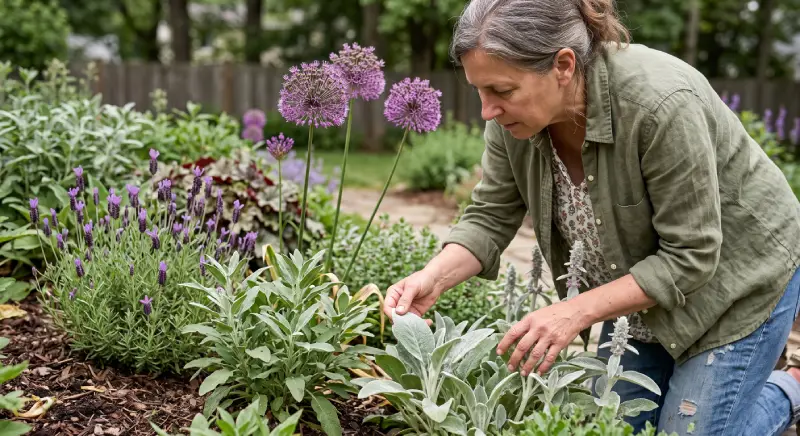
Before diving into the list, it helps to understand what makes a plant rabbit resistant in the first place. Rabbits, like deer, rely heavily on scent and taste to decide what’s worth eating. Plants with fuzzy or hairy leaves, strong fragrances, milky sap, or bitter and spiny textures tend to be much lower on their menu. This is why so many rabbit resistant herbs — think lavender, rosemary, and sage — are also kitchen staples; their essential oils are exactly what makes them unappealing to browsing animals.
It’s worth noting that “rabbit resistant” doesn’t mean “rabbit proof.” No plant is guaranteed safe when a hungry rabbit has no other food source, especially in early spring or during a hard winter. But choosing rabbit tolerant plants dramatically reduces the odds of damage, and combining several of these species creates a landscape rabbits simply find less inviting to visit.
Rabbit Resistant Perennials for Full Sun
Perennial beds are often hit hardest because they’re planted once and expected to come back for years. If you’re rebuilding a border that keeps getting nibbled, these rabbit resistant perennials full sun options are a great place to start.
- Russian Sage – Silvery, aromatic foliage that rabbits rarely touch.
- Catmint (Nepeta) – A fragrant, low-maintenance bloomer that thrives in poor soil.
- Yarrow – Feathery leaves and a bitter taste keep rabbits away.
- Coneflower (Echinacea) – Sturdy stems and coarse leaves make it unappetizing.
- Bee Balm (Monarda) – Its minty scent doubles as a pollinator magnet.
- Lavender – One of the most reliable rabbit resistant flowers for sunny beds.
- Salvia – Comes in dozens of colors, all with rabbit-deterring fragrance.
These plants also happen to be excellent perennial plants deer won’t eat, so if your yard deals with both pests, this section does double duty.
Rabbit Resistant Plants for Shade
Not every yard gets full sun, and shady gardens need protection too. These rabbit resistant plants for shade hold up well under trees or along north-facing fences.
- Hellebores (Lenten Rose) – Leathery, toxic leaves rabbits instinctively avoid.
- Bleeding Heart – A classic shade perennial with mild toxicity that deters browsing.
- Astilbe – Feathery plumes and fibrous leaves rabbits tend to skip.
- Ferns – Most ferns lack the nutritional appeal rabbits look for.
- Foxglove – Toxic to rabbits, making it a dependable rabbit resistant flowering plant for dappled shade.
Grouping these together creates a rabbit resistant ground cover layer that also fills in bare, shady patches where grass struggles to grow.
Rabbit Resistant Shrubs and Flowering Shrubs
Shrubs form the backbone of most landscapes, so protecting them matters. These rabbit resistant shrubs offer structure without becoming a bunny buffet.
| Shrub | Sun Needs | Why Rabbits Avoid It |
|---|---|---|
| Boxwood | Full sun to part shade | Dense, bitter foliage |
| Butterfly Bush | Full sun | Strong fragrance |
| Spirea | Full sun to part shade | Textured leaves, mild toxicity |
| Barberry | Full sun to part shade | Thorny branches |
| Lilac | Full sun | Tough, aromatic leaves |
For gardeners wanting colorful rabbit resistant plants for landscaping beyond flowers, these rabbit resistant flowering shrubs for gardens add height, seasonal blooms, and year-round screening.
Rabbit Resistant Annuals for Season-Long Color
If you like refreshing your beds every year, rabbit resistant annuals give you flexibility without the risk of losing an entire planting to browsing.
- Marigolds – A pungent scent makes marigolds one of the most popular rabbit resistant flowers.
- Zinnias – Bright and cheerful, with a texture rabbits generally skip.
- Ageratum – Fuzzy foliage and a soft fragrance rabbits dislike.
- Snapdragons – Rabbits tend to leave the tall, textured spikes alone.
- Wax Begonias – A dependable choice for containers and border edges.
These rabbit resistant annuals that bloom all summer are ideal for pots, window boxes, and front-yard beds where visibility matters most.
Rabbit Resistant Herbs, Bulbs, and Ground Covers
Herb gardens and bulb beds are frequent rabbit targets, but a few smart substitutions go a long way.
Rabbit resistant herbs:
- Rosemary
- Thyme
- Oregano
- Sage
- Mint (plant in containers, as it spreads aggressively)
Rabbit resistant bulbs:
- Daffodils (toxic to rabbits, unlike tulips)
- Alliums
- Hyacinths
Rabbit resistant ground cover:
- Creeping thyme
- Lamb’s ear
- Vinca (periwinkle)
Swapping tulips for daffodils alone solves one of the most common complaints gardeners have, since tulips are practically a rabbit delicacy while daffodils are almost always left untouched.
Building a Rabbit Resistant Garden: Practical Tips
Choosing the right rabbit resistant plants is half the battle. The other half is smart placement and maintenance. Here’s how to make your rabbit resistant landscaping as effective as possible:
| Strategy | How It Helps |
|---|---|
| Plant resistant species at bed edges | Creates a natural barrier around vulnerable plants |
| Use fencing for new plantings | Young, tender growth is most at risk regardless of species |
| Remove brush piles and cover | Reduces rabbit hiding spots near garden beds |
| Water in the morning | Keeps foliage dry, which some rabbits find less appealing |
| Rotate vulnerable annuals | Prevents rabbits from learning a reliable food source |
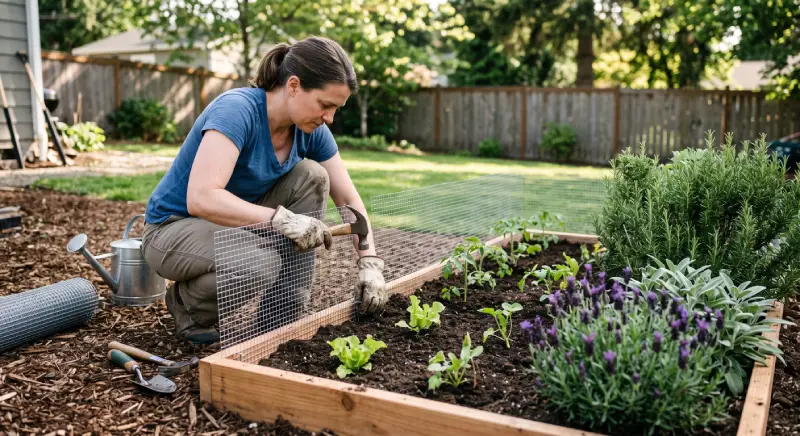
Even the best rabbit resistant plants for gardens benefit from a little extra protection while they’re establishing. Chicken wire cages around new transplants for the first few weeks can prevent early damage while root systems settle in.
Rabbit Resistant Plants for Vegetable Gardens
Vegetable beds deserve special mention, since rabbits can devastate a season’s harvest quickly. While lettuce, beans, and peas are frequent targets, these rabbit resistant plants for vegetable gardens are typically safer bets:
- Tomatoes (foliage is toxic to rabbits)
- Peppers
- Squash (prickly stems deter browsing)
- Onions and garlic
- Rhubarb (leaves are toxic)
Interplanting these with rabbit resistant herbs like rosemary or oregano along bed edges adds another layer of protection for nearby, more vulnerable crops.
FAQ: Common Questions About Rabbit Resistant Plants
What flowers do rabbits not eat?
Rabbits generally avoid flowers with strong scents, fuzzy leaves, or mild toxicity, such as lavender, marigolds, foxglove, and daffodils. These are some of the most reliable bunny resistant flowers for home gardens.
Are there truly rabbit proof plants?
No plant is 100% rabbit proof, but rabbit resistant plants significantly reduce browsing damage. In periods of food scarcity, rabbits may sample even resistant species, so fencing remains the most foolproof backup.
What flowers do bunnies not eat in shady yards?
Hellebores, astilbe, bleeding heart, and ferns are dependable choices for shaded areas where sun-loving rabbit resistant flowers won’t thrive.
Do rabbit resistant plants also repel deer?
Many do. Fragrant, fuzzy, or bitter-leaved plants like Russian sage, catmint, and lavender are commonly listed among perennial plants deer won’t eat as well, making them efficient dual-purpose choices.
Can rabbit resistant plants repel squirrels too?
Some overlap exists, since squirrels also avoid strongly scented foliage. Plants that repel rabbits and squirrels often include alliums, daffodils, and aromatic herbs, though squirrels are more motivated by bulbs and nuts than foliage.
Final Thoughts and Next Steps
Building a rabbit resistant garden doesn’t mean giving up color, texture, or variety. With the right mix of rabbit resistant perennials, shrubs, annuals, and herbs, you can create a landscape that’s both beautiful and far less appealing to browsing rabbits. Start by identifying your most frequently damaged beds, swap in a few rabbit resistant plants for gardens from this list, and add simple protective measures like fencing for new plantings.
Ready to redesign your yard? Pick three or four rabbit resistant plants from this guide that fit your sun conditions, plant them along your garden’s edges this season, and watch how much less rabbit damage you see by next spring.