
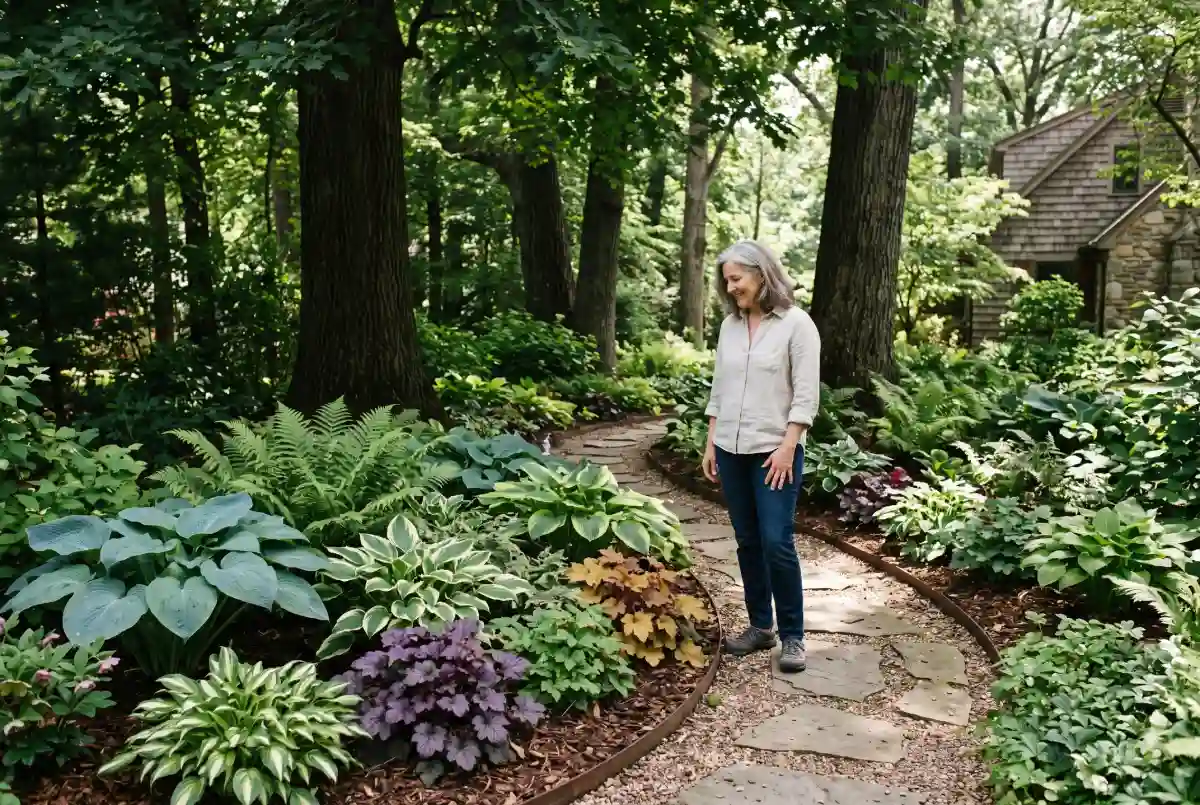
That dark corner under your maple doesn’t have to stay bare and mossy. With the right shade garden ideas, a gloomy patch of yard can become the coolest, most textured spot on your property.
Most people assume shade means struggle. It doesn’t. Shade means cooler soil, less watering, and foliage that stays lush well into summer. This complete shade garden guide covers soil, plants, design, and upkeep so you can choose shade garden ideas that fit your light, budget, and climate.
You’ll find 21 practical ideas, a few honest warnings, and answers to the questions gardeners ask most.
What Are the Best Shade Garden Ideas for Your Type of Light?
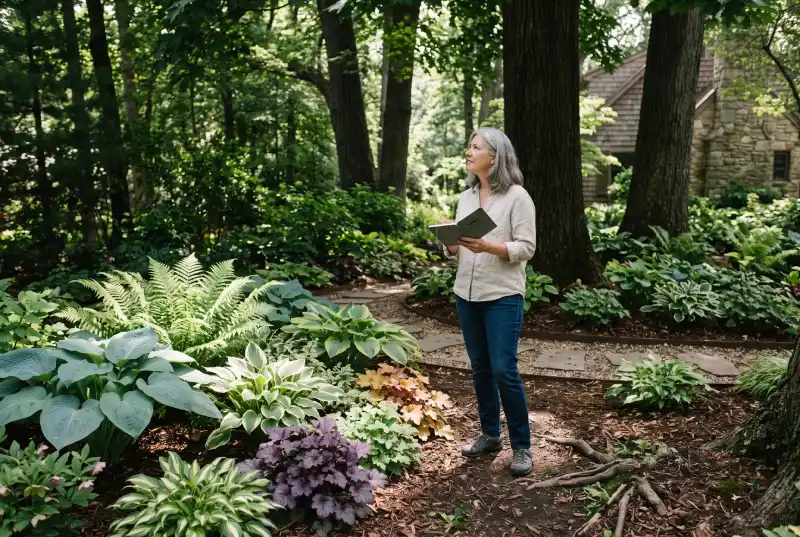
Start by matching plants to your actual light. Full shade means less than four hours of direct sun, partial shade means roughly four to six hours, and dappled shade is sunlight filtering through tree leaves.
Before buying anything, spend a day watching the space and noting when sun arrives. A north-facing wall casts steady shade, while a tree canopy changes as leaves emerge and drop.
That patience pays off. Many failed shade garden ideas trace back to a plant sitting in the wrong light, not to a lack of skill.
Partial Shade Gardening vs. Full Shade Garden Design
Partial shade gardening opens up the widest plant choices, including many flowering perennials. Full shade garden design leans on foliage, since few plants bloom heavily in deep shade.
Climate matters too. In hot southern states, plants labeled “part sun” often want afternoon shade, while in cooler northern regions they may take more sun. For best results, check your USDA hardiness zone before falling for any of these shade garden ideas.
How Do You Prepare Soil for Shade Garden Ideas?
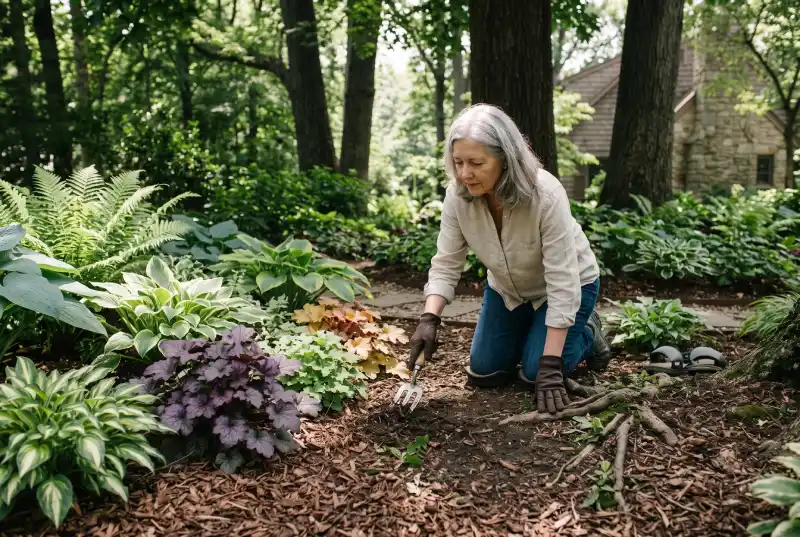
Shade garden soil preparation means loosening compacted ground, mixing in two to three inches of compost, and checking drainage. Most woodland plants prefer rich, evenly moist, well-draining soil full of organic matter.
Follow these steps:
- Clear weeds, fallen branches, and debris.
- Loosen the top eight inches with a garden fork, avoiding thick tree roots.
- Work in two to three inches of compost or leaf mold.
- Dig a test hole, fill it with water, and see whether it drains within a few hours.
- Finish with two to three inches of shredded leaves or bark mulch, kept away from trunks.
One common mistake is piling soil deeply over tree roots. More than a few inches can suffocate them, so build up gradually. Good soil work is what separates thriving shade garden ideas from struggling ones.
Best Plants for Shade Gardens: Foliage Shade Garden Ideas 1–7
Leaves do the heavy lifting in shade, so the strongest shade garden ideas lean on texture and color rather than blooms. These shade-tolerant perennial plants deliver both.
- Hostas: The classic choice, hardy across most of the country. Watch for slugs.
- Ferns: Japanese painted, lady, and ostrich ferns add soft, feathery texture.
- Heuchera (coral bells): Leaves come in burgundy, lime, and amber.
- Japanese forest grass: Arching gold-green blades brighten dark corners.
- Brunnera: Silvery, heart-shaped leaves and tiny blue spring flowers.
- Solomon’s seal: Graceful arching stems suit woodland borders.
- Foamflower (Tiarella): Low mounds with frothy spring blooms, ideal at path edges.
A practical approach is planting in groups of three or five. Repeated shapes look intentional, while single specimens scattered everywhere look messy.
On the downside, most of these plants take a season or two to fill out. The upside is that they return every year with very little care.
Flowering Shade-Loving Plants for Color (Ideas 8–12)
Yes, shade can bloom. These shade garden ideas add seasonal color, though most flowers perform best in partial shade.
- Astilbe: Feathery plumes in pink, red, or white; keep the soil moist.
- Hellebores: Bloom in late winter when little else does.
- Bleeding heart: Romantic spring flowers, though it often goes dormant by midsummer. Tuck ferns nearby to fill the gap.
- Foxglove: Tall spires that attract hummingbirds and bees.
- Oakleaf hydrangea: Handles more shade than most hydrangeas, with cone-shaped blooms and red fall foliage.
Safety note: foxglove and hellebores are toxic if eaten, so use caution around curious kids and pets.
What Are the Best Low-Maintenance Shade Garden Ideas? (Ideas 13–16)
Low-maintenance shade garden ideas rely on plants that spread, sustain themselves, and crowd out weeds. Here are four dependable options:
- Groundcover carpets: Sweet woodruff, wild ginger, and lamium cover bare soil. Check your state’s invasive plant list before planting English ivy or vinca.
- Native woodland plants: Regional natives like wild geranium and Virginia bluebells suit local conditions and wildlife with less fuss. Expert shade garden ideas often start here, because natives already match your rainfall and soil.
- Thick mulch layers: Shredded leaves suppress weeds and hold moisture.
- Mass planting: Fewer species in larger drifts means less to maintain and a calmer look. Budget tip: buy small plants and let them spread, since dividing established clumps later is free.
All four are beginner-friendly. If you are working with a small space, start with one groundcover and two or three anchor plants, then expand next season.
Full Shade Garden Design: Landscaping Techniques That Add Structure (Ideas 17–21)
Plants alone can feel flat. Shade garden landscaping techniques use hardscape and light to create structure, and these five work in most yards:
- Curving path: Gravel or stepping stones invite people into the space.
- Container groupings: Pots of ferns and coleus brighten dark patios.
- Small water feature: A recirculating bubbler adds sound and attracts birds. Keep water moving so it doesn’t breed mosquitoes.
- Low-voltage or solar lighting: Uplights turn tree trunks into evening features.
- Seating nook: A bench turns a bare corner into a destination.
For the best full shade garden design, use variegated leaves and pale flowers to reflect light, and contrast fine textures with bold ones. Whichever shade garden ideas you choose, keep main paths roughly three feet wide if two people will walk side by side.
| Shade Garden Ideas Compared | Estimated Cost | Difficulty | Maintenance | Best For |
|---|---|---|---|---|
| Hosta and fern bed | $–$$ | Easy | Low | Beginners, large beds |
| Groundcover carpet | $ | Easy | Very low | Areas under trees |
| Container display | $$ | Easy | Medium | Patios, small yards |
| Gravel path | $$ | Moderate | Low | Adding structure |
| Water feature | $$–$$$ | Moderate | Medium | Focal points |
Costs are rough and vary by region, plant size, and materials.
What Should You Avoid? Common Shade Garden Problems and Fixes
Even good shade garden ideas fail when a few basic problems go unchecked. This table covers the usual suspects:
| Problem | Likely Cause | Practical Fix |
|---|---|---|
| Leggy, sparse plants | Too little light for the species | Switch to deeper-shade plants or thin overhead branches |
| Chewed hosta leaves | Slugs and snails | Hand-pick at dusk or use iron phosphate bait |
| Bare, dry soil under trees | Root competition | Plant tough groundcovers, mulch, and water new plants |
| Crispy leaf edges | Dry soil or hot afternoon sun | Water deeply and add mulch |
Other frequent errors include overcrowding, overwatering in poorly drained soil, and planting sun lovers in hopes they’ll adapt. If large limbs need removal to let in light, hire a certified arborist. Tree work is genuinely dangerous. Solving these issues early keeps your shade garden ideas on track.
Shade Garden Maintenance Tips and Sustainable Practices
Even the best shade garden ideas need attention. These shade garden maintenance tips keep beds healthy:
- Water deeply, less often. Check the soil two inches down first; shade beds stay damp longer.
- Leave the leaves. Shredded fall leaves feed the soil and shelter beneficial insects.
- Divide crowded perennials every three to five years in spring or early fall.
- Skip heavy fertilizer. A yearly compost top-dressing is usually enough.
- Collect rainwater. A rain barrel is a simple, sustainable shade garden practice that cuts water use.
Seasonal habits keep shade garden ideas looking fresh, too. Cut back old foliage and add compost in spring, watch moisture and slugs in summer, then mulch and plant new perennials in fall.
Frequently Asked Questions
FAQ 1: What is the best plant for a shady garden?
No single plant wins, but hostas, ferns, and heuchera are the most reliable for beginners. They handle low light, come in many colors, and are easy to find at US garden centers. Choose based on your hardiness zone and soil moisture.
FAQ 2: How do I make a dark, shady yard look brighter?
Use variegated foliage, white or pale flowers, and light-colored gravel, then add lighting after dusk. Pruning lower tree limbs also lets in more light. These shade garden ideas are affordable ways to lift a gloomy space.
FAQ 3: What are the easiest shade garden ideas for beginners?
The simplest way to begin is a mulched bed of hostas, ferns, and one groundcover. Keep the layout simple, choose plants suited to your zone, and water consistently through the first season.
FAQ 4: How much does it cost to start a shade garden?
It varies widely. As a rough guide, a small bed of starter perennials can run under $150, while paths, lighting, and water features raise the budget. Dividing plants from friends saves money.
FAQ 5: Can vegetables grow in shade?
Some can. Leafy greens like lettuce, spinach, and kale tolerate three to four hours of sun. Tomatoes and peppers need six to eight hours, so they won’t do well in shade.
Turn Your Shady Spot Into a Retreat
The best shade garden ideas respect your light, your soil, and your time. Read the space, build rich soil, choose reliable plants, and add a few design touches like a path or lighting.
Start small: one bed, three plant types, and a thick layer of mulch. Every experienced gardener began that way, and the right shade garden ideas grow more rewarding each season.
This weekend, spend ten minutes mapping where the sun falls, pick three shade garden ideas from this list, and plant your first shady bed. That dark corner is ready for its transformation.