
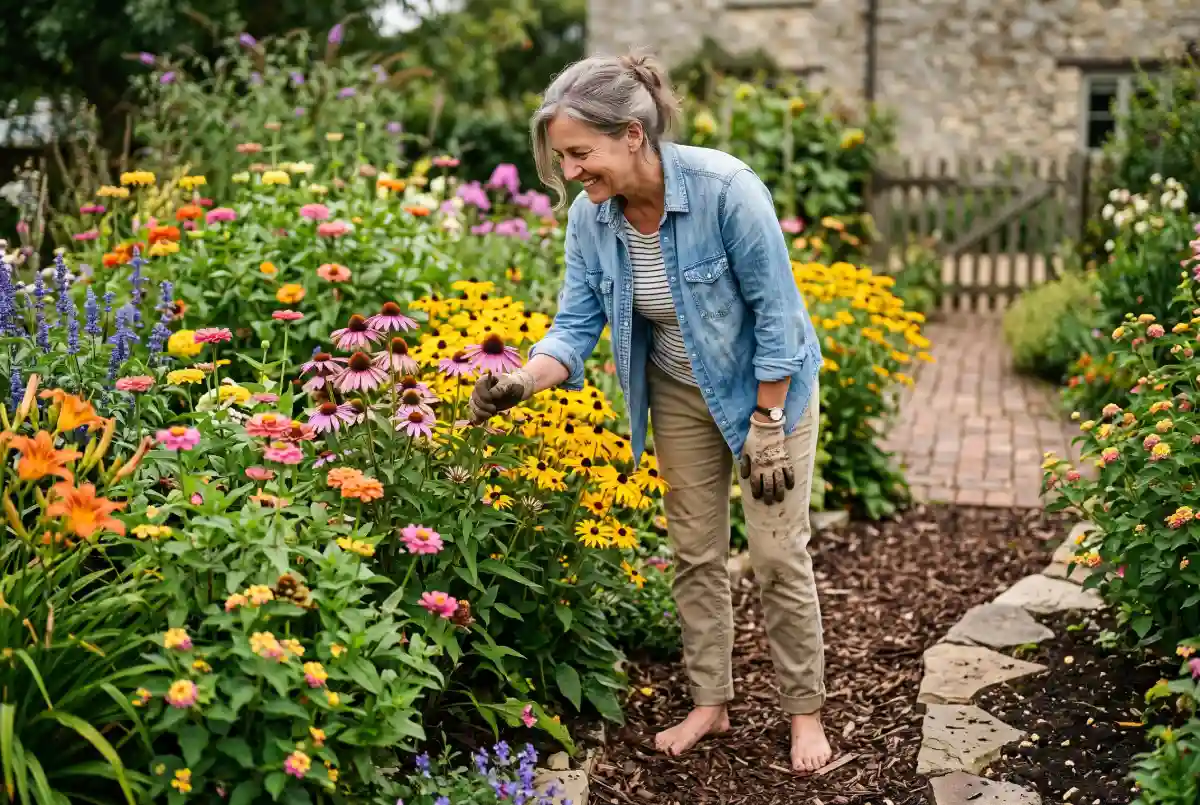
By mid-July, plenty of gardens run out of steam. Spring bulbs have faded, the heat keeps climbing, and the beds look tired. The fix is choosing summer blooming plants that thrive in the heat rather than merely tolerate it.
This guide walks through 15 dependable picks, from easy summer blooming plants to long blooming summer flowers, along with planting steps and care advice for gardens across the USA. You’ll also see how each option differs in sun needs, water needs, and lifespan, so you spend money only on plants that suit your yard.
What Are the Best Summer Blooming Plants for Your Garden?
The best summer blooming plants match your sun exposure, soil, and USDA hardiness zone while flowering for many weeks. For most U.S. gardens, purple coneflower, black-eyed Susan, daylily, zinnia, and lantana are reliable winners. They handle heat, need little fuss, and keep producing flowers with basic care.
Most summer flowering plants fall into three groups: perennials that return each year, annuals that finish in one season, and tender perennials like lantana that act as annuals where winters are cold. A practical approach is mixing all three. Perennials give your beds structure, while annuals fill gaps with fast color.
How Do You Choose Plants That Bloom in Summer?
Run through these checks before you buy:
- Sun: Full sun means six or more hours of direct light.
- Zone: Confirm the plant is hardy in your USDA zone.
- Bloom window: Look for plants that bloom in summer for at least six weeks.
- Size: Check mature height and spread so plants don’t crowd each other.
Perennial Summer Blooming Plants That Return Every Year
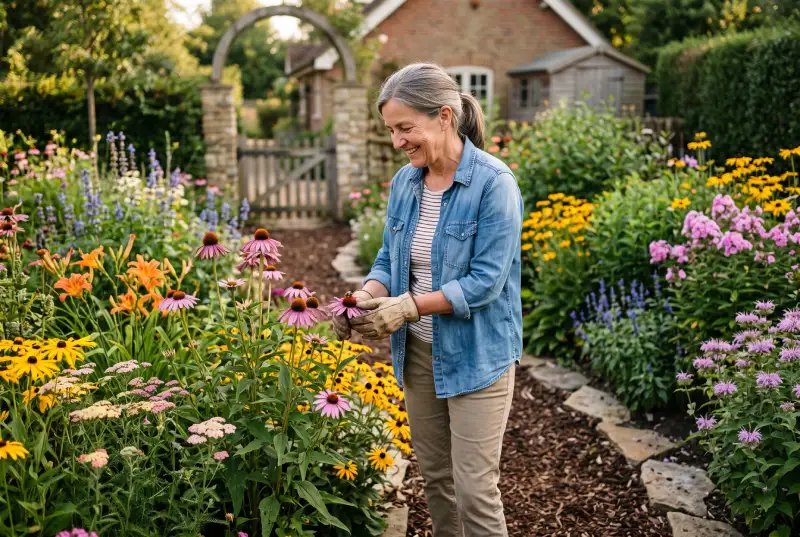
Perennials cost more upfront, but they pay you back. Well-chosen summer blooming plants develop deeper roots each year, which improves drought tolerance and reduces watering.
- Purple coneflower: A native favorite that blooms from midsummer into fall. Bees and butterflies visit the flowers, and birds enjoy the seed heads.
- Black-eyed Susan: Golden, daisy-like blooms on tough plants that tolerate heavy clay.
- Daylily: Each flower lasts one day, but plants push out dozens of buds. Few perennials are easier.
- Salvia: Purple flower spikes rebloom if you trim them after the first flush.
- Yarrow: Flat flower clusters that shrug off heat and dry spells once established.
- Garden phlox: Fragrant and showy, but prone to powdery mildew, so leave room for airflow.
- Bee balm: A hummingbird magnet that prefers slightly more moisture than the others here.
For best results, plant perennials in spring or early fall so roots settle in before extreme heat or frost.
Annual Summer Flowering Plants for Nonstop Color
Annuals live for one season, but they bloom hard. They are ideal for new beds, containers, and gaps between young perennials.
- Zinnia: Sow seed directly after your last frost. Cutting the flowers encourages more blooms.
- Cosmos: Thrives in lean soil. Too much fertilizer gives you leaves instead of flowers.
- Marigold: Compact, colorful, and forgiving in pots or borders.
- Sunflower: Fast growers that need full sun and steady water while young.
- Petunia: Perfect for hanging baskets, though trailing types need regular feeding.
One common mistake is skipping deadheading. Pinch off spent flowers, and most annuals will keep going until fall. If you want low maintenance summer flowers, zinnias and marigolds are hard to beat.
Heat Tolerant Summer Blooming Plants for Dry Gardens
Some summer blooming plants handle hot afternoons and dry soil with ease. Three standouts:
- Lantana: Perennial in warm climates, grown as an annual elsewhere. Butterflies visit constantly.
- Blanket flower (Gaillardia): Red-and-gold blooms from early summer well into fall.
- Coreopsis: Cheerful yellow flowers, a classic for sunny borders.
Even drought tolerant summer flowers need regular water during their first season while roots establish. Here is how the tougher picks compare:
| Summer Blooming Plants | Type | Water Needs | Best For |
|---|---|---|---|
| Lantana | Tender perennial | Low once established | Containers, hot borders |
| Blanket flower | Perennial | Low | Dry, sunny beds |
| Coreopsis | Perennial | Low to moderate | Edging, cottage gardens |
| Yarrow | Perennial | Low | Poor soil, meadows |
| Zinnia | Annual | Moderate | Cut flowers, fill-in color |
| Cosmos | Annual | Low to moderate | Airy backdrops |
| Purple coneflower | Perennial | Low to moderate | Pollinator beds |
| Salvia | Perennial | Low to moderate | Long-lasting color |
Native and Pollinator Friendly Summer Blooming Plants
Native plants evolved alongside local insects and birds, so they often support wildlife well and need less water once settled. Purple coneflower, black-eyed Susan, bee balm, and blanket flower are all native to parts of North America, though native ranges vary by region. Your state extension office or native plant society can point you to a list for your area.
Mixing native summer blooming plants with a few non-native annuals gives you both wildlife value and flexibility. A few habits help pollinator friendly summer flowers do their job:
- Choose single-petal forms, since heavily doubled blooms often hide nectar and pollen.
- Plant in clusters of three or five so pollinators can forage easily.
- Avoid spraying insecticides on open blooms, and read every product label.
How Do You Plant Summer Blooming Plants Step by Step?
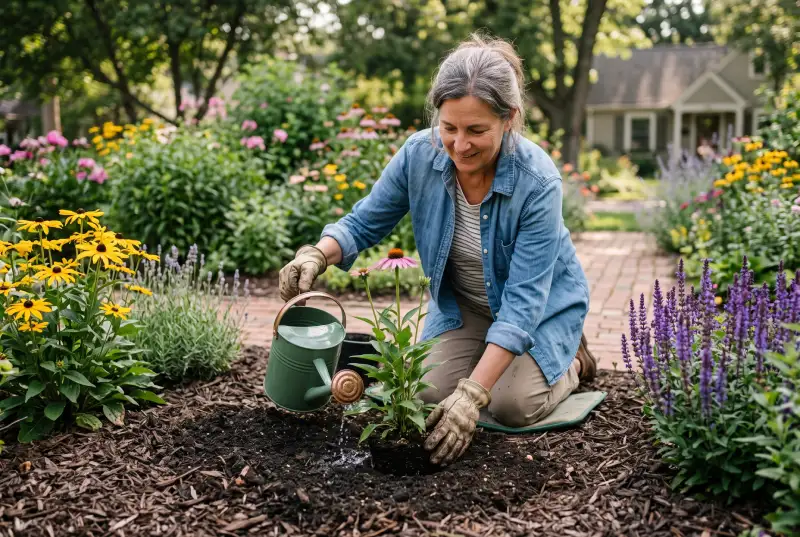
Plant summer blooming plants in a sunny, well-drained spot after the last frost. Loosen the soil, set each plant at nursery-pot depth, water deeply, and add two to three inches of mulch. Spacing and timing vary by species, so always read the plant tag.
- Pick a sunny spot with at least six hours of direct light.
- Test drainage. Fill a hole with water. If it is still standing after several hours, use a raised bed.
- Loosen the soil about 8 to 12 inches deep and mix in compost.
- Space plants according to the mature width listed on the tag.
- Set each plant at the same depth it grew in its pot.
- Water deeply, then mulch, keeping mulch off the stems.
If you are working with a small space, use containers with drainage holes and fresh potting mix. Lantana, petunias, and marigolds handle pots especially well.
Summer Blooming Plant Care: Water, Feed, and Deadhead
Good care is simple but consistent. Even the toughest summer blooming plants need help during heat waves. A good rule of thumb is about an inch of water per week from rain or irrigation, and more for containers and sandy soil. Water at the base in the morning to keep leaves dry and reduce disease.
| Task | How Often | Why It Helps |
|---|---|---|
| Deep watering | 1–2 times weekly | Builds deeper roots |
| Deadheading | Weekly | Encourages new blooms |
| Light feeding | Every 3–4 weeks (containers) | Replaces nutrients washed out by watering |
| Mulch refresh | Once in early summer | Holds moisture, blocks weeds |
Many summer blooming plants flower best in average soil, so go easy on fertilizer. Mistakes to avoid:
- Overwatering, which leads to root rot and floppy growth.
- Heavy nitrogen fertilizer, which favors leaves over flowers.
- Planting too densely, which invites mildew.
Designing With Summer Blooming Plants on Any Budget
Layer your beds by height. Put tall plants like sunflowers and phlox at the back, mid-height coneflowers and salvia in the center, and low growers like marigolds up front. Repeating colors in groups makes a bed look planned rather than random.
Budget matters too. Seeds are the cheapest route, since zinnias, cosmos, and sunflowers grow quickly from a single packet. Perennials cost more per plant, but you can divide mature clumps of daylilies and yarrow in spring or fall to fill new areas for free.
For a first-time gardener, coneflower, black-eyed Susan, salvia, and zinnia make an easy starter combination. Pairing summer blooming plants with different bloom windows keeps color going deep into fall.
Summer Blooming Plants FAQs
FAQ 1: What are the easiest summer blooming plants to grow?
Zinnias, marigolds, daylilies, black-eyed Susans, and coneflowers are among the most forgiving. They tolerate heat, need only occasional watering once established, and rarely demand special soil. If you want low maintenance summer flowers, start there.
FAQ 2: Which flowers bloom all summer long?
No plant blooms forever, but zinnias, lantana, coreopsis, and salvia flower for many weeks with regular deadheading. Combining several summer blooming plants with staggered bloom times keeps color going from June to frost.
FAQ 3: What flowers grow best in full sun?
Coneflower, blanket flower, yarrow, zinnia, and lantana all thrive with six to eight hours of direct sun. Full sun summer blooming plants generally need well-drained soil and good airflow to stay healthy.
FAQ 4: Can heat tolerant flowering plants grow in containers?
Yes. Lantana, petunias, and marigolds do well in pots. Use containers with drainage holes, expect to water more often than in the ground, and feed lightly every few weeks.
FAQ 5: When should you plant summer blooming plants?
Plant annuals after your last frost date. Plant perennials in spring or early fall. Timing shifts by region, so check your local last-frost date and USDA zone before you start.
Bring More Color to Your Garden This Summer
Great summer color comes from matching plants to your conditions, not from chasing every trend. Choose summer blooming plants that suit your sun, soil, and zone, mix perennials with a few annuals, and stay consistent with watering and deadheading.
Start small. Pick three or four plants from this list, put them in the ground this weekend, and see which ones thrive. Once you see how summer blooming plants perform in your own yard, expanding your beds gets easy. Which one will you plant first?