
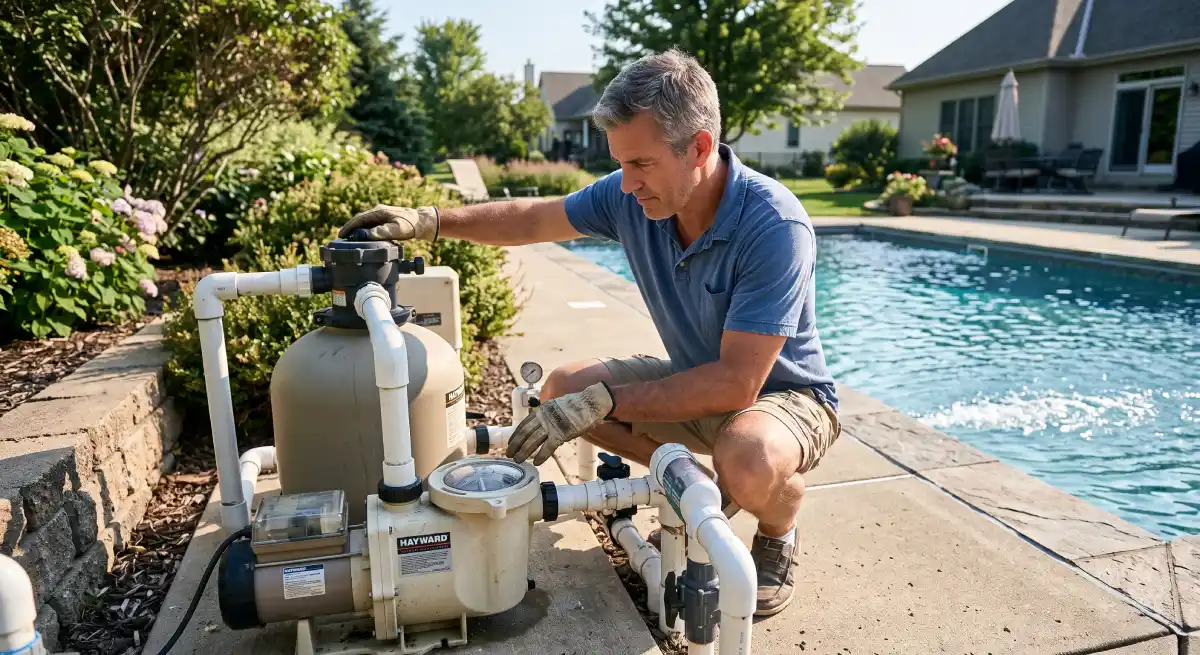
A well-running pool pump is the heart of any swimming pool. It circulates water, pushes it through the filter, and keeps the water clear and healthy. Skip regular care and you face cloudy water, higher energy bills, noisy equipment, and costly repairs. Whether you own an inground pool or an above-ground model (including Intex setups), proper pool pump maintenance protects your investment and keeps swimming season enjoyable.
This guide shares nine practical, often-overlooked secrets for swimming pool pump maintenance. You will learn how a pool pump works, step-by-step cleaning and inspection routines, troubleshooting common problems, energy-saving tips, and a simple service schedule. Everything is written in plain language so any homeowner can follow along.
How Does a Pool Pump Work?
Understanding the basics makes maintenance easier. Water enters the pump through the skimmer and main drain lines. It first passes through a strainer basket that catches leaves, hair, and debris. The impeller then spins at high speed, creating pressure that pushes water out to the filter and back into the pool through the returns.
This continuous circulation is the pool circulation system. Without steady flow, chemicals do not distribute evenly and algae can take hold. A healthy pump maintains good flow rate and pressure. When flow drops or pressure rises, the system is telling you it needs attention.
1. Clean the Pump Basket Regularly
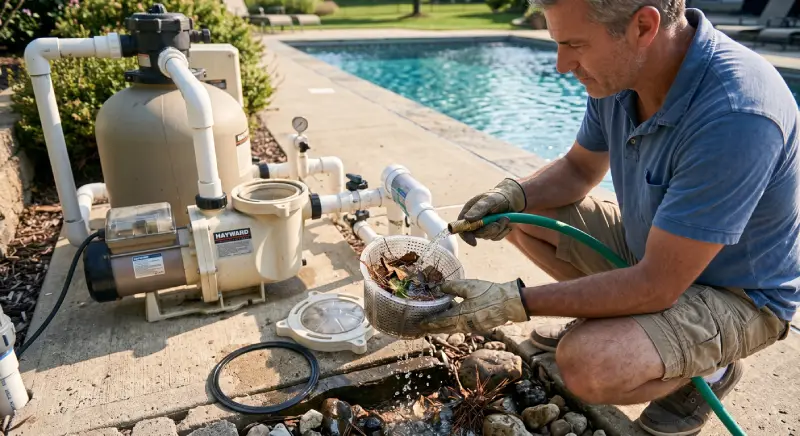
The strainer basket is the first line of defense. A clogged basket restricts water flow, forces the motor to work harder, and can cause the pump to lose prime or overheat.
Actionable routine:
- Turn off the pump and close any valves if needed.
- Remove the lid carefully (some lids have O-rings that need gentle handling).
- Empty debris into a trash bag or compost.
- Rinse the basket with a hose.
- Inspect the O-ring or gasket for cracks; lubricate with pool-safe silicone if dry.
- Replace the lid and restart.
For most residential pools, clean the basket once or twice a week during peak season and after heavy storms or leaf fall. This single step is one of the highest-impact parts of any pool pump maintenance checklist.
2. Inspect and Clean the Impeller
Debris that slips past the basket can wrap around the impeller. A restricted impeller reduces flow and can burn out the motor.
Once or twice a season (or whenever flow feels weak), remove the pump housing according to your model’s manual and carefully clear hair, leaves, or scale from the impeller vanes. Never force anything that could bend the vanes. After cleaning, reassemble and check for leaks.
This is especially important for above-ground and Intex pool pump maintenance, where smaller pumps can clog faster.
3. Follow a Complete Pool Pump Maintenance Checklist
Use this simple checklist monthly during swim season and before winterizing:
| Task | Frequency | Notes |
|---|---|---|
| Empty and rinse strainer basket | 1–2× weekly | More often after storms |
| Check for unusual noise or vibration | Weekly | Squealing or grinding needs attention |
| Inspect lid O-ring and lubricate | Monthly | Use pool-safe lubricant only |
| Check pressure gauge reading | Weekly | Note normal operating range |
| Clean or backwash filter | As needed | High pressure signals dirty filter |
| Inspect unions and seals for leaks | Monthly | Tighten or replace gaskets |
| Clear impeller if flow is low | 1–2× season | Follow manufacturer steps |
| Test motor temperature | During run | Should not be too hot to touch |
Print or save this pool pump maintenance checklist. Consistent use prevents most common failures.
4. Maintain Proper Water Chemistry for Pump Longevity
Pool chemistry affects more than swimmer comfort. High calcium, low pH, or excessive chlorine can scale or corrode internal pump parts. Balanced water (pH 7.2–7.6, proper alkalinity and calcium hardness) protects the impeller, seals, and housing.
Test water 2–3 times per week and adjust promptly. Clean filters and pumps last longer when the water is balanced. This is a key part of overall pool equipment maintenance and residential pool pump care.
5. Address Common Problems Early (Troubleshooting Guide)
Catching issues early saves money. Here is a quick reference for frequent complaints:
| Symptom | Likely Cause | First Steps |
|---|---|---|
| Pump making loud noise | Debris in impeller, worn bearings, cavitation | Clean basket & impeller; check water level |
| Pump losing pressure | Dirty filter, clogged lines, air leak | Backwash/clean filter; inspect lid seal |
| Pump overheating | Low water flow, blocked impeller, failing motor | Clear restrictions; ensure adequate water |
| Pump leaking water | Worn seals, cracked housing, loose unions | Replace shaft seal or O-rings |
| Pump won’t prime | Air leak, low water level, clogged suction | Check lid seal, water level, clear basket |
| Low flow | Dirty basket/filter, partially closed valves | Clean system; open all valves fully |
| High pressure | Dirty filter or closed return valves | Clean filter; verify valve positions |
If basic cleaning does not solve the problem, call a technician. Knowing when repair is smarter than replacement is part of smart pool pump care.
6. Improve Energy Efficiency and Performance
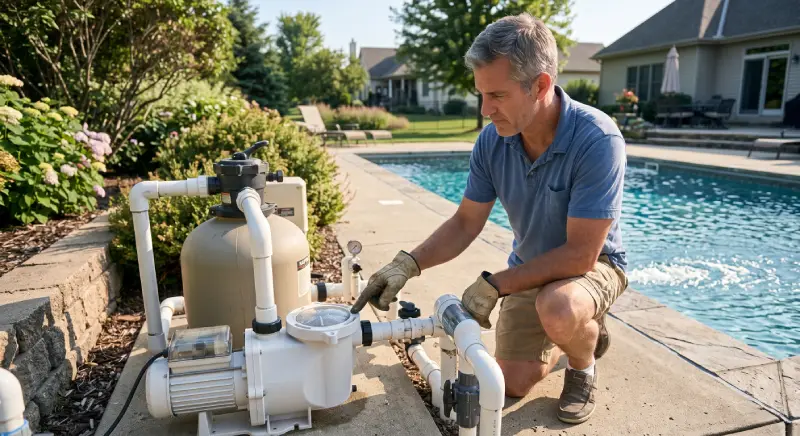
Variable-speed pumps use far less electricity than single-speed models when run at lower RPMs for longer periods. Even with a single-speed unit you can save energy by:
- Running the pump only as long as needed for proper turnover (usually 8–12 hours depending on pool size and climate).
- Keeping the filter clean so the pump does not fight high resistance.
- Ensuring the system is free of air leaks and restrictions.
- Scheduling heavier cleaning or backwashing during off-peak utility hours if rates vary.
These pool pump energy efficiency tips lower operating costs and reduce heat stress on the motor, supporting longer pool pump longevity.
7. Seasonal Care: Before Winter and Spring Startup
Before winter (pool pump maintenance before winter):
- Clean the basket thoroughly.
- Drain water from the pump housing if your climate freezes (follow freeze-protection guidelines for your model).
- Store removable parts indoors if recommended.
- Cover the pump or protect it from weather.
Spring startup:
- Reassemble and check all seals.
- Prime carefully.
- Run and watch for leaks or unusual sounds.
- Confirm pressure and flow return to normal.
Above-ground and Intex owners should pay extra attention to winter storage instructions because these pumps are often more exposed.
8. Know When to Repair vs. Replace
Minor seal or gasket issues are usually inexpensive repairs. Persistent loud bearings, repeated overheating after cleaning, or a motor that will not start often signal the end of useful life. Compare the cost of a professional repair against a new energy-efficient pump. Modern variable-speed units can pay for themselves through lower power bills within a few seasons.
A typical residential service call for basic maintenance falls in a modest range; full motor or pump replacement costs more but can be worthwhile for efficiency and reliability. Local “pool pump maintenance near me” searches will surface qualified technicians who can give accurate quotes.
9. Create a Simple Ongoing Maintenance Routine
The final secret is consistency. Build these habits:
- Daily/weekly visual checks and basket cleaning.
- Monthly deeper inspection using the checklist.
- Seasonal deep clean and winterization.
- Annual professional inspection if you prefer hands-off care.
Track pressure readings and note any changes. Small shifts often appear before major failures. Pair pump care with regular filter maintenance and overall pool circulation system care for the best results.
FAQ: Common Pool Pump Questions
How often should I clean my pool pump basket?
Most pools need cleaning once or twice a week in season. Increase frequency after storms or heavy use.
Why is my pool pump making a loud noise?
Common causes are debris in the impeller, worn bearings, or air entering the system. Clean the basket and impeller first, then check seals.
What causes a pool pump to lose pressure or have low flow?
Dirty filter media, clogged baskets, partially closed valves, or air leaks are the usual suspects. Clean the system and verify all valves are open.
Can I maintain an Intex or above-ground pool pump the same way?
Yes, the core principles are identical. Follow the manufacturer’s specific instructions for lid removal and winter storage, as these units are often lighter-duty.
Is professional pool pump servicing worth it?
For complex issues, seal replacements, or annual checkups, yes. Basic cleaning and inspection most homeowners can handle themselves with the right checklist.
Conclusion and Next Steps
Effective pool pump maintenance protects water quality, lowers energy use, and extends equipment life. The nine secrets above—regular basket cleaning, impeller care, a written checklist, balanced chemistry, early troubleshooting, efficiency habits, seasonal routines, smart repair decisions, and consistent habits—give you a complete, practical system.
Start today: empty the strainer basket, note your normal pressure reading, and schedule the next monthly inspection. Your pool (and your wallet) will thank you. If you need local help, search for qualified pool service near you or consult your pump manufacturer’s manual for model-specific guidance.
Keep the water moving, the pump clean, and the swimming season long and carefree.