
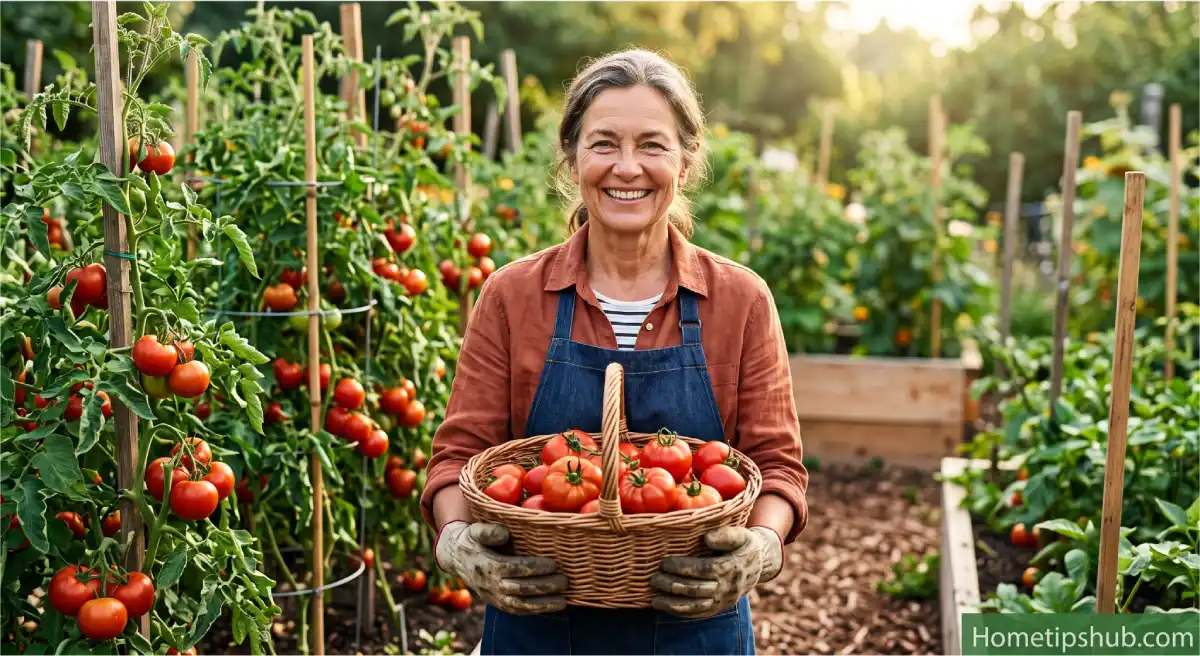
If you’ve ever planted a tomato seedling with big dreams of a summer overflowing with juicy, homegrown fruit — only to end up with yellow leaves, cracked skins, or a plant that just refuses to produce — you’re not alone. Tomatoes have a reputation for being easy to grow, but the truth is that a handful of small mistakes can quietly sabotage your entire harvest. That’s exactly why the right tomato growing tips matter more than luck.
The good news? Once you understand what tomato plants actually need, growing them becomes far less mysterious and far more rewarding. This guide brings together practical, field-tested tomato growing tips that work whether you’re gardening in raised beds, containers on a balcony, or a backyard plot. Whether you’re searching for how to grow tomatoes for the very first time or you’ve been at it for years and want to fine-tune your technique, these tomato gardening tips will help you get more fruit, fewer problems, and a plant that thrives all season long.
By the end of this tomato cultivation guide, you’ll know exactly how to choose the right variety, prepare your soil, water and feed correctly, prevent common diseases, and harvest at peak flavor. Consider this your complete set of tomato growing tips, organized step by step so nothing important gets missed. Let’s dig in.
1. Tomato Growing Tips for Choosing the Right Variety
Before you even think about tomato plant care, the variety you pick will determine how much work you’re signing up for — and how much you’ll harvest. This is one of the tomato growing tips experienced gardeners wish someone had told them sooner.
- Determinate varieties (like Roma or Celebrity) grow to a fixed height, ripen most of their fruit at once, and work well in containers or small spaces.
- Indeterminate varieties (like Beefsteak or Cherokee Purple) keep growing and producing until frost, but they need sturdy staking or caging.
- Cherry and grape tomatoes are the most forgiving option for beginners and produce reliably even with imperfect conditions.
Matching the variety to your climate and available space is one of the most overlooked tomato growing tips, yet it has the biggest impact on your success.
| Tomato Type | Best For | Space Needed | Days to Harvest |
|---|---|---|---|
| Determinate (Roma, Celebrity) | Containers, small gardens, canning | Compact | 65–75 days |
| Indeterminate (Beefsteak, Brandywine) | Large gardens, sandwiches, slicing | Sprawling, needs staking | 75–90 days |
| Cherry/Grape (Sweet 100, Sungold) | Beginners, snacking, salads | Compact to medium | 55–65 days |
2. Start With Healthy Soil
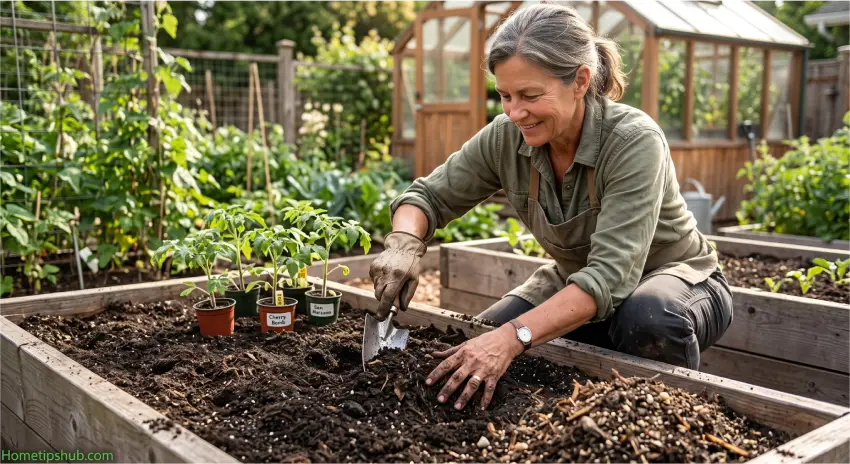
No list of tomato gardening tips is complete without talking about soil, because tomatoes are heavy feeders. They need loose, well-draining soil rich in organic matter.
What to do:
- Test your soil pH — tomatoes prefer a slightly acidic range of 6.2 to 6.8.
- Mix in compost or well-rotted manure before planting to boost nutrients and improve drainage.
- Avoid heavy clay soil that stays waterlogged, as this encourages root rot.
If you’re container gardening, use a high-quality potting mix rather than garden soil, which tends to compact and drain poorly in pots. Good soil preparation prevents many problems before they even start and sets the stage for strong tomato plant maintenance all season.
3. Tomato Growing Tips for Planting Deep
One of the lesser-known tomato growing tips experienced gardeners swear by is planting tomatoes deeper than you’d expect. Unlike most vegetables, tomato stems grow roots wherever they touch soil.
- Bury two-thirds of the seedling stem, leaving only the top set of leaves exposed.
- Remove the lower leaves before planting so they don’t rot underground.
- This creates a stronger, more extensive root system that helps the plant handle drought and wind.
This single technique is one of the best way to grow tomatoes with a resilient foundation, and it costs nothing extra to do. It’s a simple tomato growing tip that pays off for the entire growing season.
4. Give Tomatoes Plenty of Sunlight
Tomatoes are sun-hungry plants. For consistent fruiting, they need 6 to 8 hours of direct sunlight daily. Without enough light, plants become leggy, weak, and produce far less fruit.
If you’re growing tomatoes at home in a space with partial shade, consider:
- Choosing a sunnier spot, even if it means container gardening on a patio.
- Trimming back overhanging branches that block light.
- Rotating containers so all sides of the plant get even sun exposure.
Sunlight is non-negotiable, and it’s one of the tomato growing tips that’s easy to underestimate until you see how much it affects yield.
5. Watering Tomato Growing Tips You Need to Know
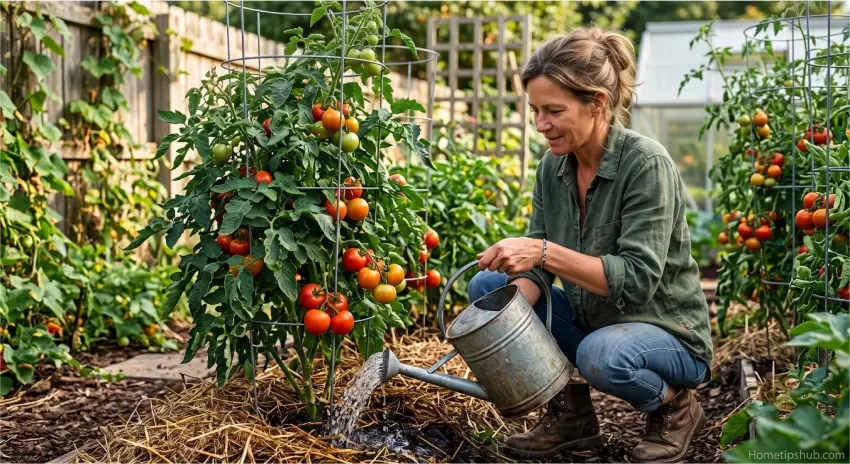
Inconsistent watering is one of the top causes of cracked fruit and blossom end rot. Proper watering is central to good tomato plant care, and it’s one of the tomato growing tips that separates a mediocre harvest from a great one.
Best practices:
- Water deeply 2–3 times per week rather than shallow daily watering.
- Water at the base of the plant, avoiding the leaves, to reduce disease risk.
- Apply a 2–3 inch layer of mulch to retain soil moisture and regulate temperature.
- Increase watering during fruit development, especially in hot weather.
| Watering Mistake | Consequence | Fix |
|---|---|---|
| Shallow, frequent watering | Weak roots, blossom end rot | Water deeply 2–3x per week |
| Watering leaves directly | Fungal disease, blight | Water at soil level |
| Inconsistent watering schedule | Cracked or split fruit | Maintain consistent moisture with mulch |
| Overwatering in containers | Root rot | Ensure good drainage holes |
6. Feed Your Tomatoes the Right Nutrients
Tomatoes are heavy feeders that need a steady nutrient supply throughout the season. Feeding correctly is one of the essential tomato growing tips in any solid tomato cultivation guide.
- Use a balanced fertilizer (10-10-10) at planting time.
- Switch to a fertilizer higher in phosphorus and potassium (like 5-10-10) once flowering begins, since too much nitrogen produces lush leaves but fewer tomatoes.
- Add calcium (crushed eggshells or garden lime) to help prevent blossom end rot.
- Feed every 2–3 weeks during the growing season.
7. Stake, Cage, or Trellis Your Plants
Proper support is a simple but essential piece of tomato plant maintenance, and it’s one of the tomato growing tips most beginners underestimate. Left unsupported, tomato vines sprawl on the ground, increasing the risk of disease, pest damage, and rot.
Support options:
- Cages — good for determinate varieties and easy for beginners.
- Stakes — simple and inexpensive, but require regular tying.
- Trellising — ideal for indeterminate varieties in raised beds, maximizing vertical space.
Install support at planting time, not after the plant has grown large, to avoid damaging roots later.
8. Prune for Better Airflow and Bigger Fruit
Pruning is one of those tomato growing tips that many beginners skip, but it makes a noticeable difference in plant health and fruit size.
- Remove “suckers” — the small shoots that grow in the joint between the main stem and branches — especially on indeterminate varieties.
- Prune lower leaves that touch the soil to reduce disease risk.
- Avoid over-pruning determinate varieties, as they need most of their foliage to support fruit production.
Good airflow through proper pruning reduces humidity around the plant, which helps prevent fungal diseases like early blight. Consider this one of the most actionable tomato plant growing tips for reducing disease pressure without spending any money.
9. Pest and Disease Tomato Growing Tips
Even with excellent tomato plant care, pests and disease can strike. Knowing what to look for is one of the most practical tomato growing tips for protecting your harvest before it’s too late.
| Problem | Signs | Solution |
|---|---|---|
| Aphids | Curled leaves, sticky residue | Spray with insecticidal soap or neem oil |
| Hornworms | Large green caterpillars, chewed leaves | Hand-pick or use Bacillus thuringiensis (Bt) |
| Blossom end rot | Dark, sunken spots on fruit bottom | Maintain consistent watering, add calcium |
| Early blight | Brown spots with yellow rings on leaves | Remove affected leaves, apply fungicide, improve airflow |
| Blight/fungal issues | Wilting, spotted leaves | Rotate crops yearly, avoid overhead watering |
Crop rotation — avoiding planting tomatoes in the same spot as last year — is one of the most effective long-term tomato farming tips for keeping soil-borne diseases in check.
10. Harvest at the Right Time for Best Flavor
Timing your harvest is the final step in this tomato growing guide, and it matters more than most people realize. It’s also one of the most satisfying tomato growing tips to put into practice.
- Pick tomatoes when they’re fully colored but still slightly firm.
- Avoid leaving ripe fruit on the vine too long, as this attracts pests and can cause splitting.
- If frost is coming, harvest mature green tomatoes and let them ripen indoors on a windowsill.
Quick Reference: Tomato Growing Tips Checklist
Use this table to keep your priorities organized by season, so you always know what your plants need next.
| Stage | Key Action | Timing |
|---|---|---|
| Planning | Choose variety suited to your space and climate | Before last frost |
| Planting | Bury stem deep, choose sunny spot | After last frost date |
| Early growth | Water deeply, add mulch, install support | Weeks 1–3 |
| Flowering | Switch to phosphorus-rich fertilizer, prune suckers | Weeks 4–8 |
| Fruiting | Monitor pests, maintain consistent watering | Weeks 8–12 |
| Harvest | Pick when firm and fully colored | Ongoing through season |
Frequently Asked Questions
1. What are the most important tomato growing tips for beginners?
The most important tomato growing tips for beginners are choosing a forgiving variety like cherry tomatoes, planting in nutrient-rich soil with full sun, watering consistently, and providing support early with a cage or stake.
2. How often should I water my tomato plants?
Most tomato plants need deep watering 2–3 times per week rather than light daily watering. Consistency matters more than frequency, since irregular watering leads to cracked fruit and blossom end rot.
3. Why are my tomato leaves turning yellow?
Yellowing leaves are usually caused by inconsistent watering, nitrogen deficiency, or early fungal disease. Check soil moisture first, then consider a balanced fertilizer, and remove any spotted leaves to prevent disease spread.
4. How long does it take to grow tomatoes from seed?
Most varieties take 60 to 85 days from transplanting to harvest, though this varies by type. Starting seeds indoors 6–8 weeks before the last frost date gives plants a head start.
5. Do tomato plants need full sun to produce fruit?
Yes. Tomatoes need at least 6 to 8 hours of direct sunlight daily to flower and fruit properly. Insufficient light leads to leggy growth and significantly reduced yields, no matter how well you follow every other tip on this list.
Final Thoughts: Put These Tomato Growing Tips Into Action
Growing great tomatoes isn’t about luck — it’s about consistency. From choosing the right variety and preparing rich soil, to watering wisely, feeding on schedule, and staying ahead of pests, every step in this guide plays a role in the size and flavor of your final harvest. These tomato growing tips are the same fundamentals experienced growers rely on season after season, and they work whether you have a sprawling backyard garden or a few containers on a sunny balcony.
Start with one or two changes from this guide — maybe deeper planting or more consistent watering — and build from there. The more of these tips you apply together, the bigger the difference you’ll see in your harvest. Your tomato plants (and your future salads, sauces, and sandwiches) will thank you.
Ready to get growing? Pick your variety, prep your soil, and plant your first tomato seedling this week. Bookmark this guide and revisit it throughout the season, and share your harvest results or questions in the comments below — we’d love to hear how your tomato garden turns out this year!